Rambling 120: The Life Checklist
/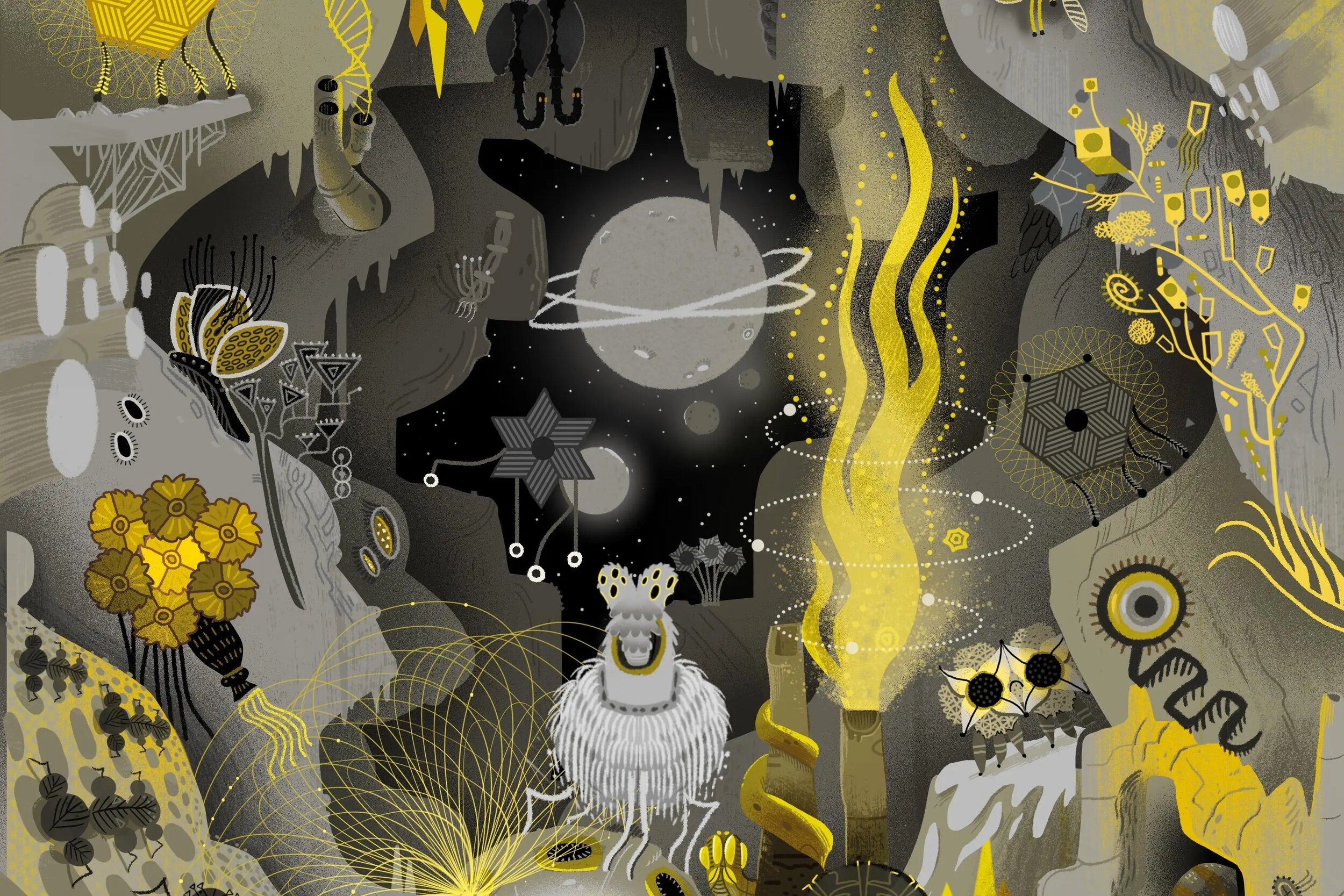
How do we know when something is alive? What of things that meet all the same requirements but we consider not alive? Understanding and designing a new checklist to measure life on this episode.
Story:
The duo unpacks what constitutes being alive in order to best explain to the listeners who or what to force to listen to the show. But on their journey to understand the concept of life they discover several interesting facts and create an entire checklist with different tiers of life to assist scientists in measuring the possibilities.
+Episode Details
Topics Discussed
- Are all living things conscious?
- Which things aren’t alive?
- The problem of aging
- Is fire alive?
- Carbon based life
- Is God Alive?
- Is sperm alive?
- Organic Matter
- Cells
- Alive vs Galvan
Our Links:
Official Website - https://greythoughts.info/podcast
Twitter - https://twitter.com/JustConvoPod
Facebook - https://facebook.com/justconvopod
Instagram - https://instagram.com/justconvopod
+Transcript
Cristina: This program contains strong themes meant for a mature audience. Discretion is advised.
Jack: Going live in 5, 4.
Cristina: What does live mean?
Jack: Welcome to the Just Conversation Podcast, the show where we ground humanity's most absurd and baffling ideas in childish ways. I'm your host, Jack.
Cristina: And I'm your host, Christina.
Jack: And if you haven't yet, remember to hit that subscribe button to get notified the second new episodes are released.
Cristina: Also, this show is most enjoyable with a listening partner to share opinions and ideas on topics we discuss.
Jack: Yes. So go find a person and an inanimate object and make them both listen.
Cristina: What?
Jack: You never know what's alive.
Cristina: Okay.
Jack: You never know. We don't know what is life. You force anything to listen, make your walls listen, blast it as loud as possible. You don't know if your house is alive. There's no way to tell.
Cristina: There's no way to tell.
Jack: Like weird a** rubric we have for f****** life.
Cristina: I guess if it has a heart. It doesn't have a heart.
Jack: It doesn't need a heart to be alive.
Cristina: What? What?
Jack: Yeah, let's think about it. Let's think about it. Right? Let's think about it. What do we call in life? If you're conscious, are you alive?
Cristina: Yes.
Jack: Is that life? So conscious beings are by default alive?
Cristina: I think so.
Jack: How do we gauge consciousness? In order to say anything's alive, then.
Cristina: You have to say it. You have to announce, I am conscious.
Jack: So animals aren't conscious then?
Cristina: Ooh, they're definitely conscious. They say it in their own ways.
Jack: How?
Cristina: With whatever sound that they make.
Jack: That's not saying I'm conscious. Are plants conscious?
Cristina: No.
Jack: So animals? Yes. But plants know?
Cristina: Well, I think. Yes, but if it's just by the sound that they're making that. No.
Jack: Yeah, it doesn't even make sense. Do they have to make a sound in order to be conscious? What about things that make sounds but aren't animals?
Cristina: Like what?
Jack: I don't know. Like a plant that makes a sound or some s***.
Cristina: It's a plant that makes a sound.
Jack: I mean, there's probably a plant that makes a sound. That's interesting.
Cristina: I would say that has consciousness.
Jack: Then by default, all plants have consciousness.
Cristina: Okay, all plants have consciousness.
Jack: But then where do we draw the line? Where do we stop our cells? Conscious?
Cristina: Yes. I don't know how. Yes, they're conscious. Everything's conscious. Okay. Everything. Even the walls?
Jack: Yeah. It seems like everything is conscious, right?
Cristina: Yes.
Jack: Because if we just assume that consciousness is like a collection of matter, then everything is relatively, like different degrees of conscious, but all conscious, no matter what.
Cristina: How could you prove any of that?
Jack: How could you prove I'm conscious?
Cristina: Because you can say it and I believe you.
Jack: Right, but why does me saying it make it true?
Cristina: Hmm?
Jack: What can you do to prove my statement?
Cristina: Brain scans does that how to prove consciousness. Maybe there's somewhere in the brain that says, is the conscious spot like everything else. Like there's.
Jack: We have no idea. We have no idea. There's nothing. There's nothing.
Cristina: There's nothing.
Jack: Nothing. We don't have a guide or anything.
Cristina: Well, there's no test.
Jack: Nope.
Cristina: I don't know.
Jack: There's zero things tell us whether something conscious is alive. We don't even know what alive is. Regardless of consciousness, whether or not it's conscious. We can't tell something is alive. Like, if we. Because obviously we don't even know what consciousness is to say that that's alive. I don't know why that was where you went with that. But, like, we can't gauge any consciousness in anything. We're just assuming consciousness because we perceive thus, you know? I guess the same s*** applies of.
Cristina: The if something's alive that it's also conscious.
Jack: I guess a cell is alive according to our rubric.
Cristina: Oh, is it? What's the rubric?
Jack: Well, it needs to reproduce, it needs to grow, it needs to eat. It needs to respond to its environment. Like a cell fulfills all those things.
Cristina: Really?
Jack: Is it conscious? Huh?
Cristina: Yes.
Jack: I guess consciousness is not the point.
Cristina: No. Okay, what's the point?
Jack: That we don't know what the f*** is alive. You can't just say something is alive because it's conscious. That doesn't make sense. Okay, that means that God isn't alive, but it's conscious. Oh, giant hole in the logic. That means that any other version of you in any other dimension is. Is by extension dead.
Cristina: They're dead?
Jack: Yeah.
Cristina: Why?
Jack: Because you're not alive, like, biologically, but you're still conscious. You're just dead. But, like, it doesn't make any sense. Okay, you got to satisfy the rubric. That's the measurement of life. Allegedly.
Cristina: Okay, but God's not alive.
Jack: God doesn't satisfy the rubric. No, he doesn't like age. He doesn't like die. He doesn't like. So what the f***? He's conscious. But does he. That doesn't make any sense. But I don't even know why we're talking about consciousness. Because we needed some inanimate object.
Cristina: Yes.
Jack: Because it might be alive.
Cristina: Yeah. Well, how do you prove an in object is alive?
Jack: I don't know. I guess it depends on the object itself. Right?
Cristina: Like. Like what?
Jack: Here's the problem. Here's the problem. Here's the problem. You can't just grab an inanimate object. It would have to be something that already seems to behave on its own.
Cristina: But it has to be. Okay, so this is an inanimate object that believes.
Jack: I guess it's complicated. Would you say fire is inanimate? Because I feel fire is very animated.
Cristina: Yes, it's an animated thing.
Jack: Interesting. Right? So an inanimate object might not be alive because it's inanimate, but an animated object that doesn't satisfy the rubric might be alive.
Cristina: Huh? But how do we prove that that inanimate object is not alive just because it's not?
Jack: If we. If we go by the assumption that all matter has some consciousness, and the more complicated something is, the more consciousness it has. Everything is conscious. It's just different levels that we can gauge to some degree.
Cristina: But we're talking about life, though, now.
Jack: Yes.
Cristina: And anything that moves is alive. Like fire. You call that as light?
Jack: I guess. Here's what's weird. Here's what's weird. Okay. Okay, let's. Let's take some steps back. Right.
Cristina: All right.
Jack: There are literally animals that don't. Just things that satisfy the living rubric that don't move.
Cristina: What animal doesn't move?
Jack: Barnacles are this sort of sea creature that does not move or respond to its environment at all. But it reproduces.
Cristina: But that's like a plant.
Jack: No, it's sort of like a sea plant.
Cristina: Like a sea plant?
Jack: Something like that.
Cristina: Yeah.
Jack: Coral doesn't move either.
Cristina: Coral doesn't. Okay, so just all these things are in the water. Is there anything outside the water?
Jack: There's a germ. Staphylococcus.
Cristina: That doesn't move.
Jack: It doesn't move. It's weird. Other things have to eat it up and then they get sick. But it multiplies.
Cristina: But it multiplies.
Jack: Multiplies how?
Cristina: It's like. But it's not moving.
Jack: It's like. It's not a virus. It's a germ. It's a living thing. It's like a cell.
Cristina: It fits, but other germs move. This is the only one that's not moving.
Jack: Yes. It's really weird. It's very strange.
Cristina: But we can say that it's alive because it reproduces.
Jack: It reproduces, huh?
Cristina: That's the only way we know. Like. Yeah, that's a. That's the Thing that's not exactly.
Jack: Exactly. Okay, fair enough. Fair enough. So let's really think about this, right? There is a literal rubric for something requiring to be alive, right? So there is. There's a chart, and I think it's seven things. So we got. You need to consume nutrition, you need to breathe air, you need to poop, you need to grow, you need to reproduce, you need to age, you need to move. Just things like that, you know?
Cristina: Yeah.
Jack: Basic s***.
Cristina: But how important are all those things?
Jack: Well, here's where it gets really weird, because not all things fit the category like what we just mentioned. Three things that don't move that we still consider to be alive.
Cristina: Is there anything that doesn't age? That's alive? What?
Jack: Turtles don't age. There's never been a turtle to die of age. They always die because they either get killed by some circumstance, get starved, or are sick. There's no turtle to have known to die of age.
Cristina: Of age.
Jack: Of age. No turtle dies of age. Turtles are the known immortal animal. Yes.
Cristina: Okay.
Jack: But they age. They age, but they don't grow old, if that makes sense. They get older, but they never become seniors.
Cristina: Okay.
Jack: And that is just a weird thing about turtles.
Cristina: That is so weird.
Jack: But also, jellyfish don't age.
Cristina: How do they? What?
Jack: Yep.
Cristina: Like, they don't die the same thing, or is it just like.
Jack: No, they don't age. They don't age at all.
Cristina: They don't.
Jack: They do not age at all. Neither do lobsters.
Cristina: What? Neither do lobsters.
Jack: Neither do lobsters.
Cristina: But they have to. They have at least the age of, like, baby to adult.
Jack: Well, no, you're missing. You're missing. You're missing. They. I guess I got a word. It. They grow up.
Cristina: Yes.
Jack: But they don't grow old.
Cristina: They don't grow old.
Jack: In every one of these instances. They grow up, but they don't grow old.
Cristina: Okay. But they do die. Except for the turtle.
Jack: Not available.
Cristina: Oh, all of them are the same.
Jack: Yeah. They don't die of age.
Cristina: Oh, okay.
Jack: Because they don't age.
Cristina: Yes.
Jack: They don't grow old.
Cristina: Or the jellyfish, the turtle, and what was the lobster?
Jack: Yes, yes, yes, yes, yes. Interesting, right?
Cristina: Yes. And for all these different things, what was it? The different points of life or whatever.
Jack: Yeah, yeah, yeah. The rubric, the checkboxes.
Cristina: The checkbox. Is there an exception for each of those things?
Jack: Not necessarily an exception for all of them, but there's an exception for a lot of them. For example, last year on an episode you were talking about, we found A creature that doesn't require oxygen. Loriciferans, which are a type of. What the f*** are they called? The type of film, the loriciferins, which are a type of film that was discovered to not require oxygen but be related to the other film that are things that.
Cristina: That's a fish. I don't know. I feel like it was something water.
Jack: Related, but I don't know. Microscopic creature.
Cristina: Oh, it's okay.
Jack: And it's the cor. Not the cordyceps. What the h*** are they? The water bears are related to them.
Cristina: Oh, okay.
Jack: And so this is a type of.
Cristina: Water bear that tiny.
Jack: Yes.
Cristina: Oh, okay.
Jack: Except it doesn't need air.
Cristina: What?
Jack: And sticking to the fact that not everything fills out every. Nothing completes the checklist. Not all things complete the checklist. The water bears themselves, what do they.
Cristina: They need.
Jack: They don't need food.
Cristina: They don't need food, but they can eat food.
Jack: They can eat food, but they don't need food. They have starved somehow for up to 30 years without seeing a single response.
Cristina: Well, but. And, and they just live.
Jack: They just fine.
Cristina: They're just fine.
Jack: Just fine.
Cristina: Wow.
Jack: Starve them out for 30 years. F****** nothing.
Cristina: But you would. If you still say these things are.
Jack: Alive, you still call, yes, they are alive. They, in any case, they respond, they do all the other things and then you have to say like, f***. So it doesn't fill out this one, which is crucial.
Cristina: Yeah.
Jack: But then it does all the others. So if like something reproduces, is it alive? If something responds to its environment, is it alive? Because a plant responds to its environment. A plant breathes air, plant drinks water.
Cristina: Are there any, then that. Which of these don't have any? Example of something that doesn't have it.
Jack: Something that doesn't have it. That's a hard one.
Cristina: I don't know, because you said most of them, they're the turtle and whatever. Well, is there any that all of us have related? I mean, is there one thing that everyone has, no matter what, to be alive?
Jack: No, no, no, because. Okay, okay, okay. There would have to be things. But for a fact, if. If one of the things doesn't make. If any creature can fail making one part of the list, there must be situations in which they all happen. Things that we would consider to be alive. In the case of something like sperm, for example, we trace it back. We're like a fetus is alive. Well, a human is alive. A baby is alive. A baby in the womb is alive, which means a fetus is alive. And we keep tracing it and we're like, it's all alive. The ups of sperm before it's even a sperm, when it's just a collection of cells. But that's actually wrong because a sperm neither eats nor poops.
Cristina: So that's two of the things. Okay, so if they're missing more than two or two or more, then you wouldn't call them alive.
Jack: I don't know, it's complicated because some.
Cristina: Of these things were missing one thing, but you'd still say they're alive.
Jack: Yes. So the sperm is missing two and we still call the sperm alive.
Cristina: Yeah. Okay, so but should we. Or should two be the mark of like. Okay, now you're not alive.
Jack: I don't know. See, here's the thing. Here's the thing. I think our definition of life is.
Cristina: Flawed for like this checklist or.
Jack: Yeah, the checklist is f*****. The checklist is f*****. Because there's exceptions to the rule. Yeah, should be. The reason we can't find life is because we have a very strict thing and we're measuring everything by this loose, always changing thing. If we just pick some f****** things and say these things are alive, then we can basically. We need a word for something else. Now let's look at it like this, right? Carbon based life. One type of life. We theorize that there is the possibility for life not based on carbon.
Cristina: Yeah. There's like two other elements that you were talking about in some other episode. They were.
Jack: So there is the possibility that there could be creatures based on other elements that are sticky as well. We just don't have any proof for it. But we're also looking based on a rubric that's always changing. So we can't even find ourselves.
Cristina: Yeah.
Jack: So we need alive and we'll say that's carbon based life. If you're carbon based, you're alive. But let's use a different word that also means alive and say that some other s***. Is that anything that isn't carbon based but seems to have more or less the same things.
Cristina: Yes.
Jack: We can say is Galvan.
Cristina: Galvan.
Jack: Galvan. Which also means essentially animated.
Cristina: Yes. That's when they electrify dead bodies. I think that's alive, but it's not.
Jack: Really alive exactly, it's galvanized.
Cristina: Okay.
Jack: So alive in Galvan. So carbon based life that is alive.
Cristina: Okay.
Jack: And then things that aren't carbon but fill out the rubric are then Galvan. And then we need a rubric for Galvan hard. There's no way to really do that yet. We just have to figure out what life is. Not before we can say what Galvan is. And that's where we're f****** up. Because we have a weird list that's always shifting.
Cristina: Yes, but do you have a list yourself for what life should be then?
Jack: Well, I think we should take out several things. Because nobody's gonna say a turtle isn't alive. Nobody's gonna say that a jellyfish isn't alive. Nobody's gonna say that a lobster isn't alive.
Cristina: No.
Jack: Aging is not a requirement of life. In fact, if we ever find the cure to aging and thus solve the problem of death. Death. We even know what. What things in our body specifically cause aging.
Cristina: Yeah.
Jack: We might solve that problem.
Cristina: We might still be alive even if we solve the problem of death.
Jack: Exactly. In which case we can already foresee a future in which aging isn't a thing. But that doesn't stop us from being alive.
Cristina: Oh, okay.
Jack: So we can remove aging from the equation.
Cristina: Yes.
Jack: The other thing we can definitely remove from is movement.
Cristina: Yeah. That seems really wrong.
Jack: Movement is an issue.
Cristina: Yeah.
Jack: Responding to your environment. Completely unnecessary. And there's one perfect example of that case.
Cristina: What's that?
Jack: You can have a brain dead individual.
Cristina: Okay. That's exactly what I was thinking. Like.
Jack: And they're still alive.
Cristina: They're still alive. That's why. That's why I was thinking. Like that's so wrong. Because that's exactly what I pictured.
Jack: Yeah. It doesn't make sense. It doesn't make any sense. There's still alive even if they're not moving.
Cristina: Yep.
Jack: They have no motion. But you've not said they're dead yet.
Cristina: Mm.
Jack: And those two things are a problem. The other things that obviously don't need to make it are like consciousness. You can't judge that. You can't judge that. Exactly. There's no way to do it. Which would mean the only things that are a requirement for life would be nutrition. You have to consume things.
Cristina: Okay.
Jack: Respiration, you have to inhale oxygen. Excretion, you have to have waste for what you consume. Growth. You need to grow in some degree even if you don't age. Two different things. And reproduction. You need to be able to make more of you.
Cristina: Awesome.
Jack: Now, something that is Galvan doesn't require any of the things I've just mentioned. But it does not at any moment mean that it's not conscious.
Cristina: Because we're not counting anything about conscious though. Because we can't tell.
Jack: Yes. We're saying that any conscious being could be alive. Or Galvan and Galvin is the thing that isn't life, but is not. But it's similar. It's the. It's life that isn't carbon.
Cristina: Okay?
Jack: That's Galvin.
Cristina: Okay.
Jack: And because it's not carbon, it doesn't behave the way that things that are carbon are. But what do we mean? We mean is that it is conscious. It's perceiving the universe.
Cristina: There's no examples of Galvin.
Jack: Not that we can think of. Exactly. Yet.
Cristina: Yes, yet.
Jack: With enough time. But with this list, a couple of weird things will happen. Because most of the things in the world we can easily chalk off to alive and dead. Some of them are hypocritically so.
Cristina: Like what?
Jack: We just don't like some things?
Cristina: We just don't like some.
Jack: Yeah, we just don't like some things. And we done call it not alive because we can't.
Cristina: We.
Jack: We can't talk to it or something, you know. Yes, But a good example of something that fills the rubric out, all right, is fire.
Cristina: Fire.
Jack: Fire needs matter. Yes, yes, the checklist. Fire needs matter. Fire breathes air, Fire leaves waste. Fire grows and it reproduces fire. And the craziest part is it is carbon based.
Cristina: Yes. It fits all this and even fits some of the other things we took off the list, like movement.
Jack: Movement. Yep, yep, yep.
Cristina: What?
Jack: So fire is by any other measure alive. It's a living thing. It responds to its environment.
Cristina: Yeah. What?
Jack: It is a living thing. Fire is a living thing, alright.
Cristina: What?
Jack: Not only that, but fire. So unbelievably similar to humans in so many ways. Let's break down what a human is. Right. So human consists of a cycle of oxygen, carbon, hydrogen, nitrogen, calcium and phosphorus, while fire consists of a cycle of carbon, hydrogen, oxygen and nitrogen. All this f****** missing is phosphorus and calcium.
Cristina: Wow.
Jack: Okay, so then we go on and say humans breathe oxygen. Well, so does fire.
Cristina: Yeah.
Jack: Fire cannot exist without oxygen. It would disappear. It's composed of a combination, particularly the running forces. The big giant chunks of everything that creates a person is carbon and nitrogen. Those are the two big ones out of all the major elements that they're composed of. Well, so is fire. Humans, after they inhale oxygen, they exhale carbon dioxide, which just so happens to be what fire leaves behind after it takes in the air.
Cristina: We're twinning. Oh my gosh, we're twinning.
Jack: F*** yeah. And the obvious one, that humans respond to their environment as does fire. Now, interesting enough. Fire fuses to procreate like a very specific species of angler fish.
Cristina: What do you Mean like angler fish.
Jack: There's an. There's an angler fish that it fuses with the female to reproduce. Their bodies fuse and fire.
Cristina: That's what's happening with fire.
Jack: Fire can fuse to reproduce. Fire doesn't need that to reproduce, but it can do that to reproduce, which is something that we already see in nature by something we already call alive. So it reproduces like something fully biological.
Cristina: What?
Jack: The only difference between fire and humans is that fire isn't, isn't composed of cells. That's an interesting thing that's going on there.
Cristina: We do we. Is that part of the definition? That's not part of the definition.
Jack: No, that's not part of the definition of life.
Cristina: Okay.
Jack: It is not made of cells, although I think people think of it that way. I think that's the general consensus. We're just looking for things that are either cells or made of cells and calling that alive and then trying to nail down the checklist for anything and everything that contains cells. But the problem is not everything falls in.
Cristina: Yes, like this. Like fire.
Jack: Yes, but in this case, by choosing very specific things, we can call something alive without needing the requirement of it being composed of cells. Although it's still carbon based life.
Cristina: It is what? It's a whole different type of life.
Jack: It's a whole different type of life and we can compare it and it makes perfect sense. It is carbon based life that behaves in every, every possible way like a human. It's just not made of cells. The problem is, in science we have a very particular problem where we think we already figured it out and moved forward as such. So cells that's alive. Now anything that has cells is alive by default.
Cristina: But.
Jack: Okay, then make a rule set that tells us. Well, no, if their argument was it's made of cells, thus alive. Fine, but why do we have a checklist then? The checklist would just be it's made out of cells.
Cristina: Yeah.
Jack: Thus alive.
Cristina: The end. But then what about plants? No, they have cells too, right? Yeah, it's just different.
Jack: Different cells.
Cristina: Yeah. Okay.
Jack: That's why I think their argument is that even if they're trying to make a checklist, but the problem is it makes it difficult to discover what is life that isn't made of cells. Yes, that's where it f**** up. Maybe it's a useful measure that we say all things made of cells are alive, but there are things that aren't made of cells that are alive too. Like fire.
Cristina: Yeah, like fire. What's anything else like fire?
Jack: Well, something Very similar to fire is lightning, which is a form of fire, essentially. It's also constructed of nitrogen and oxygen as a response to its environment. And it does not age, which is interesting. Neither does fire. Neither does fire.
Cristina: It's just fire in a different form, though not necessarily. Okay.
Jack: Because its function is completely different and it's sort of composed of a chain reaction in a different way. I guess fire is also. Everything is a chain reaction. Think about it.
Cristina: Okay.
Jack: Yeah. But what's interesting enough, after we have a rubric like this designed, we start getting into the weeds, which it gets weird. It gets really, really, really, really odd as you continue to move forward. Because if we use this rubric and apply it to a fetus, okay. Then we can definitely say even if a fetus is made of cells, this is assuming. We're not saying that all things with cells are alive.
Cristina: No, we're just going based on the checklist.
Jack: Yes, Just this checklist.
Cristina: Yes.
Jack: So based on this checklist, like a fetus breathes through its mother, a fetus consumes nutrition through its mother. It receives food and it poops outward through the umbilical cord. And it receives its oxygen through the umbilical cord and it grows with those things. But it doesn't reproduce, which is problematic because you're a living thing that doesn't reproduce.
Jack: And a fetus isn't a baby yet a fetus is just a fetus. Unless you're also saying the sperm is also a baby. But those doesn't work that way. So fetus does not reproduce. Thus by extension it is not alive. Alive.
Cristina: What, so you're saying only once it's born, it's alive?
Jack: Only once it's born, it's once. Well, it doesn't need to be born, but once it has functional sexual organs.
Cristina: Oh, okay.
Jack: That's when it crosses the threshold and can complete the checklist.
Cristina: Okay.
Jack: Now I think the best approach is a combination of both systems. Right? So we say all things made of cells are factually alive.
Cristina: Okay.
Jack: And anything that completes this checklist.
Cristina: And.
Jack: And yes.
Cristina: All right. So this thing is alive even if it doesn't complete the checklist because it's made out of cells.
Jack: Exactly. So you're made of cells. Check. You're in. Yes, you've made it. That means you don't need anything else on the list.
Cristina: All right, but if you don't have cells, then we check the checklist.
Jack: Yes, check the checklist. You compared to the checklist and you function good. You are a living thing.
Cristina: All right.
Jack: That does not mean conscious. There's no way to tell.
Cristina: Nope.
Jack: Fire could totally not be conscious.
Cristina: Totally could be.
Jack: And it totally could be. It totally could be. There's no way to know.
Cristina: There's no way to know.
Jack: All of it could be intentional. Yeah, there's no way to know. We can't predict fire. Just the same way we can't predict a person. Yeah, it's random. It's chaotic. It moves in ways we can't assume. We can be. Like it's headed that way, but you know, we can never. Like we're gonna go that way and stop preemptively. It's like. But it turned that f*** away instead. There's no way to know. But following the checklist, now let's. Let's use that same checklist and compete with spur compared to sperm.
Cristina: Oh, okay.
Jack: So sperm doesn't breathe, doesn't need oxygen. Sperm doesn't eat. Sperm does not excrete. Sperm doesn't grow. Sperm doesn't reproduce. All it does is respond to its environment. That's it.
Cristina: So it's not alive. Except for that. It's made out of.
Jack: Except for that it's made out of cells.
Cristina: Yeah. So it checks and it has. It's alive even though it doesn't have anything.
Jack: Unless we're saying the checklist is the only way.
Cristina: Yes, but I like using both.
Jack: I think made of cells equals alive or complete the checklist.
Cristina: Yes, I think that's right. How about a tornado? Since you talked about fire and lightning. Is tornado way off.
Jack: A tornado doesn't reproduce.
Cristina: No. Too little tornadoes.
Jack: Hurricane can make tornadoes.
Cristina: Does that count? Does that even though it's one giant thing. I don't know.
Jack: Why does size matter?
Cristina: Does size matter? I don't know. No, it doesn't.
Jack: Okay, well, let's look at the checklist. Needs to consume.
Cristina: Yes. Does it?
Jack: Yes. Water.
Cristina: Water.
Jack: Needs water.
Cristina: Okay.
Jack: And needs air.
Cristina: Okay.
Jack: Doesn't leave waste relative to air or water, though. It doesn't consume those things and then get rid of something. It doesn't leave carbon behind.
Cristina: It leaves water behind.
Jack: That's not waste. It's using it, but it's not getting rid of anything. That's what its body is made out of. Decomposing. If anything it grows, does grow, it can produce reproduction. We can assume the tornado itself. Yes, but then the tornado would in any case be like a sperm. It can't reproduce itself.
Cristina: Yeah, but then it won't be alive because it doesn't.
Jack: Doesn't complete a checklist. And it's not Made of cells.
Cristina: Yep.
Jack: Pretty simple checklist. It's easy to check things off suddenly and we can measure anything. That is the usefulness of something like this. We can immediately just say whether something is alive or not by putting it to this checklist. Easy, simple, easy peasy, lemon squeezy. One thing I do find interesting is the idea of a God that isn't made of cells and also doesn't breathe oxygen and. And also doesn't eat food, and also doesn't excrete and also doesn't grow and also doesn't reproduce. It does reproduce. That's why we're here.
Cristina: That's why everything's here. That's why everything's here.
Jack: So it can produce, reproduce, but it's not made of cells. And he can respond to its environment. That's how he knows good or bad and gets angry or whatever and rearranges things accordingly.
Cristina: I learned so many things from the checklist.
Jack: Yes. God's not alive.
Cristina: He's not alive.
Jack: He's Galvan.
Cristina: He's a Galvan.
Jack: Yes.
Cristina: Oh, wait, I forgot about Galvan.
Jack: Yeah.
Cristina: Okay. Do we have a definition for Galvan?
Jack: Well, for Galvan, we don't know what things are Galvan. We have no checklist for Galvan because we needed to create a checklist for life that did not change first. Again, the one thing we know in Galvan is things there could be consciousness, things there could move, and things there could.
Cristina: So they. They may check off one or two.
Jack: Things off the list, but movement is. I don't know if it's a requirement. No, neither is aging. Something that is Galvan could potentially age, but it's also not in the checklist for life.
Cristina: No.
Jack: So they have things that could exist in both. We know things that could exist in both. And with those leftover things, we can then begin to look. So things that age. Some things that are alive age. Most things that are alive age, but not all things that are alive. So maybe there are Galvan things that age but aren't alive.
Cristina: Okay.
Jack: And maybe there are Galvan things that move aren't alive. Maybe there's Galvan things that respond to their environment but aren't alive.
Cristina: Are you putting sperm and God and Galvan?
Jack: Yes, both for Galvin.
Cristina: Oh, okay.
Jack: Except sperm is made of cells. Oh, yeah.
Cristina: Already? Yeah.
Jack: Sperm is live because.
Cristina: But God and that. Tornado. Not tornado.
Jack: Hurricane.
Cristina: Hurricane. That. Yes. God and that hurricane.
Jack: Hurricane are Calvin. They are animated, but not alive.
Cristina: Okay. We cannot prove that they're cautious or not cautious, because we can't prove Any of it to anything. So.
Jack: So then assuming that we have things that are filling these rubrics, we can say that sperm and fetuses and just plants and whatever. Anything made of cells alive. But then we have fire that's not made of cells, but does check off the entire list. Thus alive.
Cristina: Thus alive.
Jack: Yes, yes. And if it wasn't for the fact that a fetus is made of cells, it would be Galvin. But it's made of cells. Yes, so it's alive. If it wasn't for a fact that sperm doesn't check s*** off the list other than responding to its environment. Yeah, it would be Galvan. But it's made of cells, so it's alive. Meanwhile, God Galvin. Any helium based life would then be Galvan. You could come, you could touch things on the scale and not check off all of them, but still not be made of cells.
Cristina: Yeah.
Jack: And be Galvan.
Cristina: Okay.
Jack: God Galvan. Like a previous episode, we were talking about shadow people. They're probably conscious. They move, they respond to their environment. But their physics are different. They don't necessarily breathe air.
Cristina: We don't.
Jack: They might reproduce.
Cristina: They might.
Jack: We don't know.
Cristina: We don't know much about them.
Jack: Yeah, they would seem to behave alive. Yes, except they're not made of cells. They don't check off the whole list. No, they're Galvan because they are animate and functional and responding to their environment. Maybe aging, maybe could even die.
Cristina: Yeah.
Jack: But aren't made of cells and don't check off the life checklist. Yes, but we know they're not like a rock.
Cristina: No rock. Okay. A rock isn't alive.
Jack: A rock, as far as we know, is obviously. Well, we know it's definitely not alive. But the potential that it's not even Galvin is there.
Cristina: Yes.
Jack: Because there could be a third thing we don't even have a name for because we just made up a f****** name right now.
Cristina: Yeah.
Jack: Add a third name and it doesn't fit Galvin checklist or Alive checklist. But there is consciousness somehow. And that could be a third thing of its own. If it's nothing that we would say is behaving as an animate object that doesn't seem to do anything except perceive, which is weird, but possible because that's what a vegetable is.
Cristina: Yeah.
Jack: And it could totally be haunted.
Cristina: Yeah.
Jack: So we don't know where that lands now, to give Galvin a definition. Right. I guess it would be a being that's not carbon based but still has capacity to be conscious. It doesn't need to be conscious, but it could be conscious. And it needs to. There should be a checklist that in the future we can make that should contain maybe something Galvan does move. Maybe it needs to move.
Cristina: But what about Frankenstein? That was what was based on. But because of this checklist and because of what we just came up with, is it alive?
Jack: Then he's made out of cells.
Cristina: Exactly. That's exactly what I was thinking.
Jack: Like, yeah, he's made out of cells. Frankenstein is.
Cristina: He's not a gallon. Even though he might be inspired by that idea. But our new checklist makes him alive.
Jack: Yes, because we're including being made of cells. And all the separate limbs he's made out of only function, because Cells.
Cristina: Yes.
Jack: So he's definitely alive. Alive.
Cristina: What?
Jack: But now, what's interesting about this is I would argue that something Galvin has to move. We'll put that in that checklist. It has to move. Now, something alive doesn't have to move, but something Galvin does.
Cristina: What about God?
Jack: Well, God can move.
Cristina: How do we know?
Jack: Well, he can do things. He's allegedly been places and he can create. That's all part of emotion.
Cristina: Okay. I guess creating would be part of motion. Just the idea of he has shown.
Jack: People his shoulder, unquote.
Cristina: Oh, yeah.
Jack: And he had to move to do that or something. So based on that, he's Galvin.
Cristina: There's movement.
Jack: There's movement. So he's Galvin because there's movement. I don't know about aging. I feel like that one could be wrong.
Cristina: Aging needs to be there.
Jack: No, like it shouldn't be there because aging feels like a weird one.
Cristina: Aging. I don't know.
Jack: We can't prove shadow people age.
Cristina: No, you can't prove. I don't think aging needs to be there.
Jack: That's what I'm saying. I don't think aging should be. Be there at all.
Cristina: Yeah.
Jack: And now, so. So I guess Galvin is pretty much anything that's not in the life list. So then our Luciferins, the films called Luciferins, are they alive or are they Galvan? They're made of cells.
Cristina: They're made of cells. They're alive.
Jack: Yeah. They're almost cells themselves.
Cristina: Yeah.
Jack: Which means. Yeah, they're alive.
Cristina: They're alive.
Jack: Even if they don't eat.
Cristina: Nope.
Jack: Because they bypass the checklist. If you're missing something from the checklist. Are you made of cells?
Cristina: Yeah.
Jack: Okay, you're in.
Cristina: Yeah. That's it.
Jack: Simple. No question, no doubt in anybody's mind.
Cristina: All those vampires, werewolves, zombies, they're alive.
Jack: All alive. All alive.
Cristina: All of it.
Jack: Even like a fully. If zombies weren't barely alive. If they were, like, if you truly murder somebody to the point that heart stops beating and everything. That at least was a living creature.
Cristina: Mm.
Jack: It was never a Galvan creature.
Cristina: No.
Jack: And if it reanimates, it's again, a living creature.
Cristina: Yes.
Jack: Because it's still made of cells.
Cristina: Yes. Yeah, I think we figured it out. Yeah.
Jack: And that means that turtles, for a fact, are alive. Are alive.
Cristina: Yeah.
Jack: Because we'll never say turtles aren't. But they don't age. And age is a weird one to have there at all.
Cristina: And jellyfish that don't even look like jellyfish. Yeah.
Jack: They look like some whole other s***. They look like a trash bag in the water.
Cristina: They look like aliens.
Jack: Yeah. It's really weird.
Cristina: But do you know any more Galvan creatures? I guess we'd have to. I don't know. That's. That's a tough one.
Jack: No, not necessarily, but that's the problem. We need to then make a checklist of things that we can call Galvan. And I think the only thing that makes sense for now is movement.
Cristina: Yes.
Jack: Because we don't know how. Something like. I'm assuming that Galvan things will behave similar to living things in that most of them can move. And that's a good start.
Cristina: Yes. Okay, let me think. Something that can move.
Jack: Lightning.
Cristina: Lightning is alive.
Jack: It checks off some of the things on the checklist, but it's not made of cells and it doesn't check off all of the things on the checklist.
Cristina: Yeah. So lightning and fire go in there?
Jack: Well, no, because G. Gal. A. Fire completes the checklist.
Cristina: Oh, yeah.
Jack: Fire is alive while lightning is Galvan.
Cristina: Yep. How many things make the checklist that aren't made out of cells? Is fire the only one?
Jack: Fire seems to be the only one, though. Fire is the only one at the moment.
Cristina: Awesome.
Jack: But fire fits everything. A human fits. Consumes matter. Humans consume organic matter. Respiration. Both. Fire inhales oxygen. Humans inhale oxygen. A screecher. Fire exhales carbon dioxide. Humans exhale carbon dioxide. Growth. Fire grows as it consumes. So do people. They grow as they consume. Reproduction. Fires can break off into smaller fires that keep moving and then grow on their own. By consuming, humans can reproduce, have babies that go on consuming and growing, and they can then do the same thing.
Cristina: So is the sun a living planet with, like, fire creatures on it or something?
Jack: Yes. You know, the difference is that the sun does age. The sun is a Different kind of fire.
Cristina: The south.
Jack: Yeah. It has a timer that's internal and ticking, and it's slowly aging, getting older and will die of old age. Something. Yeah. So it not only fits the entire rubric in which fire will definitely. Here's the thing. It doesn't actually. Because it doesn't need oxygen.
Cristina: Doesn't need oxygen.
Jack: It doesn't need oxygen. And it's not made of cells. So it's missing one thing in the checklist, and it's not made of cells. The sun is Galvan.
Cristina: What? How is a fire alive? The sun is Galvan.
Jack: How is lightning? Galvan? Okay, the sun and lightning are closer related than the fire. The fire in the sun.
Cristina: Okay. What? How about lava?
Jack: Lava. It leaves waste. But it doesn't grow. It does age.
Cristina: Does age. It does grow. When it turns into. What's the.
Jack: No, it's not multiplying. It's not getting bigger. It's rolling over things that might be higher up. And it just looks bigger. Yeah, but it's not growing. There's not more of it.
Cristina: So it's not alive.
Jack: No, it's not even Galvan.
Cristina: Or Galvan. All right.
Jack: Like it has movement. It has movement. It definitely has movement, but it doesn't reproduce.
Cristina: I'm thinking something Galvin reproduce.
Jack: I'm thinking something Galvin might need to.
Cristina: Okay.
Jack: I think lightning reproduces.
Cristina: Yes.
Jack: We can see a bigger lightning bolt shred into a million smaller ones, and they break up into a billion smaller ones until they all celestial.
Cristina: You said like angels. Well, we have no idea what they do, so we can't say.
Jack: Well, based on what we know of angels, the lore of angels, they aren't made of cells. They don't breathe oxygen, but they fit the perception of life. They seem conscious, they move of their own accord. They respond to their environment. They can theoretically die.
Cristina: They seem a lot like us.
Jack: Yes, except they're not made of cells. They don't breathe, they don't poo.
Cristina: So put them in the Galvan.
Jack: They're Galvan. Like God.
Cristina: Okay.
Jack: Like God and lightning.
Cristina: Yes, and the sun and the sun.
Jack: God, lightning.
Cristina: But does the God reproduce angels?
Jack: God can reproduce.
Cristina: The sun, though.
Jack: The sun doesn't reproduce. No.
Cristina: So is that still Galvan? Interesting, because now we're having for sure movement and reproduction has to be there.
Jack: S***. Do angels reproduce? Because I don't. Fair enough. Fair enough.
Cristina: We don't really know if angels reproduce or not. Maybe they do.
Jack: And if they don't, then they're not Galvin.
Cristina: Then they're not Gavin. I guess.
Jack: But they seem to be the closest thing to life, I would say. I would argue that angels and shadow people are the same s***, even if they're not. I mean, technically they are, but outside that point, if we went like biblical angels. Yes, and shadow people, then they behave the way humans do and seem to think and can talk and can respond to their environment.
Cristina: They're for sure conscious.
Jack: Sure, for sure. Conscious. But they don't reproduce. So that means reproduction cannot be in that checklist either.
Cristina: Okay, then. So then movement is the only thing.
Jack: We have so far.
Cristina: All right? It's just that you can't. You don't have the. The requirements for living. But you can move. So you're. You're a Galvan.
Jack: No, because lava can move and we can. And we know for a fact it's not reproducing. We know for a fact it's not behaving of any accord. It's just like water rolling. But lightning can reproduce.
Cristina: So then what's the requirement for Galvin?
Jack: I don't know.
Cristina: Judging.
Jack: Okay, fair enough, fair enough, fair enough. What if something galvanized checks off many things off of the life list.
Cristina: Okay.
Jack: But not all of them.
Cristina: All right?
Jack: So you are either alive, in which you're either made of cells, or check off the whole list. Galvin not made of cells. And check off some of the things on the list or some third other s***.
Cristina: Okay, so then what was the one that we were saying? It only has movement, so it doesn't count. Yes, Lava only has movement.
Jack: But then we. We have four. Four tiers. Alive.
Cristina: Yes.
Jack: Galvan.
Cristina: Galvan.
Jack: Whatever movement by itself is. And then something that doesn't even have that.
Cristina: There's nothing that doesn't have movement.
Jack: A rock. It moves a rock. A rock doesn't move by itself.
Cristina: Mountains move.
Jack: Mountains also don't move by themselves.
Cristina: They grow. They don't move.
Jack: They shrink.
Cristina: They shrink. That's something.
Jack: No, no. So that's four tiers. Alive. Galvan motion and no motion. All right, so alive you have. You're either made of cells or check off the whole list.
Cristina: Yes.
Jack: Galvin not made of cells. Check off most of the list. Motion. Not alive. Not. Galvin, you don't check off. You're not made of cells and you only check off motion, which isn't even part of the list.
Cristina: Nope. That's just its own thing.
Jack: That's its own thing. If you can move, lava can move.
Cristina: Planets can move.
Jack: Planets could move. See, we have similarities. Now, water is in perpetual motion in the ocean, yes.
Cristina: So what's Atlas called?
Jack: That's just motion, I guess. We don't have a name for that.
Cristina: It's just things that move. All right. And things that don't move.
Jack: So biological life form and fire.
Cristina: Alive for fact, yes.
Jack: Shadow people, celestials, God, lightning, the sun. Galvin. All Galvin?
Cristina: Yes.
Jack: They don't necessarily check off many things. Well, they check off many things, but not all of them. The sun doesn't reproduce and doesn't breathe.
Cristina: That sounds right.
Jack: It does leave residue. It radiates parts of it, little by little. Excretion of sorts, of it can also get bigger. It ages. That's not even part of the f****** checklist.
Cristina: That's not. But it's so.
Jack: But it takes nutrition. Anything that lands into it, it consumes. It can't reproduce, but it grows. It has excretion. Some of the things on there make it.
Cristina: Yes.
Jack: God is weird because he doesn't satisfy a lot of this.
Cristina: Yes.
Jack: But he reproduces. D***. He only checks off one of the things on the list. So then checking off anything on the list.
Cristina: Okay, okay.
Jack: Without all of the list.
Cristina: Yes. Is galvanized.
Jack: Just one thing on this list. If you reproduce, Galvin, if you grow Galvin, if you excrete, Galvan, if you breathe Galvan, if you eat Galvin, you don't need all of them, you just need one of them. If you do all of them, you're alive.
Cristina: A virus.
Jack: Virus is alive. No virus is Galvan not alive. A virus is Galvin. Because a virus, it's creep. It excretes. And a virus can reproduce.
Cristina: It's not made out of cells.
Jack: It's not.
Cristina: Okay, then it's Galvin.
Jack: It's Galvin.
Cristina: Okay.
Jack: In fact, it kills cells.
Cristina: That's true.
Jack: Or infects them. Or makes them sick.
Cristina: Or it makes them sick.
Jack: Yep. Yeah, but it is Galvan.
Cristina: Yeah.
Jack: And we were struggling. Science has struggled for very long to say whether a virus is alive or not. Well, you know what? It's close, but it's not alive.
Cristina: Yep.
Jack: It's next best thing. It's Galvin.
Cristina: It's God. No.
Jack: God and a virus are more or less the same.
Cristina: It's more or less the same. Who knew?
Jack: So then, what else can we put on that list? We got the sun, we got God, we got angels, we got shadow people, we got lightning. That's an interesting one.
Cristina: Yes.
Jack: Lightning reproduces. Lightning breathes.
Cristina: What else? What else is there?
Jack: And then there's the motionless.
Cristina: The motionless water. Yes. Lava.
Jack: Lava.
Cristina: Wind.
Jack: Wind. Wind is in Motion.
Cristina: Yeah.
Jack: And not one of those things we would say is conscious. We also don't know. There's no way to know.
Cristina: There's no way to know.
Jack: There's no way to know. But they do have motion.
Cristina: Yeah. But no matter where you're on this list, we don't know if you have conscious. Like, you'd be a non moving object, and we still have no idea.
Jack: Yeah, yeah, yeah. You could be conscious in any case. But I guess the ultimate idea would be to try to pin consciousness down, because we. If we can prove that the. In the entire time when we're thinking God, when we're thinking angels, when we're thinking shadow people, we are thinking of things that we can at least say are similar to us in some manner, shape, or form.
Cristina: Yes.
Jack: And we know we're biological, so we'll just chalk off anything biological and throw it into that same thing. Because it's probably, if any. If biology is the root, then for a fact. But if not, here are things that are similar.
Cristina: Yes.
Jack: And the less similar you are, the further down this scale you are. But the closer to us you are, the more likely you are as conscious as me perceiving at this moment and thinking about it.
Cristina: Mm. So the only important thing is looking for, when we're looking for life is the living list.
Jack: Yeah. So we're comparing everything to the living checklist. Yes.
Cristina: Okay.
Jack: And then from the living checklist, we then attach rules to the checklist, rather than say, if you make the checklist, you are one, and if you don't, well, you're not. And instead of that, we'll say the degree of checklist completion. Number one, are you made of cells? Yes. Alive. Okay. Not made of cells. Let's move on to number two. There's a checklist. If you can meet all the requirements on the checklist, you are alive.
Cristina: Yes.
Jack: Great.
Cristina: Mm.
Jack: Now, fair enough. We can say organic in place of alive, because organic inherently means alive. A hundred percent of anything that is made of cells is by default alive. So then we have a tier system. You're either organic, alive, Galvan, movement, moving. Good moving. Or some other s***. Or inanimate. Then. Then we finally hit inanimate.
Cristina: Yes.
Jack: There you go. Five steps. Are you organic? Sweet. That means you accomplish everything else under you except inanimate. Inanimate is the absence of all the others.
Cristina: Yes.
Jack: So you are moving. You do complete the checklist. Some of the things, you complete the whole thing. And you're made of cells. Organic. Organic is, for a fact, the goal. Okay, so you're not organic, are you? Galvin, do you? Or well, are you alive?
Cristina: Are you alive? Yes.
Jack: So then. Interesting, because that puts fire by saying organic over alive.
Cristina: It's not organic, but it's alive.
Jack: Fire is not organic, but it's alive. Yeah.
Cristina: Yeah.
Jack: So we are organic and we are identical to fire in everything, with the exception that fire isn't organic, but it is alive.
Cristina: Yes.
Jack: We're organic, therefore alive, therefore Galvan, therefore moving. But fire isn't organic, but it is alive, therefore Galvan, therefore moving.
Cristina: Yes. Does that work with everything?
Jack: Well, God, celestials, shadow people, lightning, they are all. They're not alive, but they're all Galvan and they're all moving. And lava, air, water, are not organic, not alive, not galvanized, but they're all moving.
Cristina: Yes. Okay. And then inanimate is just.
Jack: Then inanimate. Okay, so water is an animate object.
Cristina: Yeah.
Jack: As is lava, as is air. All animate. They're not inanimate.
Cristina: Yes.
Jack: Interesting. Have we designed. I think that's the proper checklist.
Cristina: Yes. We did it.
Jack: Interesting, interesting, interesting.
Cristina: And the checklist is called the Life checklist. No. Maybe.
Jack: D***. I don't know what the name of the checklist would be because ultimately the purpose of the checklist, of anything like looking for life or whatever the f*** we're trying to do.
Cristina: Yeah.
Jack: Is to. Even if we're trying to find something in any of these categories, we're also ultimately only doing it to try to find consciousness. That is the ultimate goal of any of this. But because the idea is we find a cell, a different planet. Well, that means that life can happen, therefore there could be more complicated life out there. That's really what we're looking for.
Cristina: Yes.
Jack: Where life could happen again.
Cristina: Okay. So it's really the most important is just organic, really.
Jack: No. Because you could get through all these others that. I mean, if we found organic matters elsewhere. That's way more astounding.
Cristina: Yeah.
Jack: Because if life happened in some other way. Well, duh. Well, duh. What are the odds that it just. Exactly the same. Unless there's only one way it could happen.
Cristina: Mm.
Jack: That would be one way. There's only one way it could happen and that's it. Or we have a common ancestor somehow. That'd be the other problem. So it's either life can only happen one way, we'll have way more questions if we do find organic life. Way more questions than answers. Yeah, but if we just find like helium based life or some s***, we'd be like, yep, that makes sense.
Cristina: We just call that a living thing.
Jack: No, that would be Galvin.
Cristina: Galvin.
Jack: Yeah. Because it doesn't necessarily have to fill out the check. It could fill out the checklist and thus be alive.
Cristina: Okay.
Jack: It could also not.
Cristina: Yeah. Okay.
Jack: So the argument to be made is fire might be the only living thing that we can as of now, for a fact, pin down. And isn't organic.
Cristina: That's pretty amazing because then that really does show that there's other.
Jack: Oh, s***.
Cristina: What?
Jack: Oh, no. But it's organic. Okay. I was gonna say the Luciferians, but they're all made of. I was like, what the f***? They don't eat. But no, anything that is organic makes it by default.
Cristina: Yeah.
Jack: So then fire. If we can find anything else.
Cristina: So we have a second example of life.
Jack: Yes. Isn't organic. We have one example of life that isn't organic.
Cristina: So it's possible to find others.
Jack: Yes. We have simplified it.
Cristina: Yes.
Jack: For the scientists.
Cristina: Yes.
Jack: So that they can use. Right there we have proof. It is possible to fill out the checklist.
Cristina: Yes.
Jack: And not be organic.
Cristina: Mm.
Jack: The problem is we're looking for organic, which is stupid because what are the odds now if it did happen? Holy s***. But we didn't answer. S***. We just opened a million doors.
Cristina: Mm.
Jack: Which is. F***. Do we have a common ancestor? Or is f****** biology the only way to do it? Or like, what the f***?
Cristina: Yes.
Jack: So way more questions. But as of now, we have non biological life. If we follow this checklist.
Cristina: And that makes it. That it's possible.
Jack: That makes it possible. Because fire because. Is alive.
Cristina: We're not alone on this earth.
Jack: And it's possible there's other things that we're just not thinking about.
Cristina: No.
Jack: Because at least things that are galvan are a whole other kind of thing.
Cristina: Yeah.
Jack: That is what we were basically trying to say was life before. But our checklist was too shaky.
Cristina: Mm.
Jack: So anything Calvin. It lit. That word is a synonym for alive, by the way. Anybody confused it means animated object. It's a lot. It's alive. The point of that is that it's another word for live. But we're not using alive because you're not completing the life checklist that we made up. Yeah.
Cristina: So.
Jack: Well, actually, the checklist was already made up by scientists. We just removed two things as obligations and said that anything else you have to meet, you can't not not meet it.
Cristina: Yeah.
Jack: Unless you're organic. Then doesn't matter. You've bypassed the checklist. You start at organic, move on to the life checklist. Move on to the Galvan checklist. And then finally. Can you move?
Cristina: Can you.
Jack: Most of the things. All the way through Galvan. So organic, alive. Galvan and moving can move most of the things if you don't fill out anything else. But you can move. You're at least not inanimate.
Cristina: Yeah, we're not interested in inanimate. Inanimate.
Jack: Yes. Because that would be the hardest thing to prove. Conscious.
Cristina: Yes. And we're not really interested in moving either.
Jack: We're less interested than all the other stuff, but we're more interested than we.
Cristina: Are Galvin, I think is when it's like.
Jack: Because Galvin gets really interesting.
Cristina: Yeah.
Jack: Reproduce. Wow.
Cristina: Well, I don't know. I think we're more. It's. It's gotta be over, Gavin.
Jack: It's gotta be Galvin or higher.
Cristina: I think it has to be over Galvin.
Jack: Why?
Cristina: I don't think we're interested in Galvin. What are the things in Galvin again?
Jack: Celestials. Shadow people.
Cristina: Yeah, that's why. That's why. Like, how do you prove any of that?
Jack: Lightning is Galvan.
Cristina: Yeah, that's why we're not interested in lightning. Although we're not interested in fire. And we already proved that that's alive, so never mind.
Jack: Sun is Galvan and it's super related to fire. Like lightning.
Cristina: Yeah.
Jack: Wouldn't be. We be.
Cristina: The scientists don't care.
Jack: It would be like. Look at it like this, right? We have us at organic, thus alive.
Cristina: Yes.
Jack: And we complete the whole checklist. Yeah, but also sperm doesn't complete s*** on the checklist. But it's alive. That's the same as saying there is fire. That completes the checklist. So it's alive. But lightning and the sun don't complete the checklist. So they're Galvin. Sperm is to us what lightning and the sun are to fire. It's one step under. Yeah, except it's the same. But not.
Cristina: Yeah, it's the same.
Jack: The difference is that sperm is in fact organic. Thus it bypasses everything and comes to the top.
Cristina: Unfair.
Jack: But it works. Anyways. That's fascinating as f***. I guess we have a rubric now to determine whether something is alive or not. So like I said, go find. I guess no longer look for an inanimate object. Look for any variant of animate object. Go scoop up some lava with your hand and make it listen to the podcast.
Cristina: I thought you were just talking to your walls. Why you gotta scoop lava now?
Jack: Because walls are inanimate and we're no longer interested in. I began this episode. Wrong.
Cristina: Okay.
Jack: So they have to scoop up, bare minimum, something moving.
Cristina: Like lava.
Jack: Like lava. Just scoop up.
Cristina: Scoop up some wind.
Jack: Scoop up some wind and you can listen to the show.
Cristina: Yeah.
Jack: If it responds, then.
Cristina: Mm.
Jack: Interesting. Interesting.
Cristina: I think we got it.
Jack: I think. I think we nailed something down.
Cristina: We're scientists. Right here.
Jack: At least we simplified it for scientists. Anyways, if you guys got. If you guys like weird discussions like this. There are many discussions of this nature. We haven't done one this detailed in a while, but there's a bunch of weird s*** out there. You can go find out what it would be like if we, like, powered society with a potato, if you want to know.
Cristina: Oh, yeah, Remember that? Yeah, The. The machine. We had a time machine for a short.
Jack: Time machine. We. For a short time. We literally still have that time machine.
Cristina: We never used it. You used it to stop us from.
Jack: Killing cat people or something.
Cristina: You wanted to kill a cat people? I don't know.
Jack: Whatever. The point is. Point is we got. We got episodes where things happen.
Cristina: Things happen. Yeah.
Jack: Yeah. And we look for life in a different episode. We actively search for life. So, yeah, go listen to those episodes. Listen to other things. I think we just had a questions episode or some s***. Anyways, if you want to find that stuff, you can find it at the official website@greatthoughts.info or on Apple Podcast, Spotify, or anywhere you get your podcasts.
Cristina: And you can reach us on Facebook, Twitter, Instagram and TikTokod.
Jack: Yes. And you can subscribe and rate the show. And if you feel so inclined, you can always review the show.
Cristina: Give us your rating. We eat that. We eat that for dinner.
Jack: Yes. Yes, we do. You don't rate us, we starve.
Cristina: Yes. If you don't rate us, we starve. Help. And let someone who might like this show know about it.
Jack: Word of mouth. Tell people that we've solved the problem of life and then show them what we've come up with.
Cristina: And then show them your missing arm because you scooped up Blobber. Again, this has been the Just Conversation podcast. Take nothing personal and thanks for listening. Bye.
Jack: And balance.
Cristina: Balance. Yeah.
Jack: Creation and Atheos. Destruction and shaggy reason in the flying Spaghetti Monster. And chaos and Kek.
Cristina: What about Chuck Norris?
Jack: He's not a God.
Cristina: He's not? No.
Jack: I guess he's like a trickster.
Cristina: Yeah. Yeah. I guess he's more like.
Jack: He exists in sort of the pockets of f****** reality.
Cristina: If anything, he's a reality breaker.
Jack: Yeah. He's like Deadpool.
Cristina: Yeah. Yep.
Jack: Deadpool could be Shaggy that's so overpowered because he has this thing that makes no sense and cannot be explained in any f****** way, which is the ability to leave a panel. It's too overpowered. It seems so simple, but in any comic book page, he's basically invincible.
Cristina: Good morning. Good morning. The Just Conversation podcast is hosted by Christina Collazo and Jack Thomas, produced by Lynn Taylor and published by greatthoughts.info art by Zero Lupo and logo by Seth McCallister, with social media managed by Amber Black.