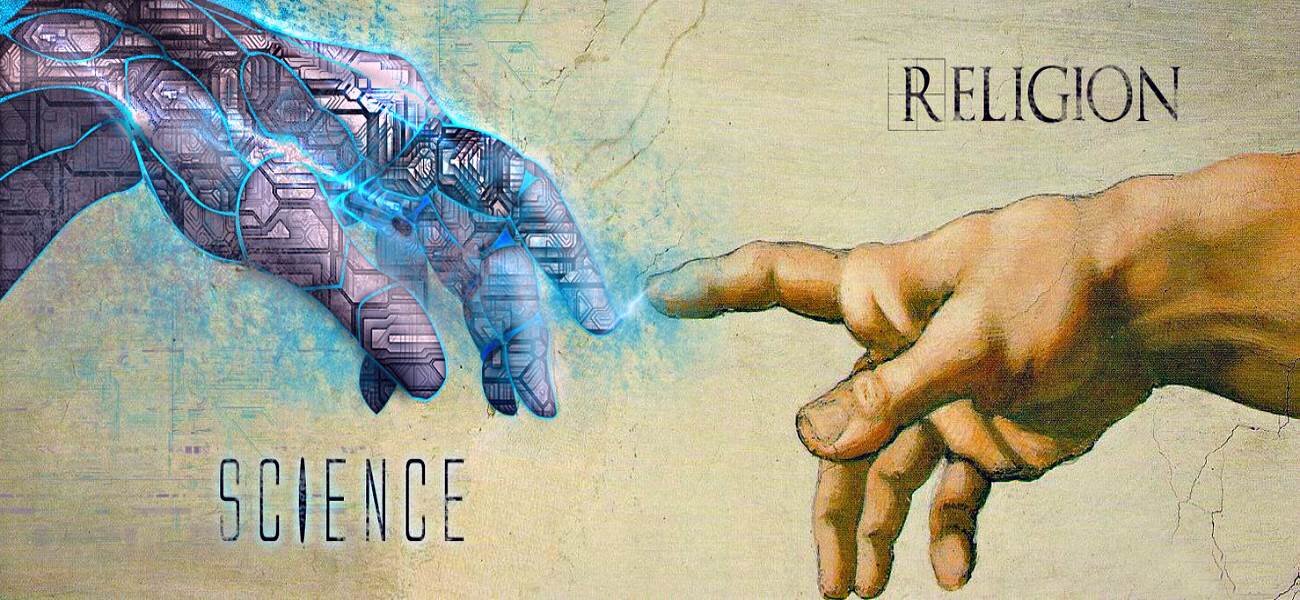
Rambling 134: The Two Religions

19400327_853871758094473_818303990680330244_o.jpg

Which has more answers for the mysteries of nature? Theology or Science? How different are these two belief systems? How identical are they? In this episode the duo breaks down the similarities and differences of Earth’s two greatest rivals for understanding the mysteries of nature. Theology and Science ad discussed as powerful religions.

Rambling 134: The Two Religions

+Episode Detail

Topics Discussed: The Scientific Method Atomic Theory Science vs Theology Objective vs Subjective Neil deGrasse Tyson Quantum Computer Morality Universe Jello Catholic Church Allegations

Our Links: Official Website - https://greythoughts.info/podcast Twitter - https://twitter.com/JustConvoPod Facebook - https://facebook.com/justconvopod Instagram - https://instagram.com/justconvopod


+Transcript

Cristina: This program contains strong themes meant for a mature audience. Discretion is advised.

Jack: Going live in 5, 4.

Cristina: What does live mean?

Jack: Welcome to the Just Conversation podcast, the show where we ground humanity's most absurd and baffling ideas in childish ways. I am your host, Jack.

Cristina: And I'm your host, Christina.

Jack: And if you haven't yet, remember to hit that subscribe button to get notified the second new episodes are released.

Cristina: Also, this show is most enjoyable with a listening partner to share opinions and ideas on topics we discuss.

Jack: Yeah. So if you need to get somebody to listen to this show, be sure to make them.

Cristina: Make them.

Jack: It's always. Look, this show always begins on the woke truth, which is you. You have the obligation to force people. You're obligated for justice. For justice. To force people.

Cristina: Mm.

Jack: To do what we're telling you to do, which is make them listen to the show. It's an obligation.

Cristina: Yes.

Jack: You don't know what kind of danger you're potentially in if you don't.

Cristina: Wait, they're in danger?

Jack: Yeah. The people we're talking to are in danger. They have to make other people listen.

Cristina: Oh, okay.

Jack: Gotta run out into the show.

Cristina: I thought only the person that they're making listen was in danger, not realizing, like, oh, we're actually making the people do it. Like, they're not just.

Jack: Oh, no, they don't.

Cristina: Doing it for fun to.

Jack: Pretty sure. In the past, I've established that I will put their children in danger.

Cristina: Yes, Yes. I forgot about that. I don't know why I forget about that. It makes perfect sense that the person listening is also like, why would you.

Jack: Do what we're saying?

Cristina: I don't know. Because they're trolls. I don't know. They.

Jack: Look, there are some trolls out there who are just like, let's do this.

Cristina: Yeah, that's what I think. That's how I feel like most of the listeners are.

Jack: I mean, like, let's be real. A huge, like, by vast majority. Like, I feel sorry for somebody who stumbled into this and isn't a f****** troll. They're over here. Like, we're about to get educated and it's like, sure, sure, sure. I mean, look, we're not gonna tell you something that's not true.

Cristina: Exactly.

Jack: But we're also not gonna tell you something that's not false.

Cristina: Mm.

Jack: It's.

Cristina: It's in there. It's in there. It's a little bit. Yeah.

Jack: But look, okay, okay. Let's be real. Right? Talking about real and fake and false and all this bullshit. Okay. What's let's. It's use a scientific method, right? You could prove. You could prove. What we're telling you is that it's dangerous or whatever. F***.

Cristina: I don't know. Because people say they use the scientific method to prove that the Earth is flat. And I don't believe it.

Jack: See, this is a weird argument because there's two things happening there. Some people think they can use science to prove the Earth is flat, which is in itself a little bit dumb, considering.

Cristina: I'm not sure if they know what the science. Scientific method is, though.

Jack: Yeah, they definitely don't because they are confused about the replication part of the pro of the whole program. Like, if I came to the conclusion, the whole other half, they're missing the. I did it and got this result. It's okay. Repeat it and get the result and then let somebody else repeat it and get the same result. They're missing that part. They're like, no, I got it the first try. I got it. I don't need any more proof. I understand. And it's like, this is science. This. Yeah, I'm sciencing, okay? And it's like, all right, bro, come on. But it's like, oh, some people also believe the f****** science is fake. And they use that to prove the Earth is flat. Like, all the science is wrong. Thus the Earth cannot be browned.

Cristina: So the scientists are wrong. I mean, they're not using the scientific method or there's something wrong with the scientific method.

Jack: God, that's so sort of the scientific method. It's not that something is inherently wrong with the scientific method. It's that it's not as right as they claim. They pretend that the scientific method is infallible, but everything is a theory because nothing has been proven. You just have overwhelming evidence for certain things, and you claim that to be as close a truth as you get. For example, the atomic theory. There are atoms. We behave and like the probabilities are in the favor of atoms by vast majority. We've built science around the concept that there are atoms. Technology relying on the idea that there are atoms. Also. We have no way to prove there's an atom. There's just not a thing we can do.

Cristina: We can't see them.

Jack: No, we're touching something, behaving in some way. We're not exactly a million percent sure.

Cristina: We're like seeing his shadow or something.

Jack: We're seeing data.

Cristina: Oh, okay.

Jack: And not even all of it. That's why we keep finding s*** inside of a f****** atom.

Cristina: In an atom.

Jack: Yeah. We discover s*** about atoms all the time.

Cristina: Oh, okay.

Jack: If we're looking at atoms, that's where it gets shaky. Yes, because, like, what the f*** are we looking at?

Cristina: Mm. So then the scientific method is not the way to go.

Jack: It's the best method we have. It's better than religion, at least for the purposes we're using it for. Okay, fair enough. That's wrong. That's wrong. Although the statement that I followed it with, the purpose we're using it for, that statement corrected what I was saying. But ultimately it's about as useful as religion.

Cristina: It's as useful in what way?

Jack: Well, science leans into understanding the objective things that both you and I experience. That's very objective. We can both see a table in front of us and say, this is a table. You're saying table. I'm saying table. Okay. The table exists within the objective reality. Yes, but there are things you feel that nobody but you feels. They can try to explain what they're feeling, but you can't feel it too. Yeah, maybe it's the same. It might sound like the words you'd use. But also we're limited by our language, so maybe you just land on those words because you're the closest. Yes, but they're wrong.

Cristina: And you're saying religion is like that.

Jack: Religion is like that. Religion is aiming to explain the subjective world.

Cristina: Subjective world, yes.

Jack: While science purely, purely, purely aims at the objective things that we can all see and replicate. You cannot replicate something subjective. It's a personal experience. Yes, but you can.

Cristina: But the Bible is trying to explain that sort of.

Jack: The idea of theology in general is to explain that. Sure. There's some cross pollination. Right. So you end up with, like, morality inside of science, the concept of morality, what's right and what's objectively right and what's objectively wrong.

Cristina: Yeah, we.

Jack: It's loosely philosophical science. Like if we gave you a thought experiment and ran you through these things, is this right? Is this wrong? Could we put somebody else through the test? Like, you're using the scientific method to work with psychology.

Cristina: Yeah.

Jack: And philosophy. But in. In religion, you're dealing with a completely different monster, which you're trying to reflect on what's inside of you. But there's the same cross pollination of. Well, we can try to tell you why the earth is at all, why we exist or what. Like, you know, there's that problem that exists in both. They're not really necessarily being used for what they're being used for. Yeah, they need. They want to explain everything. Both things but you can't.

Cristina: But why do they want to explain everything?

Jack: Because they're both religion and it's more about collecting the largest following than it is about being practical and useful. That's the same reason that scientists don't have the language to convey the information to the common person. Scientists are kind of f****** stupid. We think of scientists. Oh, they're so smart. A scientist is no smarter than a teacher who's a master at teaching than a construction worker who's a master at construction. They just happen to be in chemistry. So they're great at f****** chemistry. Or in physics. Or great at physics.

Cristina: But that doesn't mean they're good at teaching.

Jack: Yeah, that doesn't mean that they're good at teaching. They're just good at their thing. They're smart, not intelligent.

Cristina: People confuse those two.

Jack: Confuse those two s****. Too often people think intelligence collected. No, that's how fast you use information. That's how flexible you are with information. Most scientists, like theologists, are just smart in that one area.

Cristina: Yeah.

Jack: And they're ignorant to every other thing. Why is the joke? The scientists are extremely awkward people. It's because they have no social skills. They're not like interpersonally intelligent.

Cristina: Unless you count the few that are popular now.

Jack: Like Neil is not interpersonally intelligent. He is kind of rude. A bit aggressive, stubborn and rigid comedians for. Yes.

Cristina: Never mind. He has a shortcut.

Jack: He has buffers. Yes, he has buffers.

Cristina: He needs.

Jack: Oh, so like Neil is an intelligent guy.

Cristina: Yeah.

Jack: He is not just smart, he's intelligent. The problem is he's stubborn and heavily ignorant. So he'll use the information he has in clever, clever ways to just create a loop of confirmation bias rather than allowing other information into his thing. Yeah, he's just very, very. To him it's a religion.

Cristina: Yeah.

Jack: Neil worships the science. He knows.

Cristina: Yes. Cuz well, to him he knows him.

Jack: He knows. He knows how the universe came to be. He knows what? And if the question seems to not fit, which we've heard many times, he'll say it's irrelevant. That question itself is flawed because it holds no meaning. It's like there's no such thing as a meaningless question, bro. He does not study Alan Watts.

Cristina: No.

Jack: He does not understand the true granular nature.

Cristina: What kind of intelligence or smarts is Alan Watts?

Jack: He's entirely about teaching. He's like Einstein. It was all just like he was really good at communication. He's a communication intellect or smarts. He's got communication smarts and he has interpersonal smarts that they can do very good at communicating their ideas and making it accessible to the commoner. That's the whole point of the theory of relativity. Very, very. Or not the book. Relativity. It's very, very visual dialogue. The whole point is a train is doing this and this is happening and it's going this fast and you're witnessing this as it's happening. And like you'll have the numbers. It's on the page also. You can f****** ignore it because the visual he's giving you is the numbers.

Cristina: Makes sense.

Jack: Yeah, it makes just as much sense.

Cristina: Mm.

Jack: He was a scientist who studied science and used other methods to teach, not just science. Neil is just a scientist and doesn't know s*** else. He's all the blind spots in the world.

Cristina: Mm.

Jack: Only science. Just science. Nothing but science. You threw him in a random place. He starves to death. He has no idea how to survive. Because science is the. And specific science is astrophysics. The end.

Cristina: Yeah. That's not good.

Jack: That's all he's got.

Cristina: Deserted island.

Jack: Yeah. He's f*****. We look at space. Oh. Something's gonna. At that point he collapses into religion.

Cristina: Yeah. Yeah.

Jack: Which is the other side of this. Because religion also has the same problem. Religion is trying to force crap down people's throats and also fails at explaining things in a way that makes it more accessible.

Cristina: I don't understand why they want to try to explain everything with religion though.

Jack: Why are you trying to explain everything with science?

Cristina: Okay. I guess it's both the same thing. Why does everything.

Jack: I don't know. They just want to do that. But I mean they're both the same. I guess the.

Cristina: So it's just like. We just will need an explanation no matter what we're using. We just. We just need everything solved. There can't be no mystery.

Jack: Yes. Yes.

Cristina: Because then that's danger.

Jack: And I guess that's ultimately where both science and theology come in.

Cristina: Yeah.

Jack: Because they're both trying to answer the questions. All of them. They're both trying to answer all the questions. They're so scared of having unanswered questions.

Cristina: Yeah. Because that could be something dangerous there. I guess. I don't know. Like what's gonna happen if we don't know?

Jack: Alright. Let's say we. We go in and we do some science and we find out in 15 years Earth is going to be hit by another planet that's gonna enter our system. Stray.

Cristina: Cool.

Jack: Okay. What are we doing? We don't have the technology to get ever. It's f*****. It's done. Technology, Nothing's happening. We're f***** up.

Cristina: Mm.

Jack: Well, we move to Mars. Doesn't matter. Two planets collapsing next to each other, crashing into one another. That close in proximity, the debris is gonna fly out and destroy Mars. It's crazy.

Cristina: So then what do we do?

Jack: We're all dead. It's the end of the human race.

Cristina: Okay. That's because we needed to know though.

Jack: Yeah. We found out and like, great. Now we just know we're gonna die.

Cristina: Yeah.

Jack: Could have been a surprise.

Cristina: Yeah. Maybe surprises aren't so bad. I don't know.

Jack: Could have been a surprise.

Cristina: Yeah.

Jack: But no. Although on the flip side, as that planet closes in and it gets closer over the weeks and months, those storms are going to be crazy apocalyptic scale.

Cristina: We're just going to enjoy that end of the world before the death.

Jack: No, it's going to be horrifying. All the volcanoes erupting simultaneously. Hurricanes and tornadoes everywhere. Megastorms.

Cristina: Yeah.

Jack: Earthquakes everywhere.

Jack: The planet will be squeezed by the gravity of another planet. Getting crazy close.

Cristina: That's so cool, man. If we were far away, but I guess we're already doomed and like able to watch it.

Jack: That'd be cool.

Cristina: Yes. If it was hitting another planet. If it was hitting another planet, where we are though, we'd still die, right? Like it doesn't matter.

Jack: Like it would have to be a pretty far planet.

Cristina: Like if it was hitting Pluto, which I guess isn't a planet, but let's imagine that it is.

Jack: It depends how it hits it. Like Pluto's pretty far.

Cristina: Okay.

Jack: Like we could still expect some s*** to happen though.

Cristina: Yeah.

Jack: Like there's gonna be the brief flying around.

Cristina: Like how big is this planet that's hitting Pluto?

Jack: That's another good question.

Cristina: Like it's gotta be bigger than Pluto.

Jack: If it's a planet.

Cristina: Yeah. Yeah. So what does that do?

Jack: It's a potential problem.

Cristina: We'll probably still die. You think we would still prepare though to get out of here? I think we've had over doomed.

Jack: No, we can't leave the solar system. We don't have the time.

Cristina: Oh, okay.

Jack: Even if I say 20 years, we still don't. We don't have the time. Anything that's close to the orbit of Jupiter as that debris flies out in every direction is f*****. Even in a long term.

Cristina: Okay.

Jack: And anything that is in order, like a lot of those rocks are gonna get pulled in. We're towards the inside. Like we're way closer to Pluto. So we're what we're Based on the reference point of Pluto we're in, there's.

Cristina: Gotta be a scientist that's, like, dying though, right? Like, he's, like, worried, when is this giant rock gonna come out of nowhere? Because we don't know everything that's traveling in space at the same time right now with us and how everything is moving. Like, a planet could come out of nowhere. Can it? Or is that a very low possibility?

Jack: I mean, let's be real. A planet could kind of come out of nowhere. Random s*** exists. We suspect there's planets in our belt now.

Cristina: Yeah. But there's also, like, planets that aren't attached to galaxies. Or are they all attached to galaxies?

Jack: Stars.

Cristina: Stars. Sorry. Yes. Are they only attached to stars or are they flinging everywhere?

Jack: There are some planets that are just rogue. Yeah.

Cristina: Yeah. So.

Jack: And our star can capture one.

Cristina: Could capture it.

Jack: Yeah.

Cristina: Without hitting anything?

Jack: Oh, no, it could definitely hit everything.

Cristina: Oh, okay.

Jack: It could hit f****** everything. Like, it's highly unlikely that it hit anything.

Cristina: Oh.

Jack: But, like, it's possible that it could be caught and enter the gravity and stay, like, caught orbiting. But it's probably gonna f*** some s*** up.

Cristina: Yeah. Man. There is someone stressing about this. That's why there's so many of, like, Planet X is coming. Because. Yeah, there are people stressing about this. We're in space. That's. With so many things we can't see, we don't know where they are all the time. We need that quantum computer.

Jack: But we're. We're kind of sort of dealing with. This is exactly what I'm talking about. Like, science isn't perfect.

Cristina: No.

Jack: There's no equation we could run and just be like, it's over there.

Cristina: What if we had that quantum computer, though?

Jack: That quantum computer would get pretty f****** close.

Cristina: So. But not perfect.

Jack: Like, it would. It would. The better the quantum computer, the more accurate.

Cristina: Yeah, but there's no such thing as a perfect.

Jack: No. Because it would need infinite energy to calculate everything.

Cristina: Okay.

Jack: We're thinking with a massively complicated quantum computer, we can not just do the surfaces of planets the way we've successfully done on certain things like the space engines and even video games have access to a lot of this technology now. But we're talking. Actually, I think Google Earth, if you zoom out far enough, you can get the galaxy Simcha. I'm not sure. But we have that technology available to render the outside pretty accurately.

Cristina: Mm.

Jack: We're getting the. The idea of a quantum computer would essentially lead us to a computer that could render not just the surface but the inside of planets and like all the kind. But we wouldn't do it in the whole universe because it too much.

Cristina: Oh, okay.

Jack: That's. That's where the problem is.

Cristina: We can at least see our neighbors.

Jack: Yes, that help. We'll probably be able to do local things and that as it expands in complexity, we'll be able to do more.

Cristina: And more until we have a map.

Jack: Of the whole thing of our galaxy, maybe our galaxy galaxy. But we also have to be in certain places in order to get the proper angle for the computer. Because the computer still gonna process information it's receiving. It's not guessing.

Cristina: Yeah, we'll have the science.

Jack: Yeah, hopefully. But then that's the problem with religion.

Cristina: Oh.

Jack: Because religion is also doing the same thing. They're just claiming, just like science, that, you know, we got the f****** answers. We know. And it's like meteor came or f****** planet was hurling our way. You don't f****** have anything. Religion is the same f****** way. It's like we know where everything's going when it's ending. How, why?

Cristina: Yeah.

Jack: Who's going where? White. They're going there. It's like you. You're basing all of this on a book of metaphors.

Cristina: Well, most people don't even know what the book is saying though.

Jack: I mean, the people who f****** wrote it know what the book is saying. Cryptic a** mess.

Cristina: Yes.

Jack: It's all interpretation.

Cristina: Yes.

Jack: That's crazy as h***. It's all bigoted machista interpretations going on.

Cristina: So I don't know that's it's such a mess of a book. How is anyone getting any information from it?

Jack: The creation of the universe, nevertheless. Answers for human behavior nevertheless.

Cristina: Yes. When the end of the world is happening, what?

Jack: Things have their place. And we fail at realizing that things have their place. Religion has its place and so does science. And it is in that science should just be focusing on the objective and theology should just be focusing on. Because again, they're both religion. So theology should be focusing on the subjective and that should be the division you should use. The real purpose of religion. Right. Is a meditative tool. You might believe that there's literally something there that's totally fine.

Cristina: Whatever about the moral values you get from it.

Jack: That's where you're at. Exactly. That's where you're starting to land. That's the point one. When it comes to morality, that's neither religion nor science. That's pure or theology. I keep saying religion, neither theology or science. That's philosophy. Really? Really.

Cristina: It should. So it should stick to that, then.

Jack: It should stick to that. Because the problem is it's a way of thinking about things.

Cristina: Yeah.

Jack: To say blankly there is a right or wrong is something that science tries to do and something that religion tries to do. But in neither instance could you prove anything.

Cristina: No.

Jack: Because in science, you would argue everything is ones and zeros. Nothing holds inherent meaning. Well, wrong. If I shot you, you would be very frustrated. Even if you couldn't feel pain, if you just knew you were shot, you're like, f***, you suck.

Cristina: Yeah.

Jack: You need to feel pain. You're not gonna die. You just shot. You're just like. You're an a******. That was shot.

Cristina: Mm.

Jack: Why do you feel that way?

Cristina: That's crazy.

Jack: Okay. In religion, they claim that everything is inherently good or bad, but you couldn't point at an example of either that you're basing the argument that this other thing is on.

Cristina: Where is this pure good or pure evil?

Jack: Exactly. How are we pretending there's any. But again, morality is neither. It's a way of thinking.

Cristina: Yes.

Jack: Reference point of, well, what would bother me? Why would it bother me? Okay. These reasons, then that means it would probably bother them in a more or less similar fashion. Because we're more or less similar.

Cristina: Yes.

Jack: And then use that generalization. There's already a guideline, a set of rules that you're like, I don't know where it came from, but it's there.

Cristina: Yeah.

Jack: Religion would say, that's not a f****** thing. That's all in your head. Religion would say, well, God put it there. Who cares? It's. There's some thing that's there.

Cristina: Yes. That's so crazy. Okay. Yes.

Jack: That's. That's all it is. It's all that matters. There's a thing that was f****** there.

Cristina: Mm. In you.

Jack: Not necessarily in you, but it's both objective that you can confirm with somebody else. Man, this would suck if this happened, right? Yeah. Yeah, it would suck if that happened. Why? If neither would have ever experienced it, I don't know, but I know it would suck.

Cristina: Yes. That's the way it should be.

Jack: You'd be an atheist and that would happen.

Cristina: Yeah.

Jack: In fact, that is the argument for atheism.

Cristina: What is?

Jack: Well, we don't need religion to be moral people.

Cristina: Oh.

Jack: It's like.

Cristina: Yeah.

Jack: Then what is morality, bro? It's not science either. It's not like science is like. Science is ones and zeros.

Cristina: Apparently they think there's morals in there.

Jack: They try to explain, to explain away morals. Oh, but you have the Sensation of morals.

Cristina: Yeah.

Jack: While religion tries to say that for a fact there are morals. But also no. Because we're basing it all on our own opinions.

Cristina: Yes, we definitely have opinions. Yes, that's for sure.

Jack: That's for sure. We definitely have opinions. The weirdest thing, we could agree on these opinions.

Cristina: Yes.

Jack: Like pretty. Pretty heavily, universally.

Cristina: Yes.

Jack: To just say this is good, this.

Cristina: Is bad, but these are all just opinions.

Jack: They're all just opinions, but they're somehow universal opinions that we all agree with. It's sort of like the concept of creativity. What are you tuning into that allows you to see this thing that doesn't exist?

Cristina: I don't know.

Jack: Whatever that is. Probably where morality comes from.

Cristina: Imagination.

Jack: We're like, being creative about our approach to perspective in general.

Cristina: Mm. I don't know. Where does that come from?

Jack: I have no idea. But I don't know why these things aim to do these things. They try to force so much crap onto one another. And the problem is they also have because so funny. They pretend they're not. They're not each other.

Cristina: You're saying they're the same thing? Yeah.

Jack: Theology and science pretend they're not each other, but they are both sides. I'm gonna take a scientist and a priest and say that they're both way committed to their sides. Scientist is. I'll say. I don't know why this is the comparison. But we'll say Neil Degrasse Tyson with the Pope.

Cristina: Okay.

Jack: So the Pope will have to preach God. Yes. For a fact. He's up there. True, true. That woke truth God. Yeah. Sky Daddy team or whatever the f***. Team Sky Daddy.

Cristina: Who says that? Are religious people saying that?

Jack: Sky Daddy. I don't know.

Cristina: Those are people making fun of religious school, man.

Jack: Is that. They have a Sky Daddy. Come on.

Cristina: Yes, they have a Sky Daddy. Yeah. I mean, he's not in the sky, is he?

Jack: Dude, they swear. I mean, I don't know what they think.

Cristina: Ah.

Jack: Do they think there's no space?

Cristina: The space is very small, or.

Jack: No, not even that. Or. Man, it's weird because what do some people really think is happening, right?

Cristina: I don't know.

Jack: It's f****** strange. Like, do they think it's just like over the clouds, Heaven?

Cristina: Yes.

Jack: And it's like, wow, this is small.

Cristina: Like, you know in Mario, where there's a plant that grows, and then you can climb the plant and then there's clouds and you can step on the planet clouds.

Jack: Jack and the Beanstalk.

Cristina: Yes. But in Mario version, I guess that's based On Jack and the Beanstalk. Yeah. That's heaven.

Jack: Yeah. It's all the same.

Cristina: Yeah.

Jack: Well, ultimately they are the same thing, though, because they both have the. The Golden Grail, which is what they both follow, which is their scripture.

Cristina: What is the scripture?

Jack: In theology, they have literal scripture that they call scripture.

Cristina: Yeah.

Jack: And in science, the scripture is science journals.

Cristina: Science journals.

Jack: Yeah. Let's discuss science journals real quick. It's a book written by people who aren't you.

Cristina: Yes.

Jack: They've done, quote, research and run experiments that you don't know anything about and you can't and don't have the resources to replicate.

Cristina: No.

Jack: And then they put it in a book, and then other people, you don't know say, yes, true. And then they tell the rest of the world, and people are like, yeah, that's true.

Cristina: But those people that said, yeah, that's true. They tested it out.

Jack: Yeah, totally. How is that any different than the guy who saw Jesus? And the other guy's like, I saw him too.

Cristina: Oh, okay.

Jack: And it's like, right, But I didn't see Jesus. Where's Jesus? No, don't worry. I saw Jesus. Yes, and I saw him, too, but I didn't. You two saw him. How do I know you two aren't lying?

Cristina: He was on the toast. I ate him. I was hungry, was what. He was on the toast and I ate him because I was hungry.

Jack: Oh. But, yeah, that's pretty much how it goes. Science is that. That's science.

Cristina: It's religion.

Jack: It's religion.

Cristina: And so it's religion.

Jack: It's no better, no worse. It's just choosing to explain s*** differently. Yeah, I mean, I've given the example before, but let's do it again. We take science and we take theology.

Cristina: Let's.

Jack: Let's use the common American Western religion of the singular sky. Daddy, Jehovah. Jehovah, Papi, Jehovah. Right. So you have nothingness except for this one thing that exists and encompasses all that there is. We'll call that God or singularity, whatever. It was always there. And then it was like imma blink into existence. A bunch of s***.

Cristina: Yes.

Jack: And so it happened. God started bringing crap in, and so the singularity blew up and started spewing out all the matter that would become crap. And as all the matter spewed out, first plans started to take shape. God was on that roll, too. Once he had the planets, started making the heavens and the water, the oceans and s***.

Cristina: But his orders are kind of weird, though. I don't know if his orders of making things made sense. I don't remember.

Jack: The order isn't necessarily important because all the parts were there.

Cristina: Yes, yes. The conclusion I guess is important.

Jack: Parts also, how do we know what order it happened for? It was Jello at the beginning.

Cristina: It was Jello.

Jack: Yeah. We barely got told that part. Everything was Jello.

Cristina: Was.

Jack: Yeah. It was so hot. Solids were impossible. Oh, solids only happen during cooling.

Cristina: Mmm.

Jack: That's why water becomes ice. Cuz cooler. But when water is really hot, it's just vapor. So it was so hot. Everything was first vapor, but then it got just warm. Just cool enough that it wasn't just vapor, it was Jello.

Cristina: So in the beginning there was Jello.

Jack: In the beginning there was Jello.

Cristina: Okay.

Jack: Couple of seconds into the creation.

Cristina: Okay, this is the science version. Yeah, it was Jello. Okay, cool.

Jack: So God then made planets and that Jello solidified and made some planets and stars and yeah, everything became spheres. Yeah, God made the sun. Stars happened in science circles are my favorite. That sun had enough gravity to pull matter together and made planets and. Well, science says that plans began. So you just follow the train of thought and all the same parts happen. You're trying to explain all the same things. Where do we go when we die? Well, neurology says, okay, religion, what happens when we die? Well, the Bible says when you die, you go to try and explain the same s***. Yes, just religion. Both are religion, theology and science.

Cristina: Especially when explaining death. It makes no sense for either. For either. Yeah. What?

Jack: Who the f*** are we to try to explain death?

Cristina: No. Yeah, there's no way we will know. Based on what exactly? I don't know.

Jack: It's ridiculous, isn't it? That being said, if we tried to prove death right, like what's on the other side? How the f*** would do that? If there was a way, what would be the way? It couldn't be religion. It would have to be science.

Cristina: It has to be.

Jack: Because you need to use something that we, that we could ourselves see. If it's subjective, it wouldn't work.

Cristina: Yeah, that's because like the dead guy.

Jack: Saw it, but the dead, he can't tell us. Yeah, we need a living person to see the other side.

Cristina: Science to find out what's happening.

Jack: They both serve their purpose. They both serve their purpose. Definitely. If you look at, in the case of science, you can, you can do a lot of things. We built cars and GPS and bunch of f****** s***. We're talking into microphones that are sending sound waves through a wire into a computer. That's Recording it. And then later that's gonna become a different kind of file that then is gonna be mass distributed to the planet. That's science.

Cristina: Yes. And they're evil.

Jack: The Bible didn't make that happen. But science tries to say that religion is unimportant.

Cristina: Yes.

Jack: Or I guess it in itself is religion. But theology. And theology does a couple of good things, which is it tells stories that allow us to understand the world differently. And at any given moment, theologies have the best idea. Now we're in such a technologically advanced, particularly the Western societies and the. I guess Asian societies are really, really like Eastern Asians are very advanced and a lot of the western culture that we are losing the purpose of religion because it was there to tell us stories that would protect us when we're in danger, give us anecdotes about bad places to be, bad behaviors to have conflicts that could happen as a result.

Cristina: But now we can just tell each other that through the Internet.

Jack: Yes. And so we don't need a lot of these things that came from religion. But spirituality is important.

Cristina: Yes.

Jack: It makes you feel connected. That's important. That's not just philosophy. There is something else happening when you're talking about spirituality.

Cristina: Yeah.

Jack: There is a thing you feel that isn't your emotions.

Cristina: Do you get spirituality from religion or is that its own?

Jack: It's a close estimate.

Cristina: It's.

Jack: It's a close way to get it. You can also get it from. I guess you could experience. You could get it from anything.

Cristina: Okay.

Jack: It's just religion seems to be the best at doing that.

Cristina: Yeah.

Jack: Because it's the best at making you feel connected.

Cristina: Okay.

Jack: Like everything is like in science. They're so boring with it. Ones and zeros. You are made of stardust. Great line, bro.

Cristina: Hey, that's sort of connected. That's a very connected thing.

Jack: The lack of explanation of. What does that mean? Well, you made of stardust means the same matter that blew out of the singularity spread out into the universe pretty evenly distributed and then started clumping together. And then that same thing eventually made oceans and made trees and made parasites that were alive and germs and cellular creatures started to get complicated. And these are same atoms still and particles and crap together forming that. You tell that story and you're like, oh, we're all connected. I made the same s*** you're made of. But if I'm like, we're all stardust, it's like. It sounds like some f****** song.

Cristina: It's beautiful. It's a beautiful story.

Jack: We're all made of stardust.

Cristina: Yes. It kind of sounds hippie ish. For something that's scientific.

Jack: Yeah. Religion is pretty hippie ish too. And there's nothing wrong with that. It's the fact that we try to force it down people's throats that is a really.

Cristina: Forcing down anything down people's throat is a problem, whether it's science or religion or whatever. I think that's the biggest thing.

Jack: Yeah. My biggest problem is how we all have the capacity to believe in things that we've not proven ourselves.

Cristina: And then forcing it through other people's throats.

Jack: Yes.

Cristina: Sleeves. Like why?

Jack: That's weird and complicated, right? Yes, man. Cuz we don't know s*** about s***. We're really winging it pretty f****** hard.

Cristina: Why can't we just be honest about that?

Jack: I don't know. We're scared of the unknown crap.

Cristina: That's what we're. That's why we have all this in the first place.

Jack: Yeah.

Cristina: Yeah.

Jack: We're scared of the unknown. That's why we have it in the first place. Because we're scared of the unknown.

Cristina: That's why we have science and religion and Etc.

Jack: Yeah.

Cristina: Because we're scared.

Jack: And we need answers. And those of us who don't have the skills to practice these things actively will just take whatever answers they give us. Because it's better than not having any clue.

Cristina: Yes.

Jack: And then incorrect information beats no information.

Cristina: I understand. But still, why give it? Why force it onto other people?

Jack: My. My big problem is why do we have a fear of the unknown?

Cristina: Yes.

Jack: Like what's wrong with it? Everything is unknown. We don't really know s***. Come on, man.

Cristina: That's why people need to check out Alan Watts. Then they'll see, like.

Jack: Yeah, it's all meaningless.

Cristina: It's all meaningless. But it's a good meaningless thing.

Jack: I mean, that's all about.

Cristina: It's really about just enjoying the moment.

Jack: The problem is the four answers to the glass. Half full or half empty.

Cristina: What?

Jack: There are too many variants of how you can take the same information.

Cristina: Yes. Okay. Yeah.

Jack: The glass is half empty. Yay. There's more for me to do. The glass is half empty. F***. Half is already done.

Cristina: Yes.

Jack: The glass is half full. Ah. Half the work is done. Sweet. The glass is half full. F***. Somebody has already filled out this part. Like, it sucks. It doesn't matter.

Cristina: Yeah.

Jack: It's really like there's no right. And every individual basis.

Cristina: Yeah.

Jack: And that's why we have the two different systems the same way. The glass is Half full or half empty. We have religion and science. Two different sides.

Cristina: Yes.

Jack: To kind of try to grasp everybody. Some people are more critical thinkers. Some people are more emotional. Some people require a little more spiritual feeding. Some people don't have a spirit. They're like borderline sociopaths. And so they do the numbers thing. Cold as f***.

Cristina: Whatever. I guess it all fits.

Jack: It's meant for somebody.

Cristina: It's meant for someone, but it's all.

Jack: Doing the same s***.

Cristina: Yes.

Jack: Then enter philosophy. The. The winner guy. Daddy. Of the f****** ideologies of the religions.

Cristina: The sky daddy.

Jack: Yeah, we got theology and we got science. But, like, they both rely heavily on philosophy.

Cristina: Well, they both look down on philosophy.

Jack: Too, though, which is so funny, because they depend entirely. There's nothing they could do without it.

Cristina: Yes.

Jack: They think they're the next step.

Cristina: Yeah.

Jack: They're not. Because science is what you get when you make philosophy rigid. And religion is what you get when you strip out the thinking part.

Cristina: Strip out the thing. That sounds bad. Yeah, it's not bad, I guess. You don't need to be thinking all the time.

Jack: You don't need to be thinking all the time.

Cristina: Your brain needs a break.

Jack: Yeah. If you're thinking all the. And that's another problem. We've deluded ourselves to think that.

Cristina: That we have to be thinking.

Jack: You have to be thinking. The act of meditation is training to not.

Cristina: Yeah.

Jack: Which we gotta train into. Because of how programmed we are to think all the time.

Cristina: Yeah, I have that problem. Yes, I know.

Jack: The idea is going back to the fact that you mentioned Alan Watts. A person who thinks too much spends their time thinking about thoughts. And you're not present. You're just worried about thoughts that aren't happening.

Cristina: And then you're wasting your life away. Yeah. It's very depressing.

Jack: What's the point of thinking about thoughts? You're not. You're thinking about thoughts. You're not experiencing anything else to think about.

Cristina: Yes.

Jack: Go and experience emotion, then think about it. You got to be there to experience it. If you're thinking thoughts while you're there, you're not experiencing the thing. You're blocking out the experience by thinking thoughts.

Cristina: Yeah.

Jack: Experience it later. Have thoughts about it.

Cristina: So it's. It's so, so sad. But, yeah, it's beautiful.

Jack: Alan Watts, philosophy. Right there.

Cristina: It's perfect.

Jack: Stop thinking thoughts.

Cristina: Mm.

Jack: It's getting in the way of life.

Cristina: Yes. It's getting in the way.

Jack: Yeah. You thinking thoughts is getting in the way of your life.

Cristina: Mm.

Jack: That's a weird thing. To be told by anybody. You're thinking too many thoughts.

Cristina: Yes.

Jack: What the f*** else would I be thinking? Nothing. You'd be thinking nothing. Stop thinking thoughts. Think nothing.

Cristina: Just be.

Jack: Just be present. Do what you're doing. Roll with it. Be impulsive, whatever. Who gives a s***? Be present.

Cristina: Yeah. And that doesn't mean, like, not do. Like, if you like science or philosophy, like, whatever. Still do those things. Yeah.

Jack: But don't be rigid about any of it. Yeah, well, we gotta follow these rules. Neil does not have fun in life. That's why trolls have way more fun than Neil. Neil Degrasse Tyson is a miserable man.

Cristina: He said trolls, though. How do you compare trolls to this?

Jack: The idea here is that a troll finds it funny. They'll laugh it off. Neil gets kind of angry. It's like the difference between me and you, dude, is I have more fun in life because I laugh at it. I found it funny. Life better. You found it something that had to be corrected, explained. And that's problematic because you're angry at the fact that it's not happening the way you want it to happen.

Cristina: Yeah.

Jack: That's weird. But it's sort of the reality of the matter. It is f****** weird. I don't. I don't understand, but it is. I guess it is a f****** fear of the unknown. That's always. I don't know where that comes from, though. Evolutionary. Right, we're just evolutionary f****** scared of what we don't know.

Cristina: Yes. That's probably the explanation. Most likely has to be right.

Jack: Because animals are scared of what they don't know.

Cristina: Yeah.

Jack: And this.

Cristina: They all do.

Jack: Defense mechanism.

Cristina: Yeah.

Jack: It's survival. The problem is we became symbolic, metaphoric creatures seeking meaning in the fabric of the universe, which is all riddled with unknowns. So we get to think about the unknowns rather than just instinctively be afraid of them.

Cristina: Yes.

Jack: And then religion and science happen, and.

Cristina: Then we're trapped in our own thought loops.

Jack: We're thinking too many thoughts. And that is science and religion. We're just f***** bouncing between these two. We're either one or the other. We're arguing against one or the other.

Cristina: Mm.

Jack: And forcing people. No. You're gonna go to h***. But you don't know that. Somebody told you that. And the guy who told you that didn't study it. Didn't go prove that s***. You just got given the answers. Yeah. So many people f****** claim to be religious and have never picked up a single Bible. I find that magnificently hilarious.

Cristina: Yes.

Jack: Oh, I'm a Christian. Oh, yeah. What did Paul say? Who's Paul?

Cristina: No way.

Jack: What?

Cristina: Okay, that's how bad it gets, dude.

Jack: That's how bad it gets. It's just like. But look, if you say like, I believe there's something greater than me, that's fine.

Cristina: Mm.

Jack: I'm Christian. Are you though, bruh?

Cristina: You test them out.

Jack: Even worship, bruh. You even worship, bruh. I guess at that point that's how you gotta treat these people the way you do. Like people who wear banties.

Cristina: What are band tees?

Jack: T shirts with band names on them.

Cristina: Oh, band T's.

Jack: Yeah. You gotta be like, name three songs. I'm a Christian. Alright. Name three apostles.

Cristina: What?

Jack: Name three apostles, bruh.

Cristina: Then name three things they said.

Jack: Name three things they each represented. Yeah, let's go. It's like, what?

Cristina: Crazy.

Jack: Which one of the apostles did Quizdom tribute night? You Christian? All right, come to my house. You Christian? All right, come to my house. At this time tomorrow, we're gonna see if you're Christian. Have a whole group of people there just to like quiz them and prove that they're not or they are or whatever.

Cristina: Yes. Why hasn't the church done something like this? This is amazing.

Jack: It's great, right? Just make the Christian. The church wants a lie and say there's more Christians than there are. Oh, that's anybody.

Cristina: Then they have a problem with everyone.

Jack: I mean. Yeah, because the church doesn't give a s*** about the Bible or Jesus Christ. Okay, the church pretends it does, but the church is really just run by government and government is run by rich racists, which is why it's like, well, women have to f****** do this and do that. And like, we can't have gays either in the Bible and in church because, you know, we're straight white men. That's scary to us because we probably, probably suck d*** secretly and we don't want people to know. We're gonna judge us on d*** sucking. Like you're billionaire, dude. Nobody gives a f***.

Cristina: They're all child molesters.

Jack: So they are. That's where it gets f*****. Which is also approved by religion, specifically the Catholic Church.

Cristina: They're all. All of them. Yeah. All the religious, all the governmental. All of it.

Jack: They like to f*** all the children all the time. God, that's always a topic on this show.

Cristina: It's hard to ignore.

Jack: It is so hard. Anytime we discuss religion, we sudd the Catholics. Look the other way.

Cristina: Just them. It's so many organizations, but it's like people way heavily.

Jack: Yeah, way heavily. The Catholic Church.

Cristina: Yes. But it's everyone.

Jack: It's everyone. But not in vast majority everywhere. No, it's like heavily. Like if we grabbed all the people, molesting all the people, like a good 90% of them are just priests.

Cristina: That's how much hardcore, bro. That's.

Jack: No, that's hardcore. And they get away with it. That's a problem.

Cristina: Yeah.

Jack: How many of them never get caught?

Cristina: I don't know.

Jack: Just f*** the people growing up.

Cristina: Yes.

Jack: Just ruined hella lives. That's a monster though.

Cristina: Mm.

Jack: Functioning great in society. Sociopathic bullshit going on. D***. It's safe to assume that a lot of press, a lot of priests are a bit sociopathic. Right. Maybe they gotta disconnect. Unless it's an emotional urge. Oh no, I gotta f***, I gotta f*** em. It's like, bro, I don't know.

Cristina: I really want to know now.

Jack: That's what it's interesting, right? Like if we could test these people. Are they sociopaths? Is just a church run by sociopaths or do they have a problem? It's like a real problem.

Cristina: Like I gotta find out if anyone actually found that out. I'm sure they must have. Right? They must have questioned these guys.

Jack: I think because they're religious figures, we treat them differently then being curious and being like, bro, are you f****** these kids because you don't like care that they're gonna be ruined in the future? Or you have no self control despite knowing that they have a f***** future if you do this.

Cristina: I wonder how many choose the first answer.

Jack: It's nuts. They're just like, I don't give a f***.

Cristina: Yeah.

Jack: F***, let the kids have crappy lives. I don't give s***. Oh my gosh, I need to get my willy wet. And then God's gonna. I just go pray later and I'm cool.

Cristina: What about those sisters? Why they gotta touch the kids? There are plenty sisters.

Jack: They rape them too.

Cristina: They do, yes.

Jack: Crazy known.

Cristina: I thought the sisters were just having like female parties on their own.

Jack: Well, like touching each other and whatnot. Yeah, I mean probably. But I know that a bunch of the nuns casually the priests, because they're also not getting laid.

Cristina: But they're not being raped. Or are they being raped.

Jack: Some of them are.

Cristina: Oh, okay.

Jack: There's a lot of things going on. Oh, it's like yay religion.

Cristina: Yeah. Sounds like those horror stories from being in jail or whatever prison. The cops raping the prisoners or whatever for the fun of it. Because they're prisoners. I don't know what the whole thing.

Jack: It'S Usually male cops raping female inmates.

Cristina: Yeah, that's pretty horrible.

Jack: That's just horn dogs who are like, I'll get away with it. And then they go pray. God is gonna forgive him. God's gonna forgive him.

Cristina: Yeah.

Jack: Jesus will forgive them because he forgives. That's a weird thing about the Old and New Testament. The Jesus thing, the God thing. Jehovah is two different guys.

Cristina: Yes.

Jack: They're vastly different people. The first dude is wrathful, destructive, jealous, angry, savage. Which tells us he's a demigod in the first place. Why do you have emotions, bro?

Cristina: I don't know.

Jack: Like, whatever. Yeah, you can't just blink his problems away. Very angry and just can't blink it away. Nope. Yeah, totally logical, bro. That's. That's exactly what it is. You hate it all. You want to destroy it all, but you can't. Sweet.

Cristina: But he does. And then he brings it back. Or is someone else doing that?

Jack: The best he could do is flood it. He couldn't get rid of it.

Cristina: Oh, okay.

Jack: Just made it rain. Apparently, he's a God of weather.

Cristina: Yes. Is that how he's done. Whoa.

Jack: He destroyed and he sent. I think he made fire fall from the sky too.

Cristina: Okay, yeah, he has done some things. Okay, yeah.

Jack: Gave Moses the power to split the oceans.

Cristina: Wait, so he can give people powers?

Jack: He gave him a stick with powers. Maybe that was just a tool that the gods use.

Cristina: He controls the weather. Is he the Earth because he gave him a stick and it's magical? Maybe he's just Earth.

Jack: Gaia.

Cristina: Yeah. What if he was Gaia all along?

Jack: That would make sense. Gaia is, like, a pretty ancient God. I think it actually predates Jehovah.

Cristina: Oh, okay. There you go. Jehovah is just Gaia in disguise. I guess.

Jack: I mean, considering that Christianity is just Greek mythology. Well, it's just Judaism, and Judaism is Greek mythology, and Greek mythology is a Norse mythology, and Norse mythology is Hinduism. It's possible the Hinduism just comes from. From the original understanding and labeling from natives of different cultures that talked about Gaia. That talked about Gaia.

Cristina: Mm. What is that? What does that do?

Jack: Tells me when I get a message.

Cristina: Is it from this conversation or that's from something else?

Jack: No, nobody here has sent us a message.

Cristina: Oh, okay.

Jack: But, yeah, I don't know. I think it's real f***** up that people force the unknown on people as if it's totally known.

Cristina: Religion or science. It's all the same.

Jack: Science knows a lot, but it also doesn't have a finite answer for anything.

Cristina: Yeah.

Jack: It can't just be like for a.

Cristina: Fact, but they want you to believe it's believe.

Jack: I would say theology, out of the two has the least amount of way specific answers, but also it doesn't need specific answers because it's a subjective experience guidebook.

Cristina: Yeah. You're not supposed to be. The questions that you're trying to answer with the Bible doesn't make sense.

Jack: Yeah. It's about you internally.

Cristina: Yeah.

Jack: How you feel, how your emotions are. Your spirit just way abstract and personal versus objective, which is science.

Cristina: Mm. You can just divide the two.

Jack: Yeah. You have to think of that as two very different things that function together.

Cristina: And they would function together if you were thinking of it like that. Yeah.

Jack: Yes. Theology and religion do great together. Do great, great, great, great, great together.

Cristina: As long as they're not competing to answer the same questions. That doesn't even make sense.

Jack: That doesn't make sense.

Cristina: No.

Jack: It should just be things that you can create and base and understand from science and things that allow you to feel like a good person. Understand basic moral principles, family values. I'd suggest everybody become a Mormon. Yes. It's a stupid f****** religion that makes no sense. Also, their family values are better than every family value everywhere. You literally have to make time for your family. Go be a Mormon. Learn to love people.

Cristina: Those aren't the people that kick out their children if they don't want to continue that life or something.

Jack: You mean the Amish?

Cristina: Oh, okay. I don't know. They're very similar in my mind.

Jack: The Amish are the. Are you talking about Orthodox Jews as well?

Cristina: I don't. There's a couple of them.

Jack: There's a couple of these people out there.

Cristina: Mormons live. Do they live the same as the Amish, though?

Jack: No, they're just people.

Cristina: Okay. They don't live in farms. No.

Jack: They don't live in a house.

Cristina: Oh, okay.

Jack: Like anybody else.

Cristina: And they use electricity and all that.

Jack: They're super normal.

Cristina: I don't.

Jack: You might know mad Mormons and not even know it.

Cristina: Oh, okay.

Jack: It might just be surrounding you. They're just people.

Cristina: They're just people. Okay.

Jack: They're just Christians.

Cristina: All right. Amish. They're not.

Jack: No. Those aren't humans at all. Those are weird freaks of nature who are like.

Cristina: Those are people. But they're. It's not a religious thing. It's a life choice.

Jack: Both.

Cristina: It's both.

Jack: It's a life choice based on religion.

Cristina: What religion?

Jack: The. I believe it's Judaism.

Cristina: Really?

Jack: Amish or Jews? If I'm not mistaken. They are the Orthodox Jews.

Cristina: Oh. Are you positive?

Jack: I think so. I'm pretty, like, heavily sure. I could be wrong. But then that means that these two groups are very similar.

Cristina: Oh, the Jews and the Amish.

Jack: The Orthodox Jews and the Amish.

Cristina: Okay.

Jack: But I think the Amish are the Orthodox Jews. I'm not entirely sure on how that breaks down, but that seems right.

Cristina: Let's become Amish. Let's live by them. We don't have to be living with them to be their neighbors. Or they can't have neighbors.

Jack: I will never be Amish.

Cristina: I don't want to be Amish. I just want to be a neighbor of Amish.

Jack: Go live next to Amish people then.

Cristina: That's crazy. No, I mean, yes, let's go.

Jack: You can go.

Cristina: I could go. Okay, I'll go.

Jack: I have no reason to go.

Cristina: I need my podcast people to come with me.

Jack: You can take the whole crew.

Cristina: Yes, I want the whole crew to come with me.

Jack: Everybody's going.

Cristina: Everyone.

Jack: They're just all living over there?

Cristina: Yes, all. All of us. There's a lot of people. I know, but we'll make it work. We'll get one house.

Jack: You mean basically start your own Amish community?

Cristina: I guess so. Yes. We're gonna start an Amish community.

Jack: Start an Amish community. But the reason they do this because of religion is because they believe that electricity is unnatural.

Cristina: Okay.

Jack: And so anything using it is also unnatural. It's not something God put on earth for us.

Cristina: Are they sure that electricity isn't something God gave us?

Jack: It's definitely something God gave us.

Cristina: Because I feel like. Yeah, that's exactly where it's coming from. It is natural.

Jack: Yeah, but they think like technology and crap like that.

Cristina: Oh, okay. How we use it. Interesting. I don't know. Because then they're doing the same with the wood from trees. It's not. Not that. The same thing. I don't like. What's the difference?

Jack: I have no idea what you're trying to say.

Cristina: That they can destroy trees to build houses and stuff like that.

Jack: Right. So the house isn't natural.

Cristina: Yes, but that's the same thing with the electricity. The electricity is natural. What you do with it is unnatural.

Jack: Yes. So the tree is natural. What you do with it is unnatural.

Cristina: Exactly. So.

Jack: Except animals do what you do with the tree. I think that's where the base. What would an animal do?

Cristina: But we're not animals.

Jack: We totally are. Except that's science, right? Oh, not religion. Because man was made already as man, according to religion.

Cristina: Okay, wait, so then there are.

Jack: I don't know where the argument is. Yeah, I don't know where the argument comes from.

Cristina: Yes. Because in religion, we are just. We're humans. Animals are animals. That's what you're saying. Yes.

Jack: Yeah, yeah, yeah.

Cristina: Then.

Jack: Well, in science, we can. We're all the same.

Cristina: We're all the same. Yes.

Jack: Theory of evolution. Because again, nobody's proven we came from s***. Yeah, it's a theory that we came from s***.

Cristina: Mm.

Jack: From true, literal poop. From s***. We came from s***.

Cristina: What?

Jack: Us? Everybody.

Cristina: Everyone.

Jack: There was a t*** at the beginning, a magical t***. And of that magical t*** stepped out the first bipedal who later became a human. And now we poop the Earth.

Cristina: We do poop, but everyone poops.

Jack: Isn't that like a child book?

Cristina: Everyone poops. I don't know.

Jack: It's a book for kids who are scared to poop because they're ashamed of pooping.

Cristina: Really?

Jack: I don't know.

Cristina: I feel like that makes sense. Why would they be shamed of pooping?

Jack: And training A puppy, maybe?

Cristina: Yeah, they're training the child. But why would you need a story to tell you how to poop or something? I don't know. That's weird.

Jack: I mean, you always knew how to poop, but they're telling you. I guess that's potty training. It's like you're pooping in a different space other than on yourself. You used to poop in yourself.

Cristina: Some kids are afraid of toilets, I think.

Jack: And everybody poops in the toilet.

Cristina: Yeah. You gotta show them that it's not scary.

Jack: This is also where the programming comes in, right?

Cristina: What is it?

Jack: Religion and science. There's a follow the line mentality.

Cristina: Mm.

Jack: And that happens with pooping.

Cristina: Oh, my God.

Jack: Which is like, well, look, Timmy, everyone else uses the toilet. That's how you should use the toilet. What if Timmy wants to take a s*** outside? What if Timmy doesn't want to follow the conventional f****** rule? Society, Bill. What if Timmy's like, f*** the man?

Cristina: Well, he should at least understand where the man's coming from. But, like, before he decides.

Jack: But like, they're 100% like, no, everyone else does it, so you must do it. We do it, so you do it. And you're doing it just because we do it. You don't have to do it, but.

Cristina: You have to do it. All the education into a child is, though.

Jack: Yeah. Everybody else is doing this. You shut the f*** up. Don't think about it. Just do it. Yes, this is what it is.

Cristina: That's crazy. Okay. We're just. We're pretty much made like that.

Jack: Yeah. Anyways. Anyways. Science and religion are the same s***. Is the summary here. And you can not use either to prove that. We're not going to hurt you.

Cristina: We're not going to. We're not going to hurt you. What are you talking about?

Jack: To make them get listeners.

Cristina: Oh, okay. We never do that.

Jack: Fair enough. Fair enough. We might be all talk.

Cristina: Yeah, we're all talk.

Jack: All threats. All threats. Maybe I'm making promises and maybe nobody has broken their side of the deal. Do you want to be the first? Do you want to be the first?

Cristina: Okay, that sounds like a threat.

Jack: Fair. It went from a warning to a promise to a threat.

Cristina: Yes.

Jack: Let's go. I'm on a roll. Anyways, if you guys like these conversations where we bash religion and science because they're equally stupid. Also, the Earth is definitely round and flat. Actually, I found the answer to that. What was it? It's a tycohe. A tegohedron. It's a little bit flat and a little bit round. It's the answer that pleases everybody.

Cristina: Yeah.

Jack: So if you guys are confused about which one it is, find the middle ground, which is what I always say. Maybe the Earth is neither flat nor round. Maybe it's a little bit flat in a round kind of way.

Cristina: It's an eyeball.

Jack: There's a galaxy. That's an eyeball.

Cristina: That's cool. That's pretty cool.

Jack: Actually. I think it's a nebula.

Cristina: Mmm.

Jack: I don't know. There's weird s*** out there. Yes, it's probably an eyeball. Dude, all jokes, design. Anyways, you can find all that s*** on. You find all of it. All our stuff, all our things at. Actually, before that, there's. There's a bunch of episodes like this, by the way, a crap ton.

Cristina: We have one comparing science and religion with magic or one or the other with magic. I'm not sure. I think science with magic.

Jack: Science with magic. Interesting.

Cristina: I'm not sure if religion was in that.

Jack: There's a couple of us just talking about how f****** pedophilic religion is. A couple of that. That's all over the place. You stroll by accident, you'll land in that topic. It comes up too often. And anyways, you can find that stuff on the official website greatthoughts.info or on Apple podcasts, Spotify and anywhere you get your podcast.

Cristina: And you can reach us on Facebook, Twitter, instagram and TikTok. Usconvopod.

Jack: Yes. And remember to subscribe because why the f*** not leave us a just hit? Subscribe people, and you'll enjoy the show. And you can also rate it. That's great. Leave ratings. That helps people, and specifically us, and leave a review telling us, you guys are so cool. You guys are so awesome. You guys are the coolest.

Cristina: And let someone who might like this show know about it.

Jack: Yes, Word of mouth, totally awesome. Very important. It's. It's very important that you just share your kindness with everybody and tell them, look, today we're gonna learn about the comparison of religion and science and I guess theology and science. I keep mixing them up. Changeable to some degree. The problem is that science is also religion. So if I say religion, I mean theology and science.

Cristina: Okay, Religion and religion.

Jack: Yeah, religion and religion. Religion, religion. You can about learn about religion, religion. And if you want to learn about religion, religion, you're here, man. Listen to the show. You can totally do that.

Cristina: And this has been the Just Conversation podcast. Take nothing personal and thanks for listening, but maybe they just want to stand out.

Jack: Although it's about respect. I remember on the NPR show that they mentioned. What the f*** was it called? It's an NPR show, kind of like Radiolab but for court stuff. And they mentioned that the reason that they were wearing the robes in the first place was to seem like real authority based people and really stand out. And it was all dark and serious looking.

Cristina: So people before they were actually taken seriously.

Jack: Yes, that's part of the reason they started being taken seriously. But like now we know you're the judge, we don't need you to wear that.

Cristina: But if they're not dressing that and then someone just comes in a suit and then sits on that chair, you don't know if that's the judge or.

Jack: Not or if that's just some. Every officer in that court knows who that is.

Cristina: Good morning. Good morning. The Just Conversation podcast is hosted by Christina Collazo and Jack Thomas, produced by Elin Taylor and published by Great Thoughts.info art by Zero Lupo and logo by Seth McCallister with social media managed by Amber Black.
Rambling 120: The Life Checklist

new_scientist_final-editable_2-flat-2.jpg

How do we know when something is alive? What of things that meet all the same requirements but we consider not alive? Understanding and designing a new checklist to measure life on this episode.

 Story:
The duo unpacks what constitutes being alive in order to best explain to the listeners who or what to force to listen to the show. But on their journey to understand the concept of life they discover several interesting facts and create an entire checklist with different tiers of life to assist scientists in measuring the possibilities.

Rambling 120: The Life Checklist

+Episode Details

Topics Discussed

  • Are all living things conscious?
  • Which things aren’t alive?
  • The problem of aging
  • Is fire alive?
  • Carbon based life
  • Is God Alive?
  • Is sperm alive?
  • Organic Matter
  • Cells
  • Alive vs Galvan

Our Links:

Official Website - https://greythoughts.info/podcast

Twitter - https://twitter.com/JustConvoPod

Facebook - https://facebook.com/justconvopod

Instagram - https://instagram.com/justconvopod


+Transcript

Cristina: This program contains strong themes meant for a mature audience. Discretion is advised.

Jack: Going live in 5, 4.

Cristina: What does live mean?

Jack: Welcome to the Just Conversation Podcast, the show where we ground humanity's most absurd and baffling ideas in childish ways. I'm your host, Jack.

Cristina: And I'm your host, Christina.

Jack: And if you haven't yet, remember to hit that subscribe button to get notified the second new episodes are released.

Cristina: Also, this show is most enjoyable with a listening partner to share opinions and ideas on topics we discuss.

Jack: Yes. So go find a person and an inanimate object and make them both listen.

Cristina: What?

Jack: You never know what's alive.

Cristina: Okay.

Jack: You never know. We don't know what is life. You force anything to listen, make your walls listen, blast it as loud as possible. You don't know if your house is alive. There's no way to tell.

Cristina: There's no way to tell.

Jack: Like weird a** rubric we have for f****** life.

Cristina: I guess if it has a heart. It doesn't have a heart.

Jack: It doesn't need a heart to be alive.

Cristina: What? What?

Jack: Yeah, let's think about it. Let's think about it. Right? Let's think about it. What do we call in life? If you're conscious, are you alive?

Cristina: Yes.

Jack: Is that life? So conscious beings are by default alive?

Cristina: I think so.

Jack: How do we gauge consciousness? In order to say anything's alive, then.

Cristina: You have to say it. You have to announce, I am conscious.

Jack: So animals aren't conscious then?

Cristina: Ooh, they're definitely conscious. They say it in their own ways.

Jack: How?

Cristina: With whatever sound that they make.

Jack: That's not saying I'm conscious. Are plants conscious?

Cristina: No.

Jack: So animals? Yes. But plants know?

Cristina: Well, I think. Yes, but if it's just by the sound that they're making that. No.

Jack: Yeah, it doesn't even make sense. Do they have to make a sound in order to be conscious? What about things that make sounds but aren't animals?

Cristina: Like what?

Jack: I don't know. Like a plant that makes a sound or some s***.

Cristina: It's a plant that makes a sound.

Jack: I mean, there's probably a plant that makes a sound. That's interesting.

Cristina: I would say that has consciousness.

Jack: Then by default, all plants have consciousness.

Cristina: Okay, all plants have consciousness.

Jack: But then where do we draw the line? Where do we stop our cells? Conscious?

Cristina: Yes. I don't know how. Yes, they're conscious. Everything's conscious. Okay. Everything. Even the walls?

Jack: Yeah. It seems like everything is conscious, right?

Cristina: Yes.

Jack: Because if we just assume that consciousness is like a collection of matter, then everything is relatively, like different degrees of conscious, but all conscious, no matter what.

Cristina: How could you prove any of that?

Jack: How could you prove I'm conscious?

Cristina: Because you can say it and I believe you.

Jack: Right, but why does me saying it make it true?

Cristina: Hmm?

Jack: What can you do to prove my statement?

Cristina: Brain scans does that how to prove consciousness. Maybe there's somewhere in the brain that says, is the conscious spot like everything else. Like there's.

Jack: We have no idea. We have no idea. There's nothing. There's nothing.

Cristina: There's nothing.

Jack: Nothing. We don't have a guide or anything.

Cristina: Well, there's no test.

Jack: Nope.

Cristina: I don't know.

Jack: There's zero things tell us whether something conscious is alive. We don't even know what alive is. Regardless of consciousness, whether or not it's conscious. We can't tell something is alive. Like, if we. Because obviously we don't even know what consciousness is to say that that's alive. I don't know why that was where you went with that. But, like, we can't gauge any consciousness in anything. We're just assuming consciousness because we perceive thus, you know? I guess the same s*** applies of.

Cristina: The if something's alive that it's also conscious.

Jack: I guess a cell is alive according to our rubric.

Cristina: Oh, is it? What's the rubric?

Jack: Well, it needs to reproduce, it needs to grow, it needs to eat. It needs to respond to its environment. Like a cell fulfills all those things.

Cristina: Really?

Jack: Is it conscious? Huh?

Cristina: Yes.

Jack: I guess consciousness is not the point.

Cristina: No. Okay, what's the point?

Jack: That we don't know what the f*** is alive. You can't just say something is alive because it's conscious. That doesn't make sense. Okay, that means that God isn't alive, but it's conscious. Oh, giant hole in the logic. That means that any other version of you in any other dimension is. Is by extension dead.

Cristina: They're dead?

Jack: Yeah.

Cristina: Why?

Jack: Because you're not alive, like, biologically, but you're still conscious. You're just dead. But, like, it doesn't make any sense. Okay, you got to satisfy the rubric. That's the measurement of life. Allegedly.

Cristina: Okay, but God's not alive.

Jack: God doesn't satisfy the rubric. No, he doesn't like age. He doesn't like die. He doesn't like. So what the f***? He's conscious. But does he. That doesn't make any sense. But I don't even know why we're talking about consciousness. Because we needed some inanimate object.

Cristina: Yes.

Jack: Because it might be alive.

Cristina: Yeah. Well, how do you prove an in object is alive?

Jack: I don't know. I guess it depends on the object itself. Right?

Cristina: Like. Like what?

Jack: Here's the problem. Here's the problem. Here's the problem. You can't just grab an inanimate object. It would have to be something that already seems to behave on its own.

Cristina: But it has to be. Okay, so this is an inanimate object that believes.

Jack: I guess it's complicated. Would you say fire is inanimate? Because I feel fire is very animated.

Cristina: Yes, it's an animated thing.

Jack: Interesting. Right? So an inanimate object might not be alive because it's inanimate, but an animated object that doesn't satisfy the rubric might be alive.

Cristina: Huh? But how do we prove that that inanimate object is not alive just because it's not?

Jack: If we. If we go by the assumption that all matter has some consciousness, and the more complicated something is, the more consciousness it has. Everything is conscious. It's just different levels that we can gauge to some degree.

Cristina: But we're talking about life, though, now.

Jack: Yes.

Cristina: And anything that moves is alive. Like fire. You call that as light?

Jack: I guess. Here's what's weird. Here's what's weird. Okay. Okay, let's. Let's take some steps back. Right.

Cristina: All right.

Jack: There are literally animals that don't. Just things that satisfy the living rubric that don't move.

Cristina: What animal doesn't move?

Jack: Barnacles are this sort of sea creature that does not move or respond to its environment at all. But it reproduces.

Cristina: But that's like a plant.

Jack: No, it's sort of like a sea plant.

Cristina: Like a sea plant?

Jack: Something like that.

Cristina: Yeah.

Jack: Coral doesn't move either.

Cristina: Coral doesn't. Okay, so just all these things are in the water. Is there anything outside the water?

Jack: There's a germ. Staphylococcus.

Cristina: That doesn't move.

Jack: It doesn't move. It's weird. Other things have to eat it up and then they get sick. But it multiplies.

Cristina: But it multiplies.

Jack: Multiplies how?

Cristina: It's like. But it's not moving.

Jack: It's like. It's not a virus. It's a germ. It's a living thing. It's like a cell.

Cristina: It fits, but other germs move. This is the only one that's not moving.

Jack: Yes. It's really weird. It's very strange.

Cristina: But we can say that it's alive because it reproduces.

Jack: It reproduces, huh?

Cristina: That's the only way we know. Like. Yeah, that's a. That's the Thing that's not exactly.

Jack: Exactly. Okay, fair enough. Fair enough. So let's really think about this, right? There is a literal rubric for something requiring to be alive, right? So there is. There's a chart, and I think it's seven things. So we got. You need to consume nutrition, you need to breathe air, you need to poop, you need to grow, you need to reproduce, you need to age, you need to move. Just things like that, you know?

Cristina: Yeah.

Jack: Basic s***.

Cristina: But how important are all those things?

Jack: Well, here's where it gets really weird, because not all things fit the category like what we just mentioned. Three things that don't move that we still consider to be alive.

Cristina: Is there anything that doesn't age? That's alive? What?

Jack: Turtles don't age. There's never been a turtle to die of age. They always die because they either get killed by some circumstance, get starved, or are sick. There's no turtle to have known to die of age.

Cristina: Of age.

Jack: Of age. No turtle dies of age. Turtles are the known immortal animal. Yes.

Cristina: Okay.

Jack: But they age. They age, but they don't grow old, if that makes sense. They get older, but they never become seniors.

Cristina: Okay.

Jack: And that is just a weird thing about turtles.

Cristina: That is so weird.

Jack: But also, jellyfish don't age.

Cristina: How do they? What?

Jack: Yep.

Cristina: Like, they don't die the same thing, or is it just like.

Jack: No, they don't age. They don't age at all.

Cristina: They don't.

Jack: They do not age at all. Neither do lobsters.

Cristina: What? Neither do lobsters.

Jack: Neither do lobsters.

Cristina: But they have to. They have at least the age of, like, baby to adult.

Jack: Well, no, you're missing. You're missing. You're missing. They. I guess I got a word. It. They grow up.

Cristina: Yes.

Jack: But they don't grow old.

Cristina: They don't grow old.

Jack: In every one of these instances. They grow up, but they don't grow old.

Cristina: Okay. But they do die. Except for the turtle.

Jack: Not available.

Cristina: Oh, all of them are the same.

Jack: Yeah. They don't die of age.

Cristina: Oh, okay.

Jack: Because they don't age.

Cristina: Yes.

Jack: They don't grow old.

Cristina: Or the jellyfish, the turtle, and what was the lobster?

Jack: Yes, yes, yes, yes, yes. Interesting, right?

Cristina: Yes. And for all these different things, what was it? The different points of life or whatever.

Jack: Yeah, yeah, yeah. The rubric, the checkboxes.

Cristina: The checkbox. Is there an exception for each of those things?

Jack: Not necessarily an exception for all of them, but there's an exception for a lot of them. For example, last year on an episode you were talking about, we found A creature that doesn't require oxygen. Loriciferans, which are a type of. What the f*** are they called? The type of film, the loriciferins, which are a type of film that was discovered to not require oxygen but be related to the other film that are things that.

Cristina: That's a fish. I don't know. I feel like it was something water.

Jack: Related, but I don't know. Microscopic creature.

Cristina: Oh, it's okay.

Jack: And it's the cor. Not the cordyceps. What the h*** are they? The water bears are related to them.

Cristina: Oh, okay.

Jack: And so this is a type of.

Cristina: Water bear that tiny.

Jack: Yes.

Cristina: Oh, okay.

Jack: Except it doesn't need air.

Cristina: What?

Jack: And sticking to the fact that not everything fills out every. Nothing completes the checklist. Not all things complete the checklist. The water bears themselves, what do they.

Cristina: They need.

Jack: They don't need food.

Cristina: They don't need food, but they can eat food.

Jack: They can eat food, but they don't need food. They have starved somehow for up to 30 years without seeing a single response.

Cristina: Well, but. And, and they just live.

Jack: They just fine.

Cristina: They're just fine.

Jack: Just fine.

Cristina: Wow.

Jack: Starve them out for 30 years. F****** nothing.

Cristina: But you would. If you still say these things are.

Jack: Alive, you still call, yes, they are alive. They, in any case, they respond, they do all the other things and then you have to say like, f***. So it doesn't fill out this one, which is crucial.

Cristina: Yeah.

Jack: But then it does all the others. So if like something reproduces, is it alive? If something responds to its environment, is it alive? Because a plant responds to its environment. A plant breathes air, plant drinks water.

Cristina: Are there any, then that. Which of these don't have any? Example of something that doesn't have it.

Jack: Something that doesn't have it. That's a hard one.

Cristina: I don't know, because you said most of them, they're the turtle and whatever. Well, is there any that all of us have related? I mean, is there one thing that everyone has, no matter what, to be alive?

Jack: No, no, no, because. Okay, okay, okay. There would have to be things. But for a fact, if. If one of the things doesn't make. If any creature can fail making one part of the list, there must be situations in which they all happen. Things that we would consider to be alive. In the case of something like sperm, for example, we trace it back. We're like a fetus is alive. Well, a human is alive. A baby is alive. A baby in the womb is alive, which means a fetus is alive. And we keep tracing it and we're like, it's all alive. The ups of sperm before it's even a sperm, when it's just a collection of cells. But that's actually wrong because a sperm neither eats nor poops.

Cristina: So that's two of the things. Okay, so if they're missing more than two or two or more, then you wouldn't call them alive.

Jack: I don't know, it's complicated because some.

Cristina: Of these things were missing one thing, but you'd still say they're alive.

Jack: Yes. So the sperm is missing two and we still call the sperm alive.

Cristina: Yeah. Okay, so but should we. Or should two be the mark of like. Okay, now you're not alive.

Jack: I don't know. See, here's the thing. Here's the thing. I think our definition of life is.

Cristina: Flawed for like this checklist or.

Jack: Yeah, the checklist is f*****. The checklist is f*****. Because there's exceptions to the rule. Yeah, should be. The reason we can't find life is because we have a very strict thing and we're measuring everything by this loose, always changing thing. If we just pick some f****** things and say these things are alive, then we can basically. We need a word for something else. Now let's look at it like this, right? Carbon based life. One type of life. We theorize that there is the possibility for life not based on carbon.

Cristina: Yeah. There's like two other elements that you were talking about in some other episode. They were.

Jack: So there is the possibility that there could be creatures based on other elements that are sticky as well. We just don't have any proof for it. But we're also looking based on a rubric that's always changing. So we can't even find ourselves.

Cristina: Yeah.

Jack: So we need alive and we'll say that's carbon based life. If you're carbon based, you're alive. But let's use a different word that also means alive and say that some other s***. Is that anything that isn't carbon based but seems to have more or less the same things.

Cristina: Yes.

Jack: We can say is Galvan.

Cristina: Galvan.

Jack: Galvan. Which also means essentially animated.

Cristina: Yes. That's when they electrify dead bodies. I think that's alive, but it's not.

Jack: Really alive exactly, it's galvanized.

Cristina: Okay.

Jack: So alive in Galvan. So carbon based life that is alive.

Cristina: Okay.

Jack: And then things that aren't carbon but fill out the rubric are then Galvan. And then we need a rubric for Galvan hard. There's no way to really do that yet. We just have to figure out what life is. Not before we can say what Galvan is. And that's where we're f****** up. Because we have a weird list that's always shifting.

Cristina: Yes, but do you have a list yourself for what life should be then?

Jack: Well, I think we should take out several things. Because nobody's gonna say a turtle isn't alive. Nobody's gonna say that a jellyfish isn't alive. Nobody's gonna say that a lobster isn't alive.

Cristina: No.

Jack: Aging is not a requirement of life. In fact, if we ever find the cure to aging and thus solve the problem of death. Death. We even know what. What things in our body specifically cause aging.

Cristina: Yeah.

Jack: We might solve that problem.

Cristina: We might still be alive even if we solve the problem of death.

Jack: Exactly. In which case we can already foresee a future in which aging isn't a thing. But that doesn't stop us from being alive.

Cristina: Oh, okay.

Jack: So we can remove aging from the equation.

Cristina: Yes.

Jack: The other thing we can definitely remove from is movement.

Cristina: Yeah. That seems really wrong.

Jack: Movement is an issue.

Cristina: Yeah.

Jack: Responding to your environment. Completely unnecessary. And there's one perfect example of that case.

Cristina: What's that?

Jack: You can have a brain dead individual.

Cristina: Okay. That's exactly what I was thinking. Like.

Jack: And they're still alive.

Cristina: They're still alive. That's why. That's why I was thinking. Like that's so wrong. Because that's exactly what I pictured.

Jack: Yeah. It doesn't make sense. It doesn't make any sense. There's still alive even if they're not moving.

Cristina: Yep.

Jack: They have no motion. But you've not said they're dead yet.

Cristina: Mm.

Jack: And those two things are a problem. The other things that obviously don't need to make it are like consciousness. You can't judge that. You can't judge that. Exactly. There's no way to do it. Which would mean the only things that are a requirement for life would be nutrition. You have to consume things.

Cristina: Okay.

Jack: Respiration, you have to inhale oxygen. Excretion, you have to have waste for what you consume. Growth. You need to grow in some degree even if you don't age. Two different things. And reproduction. You need to be able to make more of you.

Cristina: Awesome.

Jack: Now, something that is Galvan doesn't require any of the things I've just mentioned. But it does not at any moment mean that it's not conscious.

Cristina: Because we're not counting anything about conscious though. Because we can't tell.

Jack: Yes. We're saying that any conscious being could be alive. Or Galvan and Galvin is the thing that isn't life, but is not. But it's similar. It's the. It's life that isn't carbon.

Cristina: Okay?

Jack: That's Galvin.

Cristina: Okay.

Jack: And because it's not carbon, it doesn't behave the way that things that are carbon are. But what do we mean? We mean is that it is conscious. It's perceiving the universe.

Cristina: There's no examples of Galvin.

Jack: Not that we can think of. Exactly. Yet.

Cristina: Yes, yet.

Jack: With enough time. But with this list, a couple of weird things will happen. Because most of the things in the world we can easily chalk off to alive and dead. Some of them are hypocritically so.

Cristina: Like what?

Jack: We just don't like some things?

Cristina: We just don't like some.

Jack: Yeah, we just don't like some things. And we done call it not alive because we can't.

Cristina: We.

Jack: We can't talk to it or something, you know. Yes, But a good example of something that fills the rubric out, all right, is fire.

Cristina: Fire.

Jack: Fire needs matter. Yes, yes, the checklist. Fire needs matter. Fire breathes air, Fire leaves waste. Fire grows and it reproduces fire. And the craziest part is it is carbon based.

Cristina: Yes. It fits all this and even fits some of the other things we took off the list, like movement.

Jack: Movement. Yep, yep, yep.

Cristina: What?

Jack: So fire is by any other measure alive. It's a living thing. It responds to its environment.

Cristina: Yeah. What?

Jack: It is a living thing. Fire is a living thing, alright.

Cristina: What?

Jack: Not only that, but fire. So unbelievably similar to humans in so many ways. Let's break down what a human is. Right. So human consists of a cycle of oxygen, carbon, hydrogen, nitrogen, calcium and phosphorus, while fire consists of a cycle of carbon, hydrogen, oxygen and nitrogen. All this f****** missing is phosphorus and calcium.

Cristina: Wow.

Jack: Okay, so then we go on and say humans breathe oxygen. Well, so does fire.

Cristina: Yeah.

Jack: Fire cannot exist without oxygen. It would disappear. It's composed of a combination, particularly the running forces. The big giant chunks of everything that creates a person is carbon and nitrogen. Those are the two big ones out of all the major elements that they're composed of. Well, so is fire. Humans, after they inhale oxygen, they exhale carbon dioxide, which just so happens to be what fire leaves behind after it takes in the air.

Cristina: We're twinning. Oh my gosh, we're twinning.

Jack: F*** yeah. And the obvious one, that humans respond to their environment as does fire. Now, interesting enough. Fire fuses to procreate like a very specific species of angler fish.

Cristina: What do you Mean like angler fish.

Jack: There's an. There's an angler fish that it fuses with the female to reproduce. Their bodies fuse and fire.

Cristina: That's what's happening with fire.

Jack: Fire can fuse to reproduce. Fire doesn't need that to reproduce, but it can do that to reproduce, which is something that we already see in nature by something we already call alive. So it reproduces like something fully biological.

Cristina: What?

Jack: The only difference between fire and humans is that fire isn't, isn't composed of cells. That's an interesting thing that's going on there.

Cristina: We do we. Is that part of the definition? That's not part of the definition.

Jack: No, that's not part of the definition of life.

Cristina: Okay.

Jack: It is not made of cells, although I think people think of it that way. I think that's the general consensus. We're just looking for things that are either cells or made of cells and calling that alive and then trying to nail down the checklist for anything and everything that contains cells. But the problem is not everything falls in.

Cristina: Yes, like this. Like fire.

Jack: Yes, but in this case, by choosing very specific things, we can call something alive without needing the requirement of it being composed of cells. Although it's still carbon based life.

Cristina: It is what? It's a whole different type of life.

Jack: It's a whole different type of life and we can compare it and it makes perfect sense. It is carbon based life that behaves in every, every possible way like a human. It's just not made of cells. The problem is, in science we have a very particular problem where we think we already figured it out and moved forward as such. So cells that's alive. Now anything that has cells is alive by default.

Cristina: But.

Jack: Okay, then make a rule set that tells us. Well, no, if their argument was it's made of cells, thus alive. Fine, but why do we have a checklist then? The checklist would just be it's made out of cells.

Cristina: Yeah.

Jack: Thus alive.

Cristina: The end. But then what about plants? No, they have cells too, right? Yeah, it's just different.

Jack: Different cells.

Cristina: Yeah. Okay.

Jack: That's why I think their argument is that even if they're trying to make a checklist, but the problem is it makes it difficult to discover what is life that isn't made of cells. Yes, that's where it f**** up. Maybe it's a useful measure that we say all things made of cells are alive, but there are things that aren't made of cells that are alive too. Like fire.

Cristina: Yeah, like fire. What's anything else like fire?

Jack: Well, something Very similar to fire is lightning, which is a form of fire, essentially. It's also constructed of nitrogen and oxygen as a response to its environment. And it does not age, which is interesting. Neither does fire. Neither does fire.

Cristina: It's just fire in a different form, though not necessarily. Okay.

Jack: Because its function is completely different and it's sort of composed of a chain reaction in a different way. I guess fire is also. Everything is a chain reaction. Think about it.

Cristina: Okay.

Jack: Yeah. But what's interesting enough, after we have a rubric like this designed, we start getting into the weeds, which it gets weird. It gets really, really, really, really odd as you continue to move forward. Because if we use this rubric and apply it to a fetus, okay. Then we can definitely say even if a fetus is made of cells, this is assuming. We're not saying that all things with cells are alive.

Cristina: No, we're just going based on the checklist.

Jack: Yes, Just this checklist.

Cristina: Yes.

Jack: So based on this checklist, like a fetus breathes through its mother, a fetus consumes nutrition through its mother. It receives food and it poops outward through the umbilical cord. And it receives its oxygen through the umbilical cord and it grows with those things. But it doesn't reproduce, which is problematic because you're a living thing that doesn't reproduce.

Jack: And a fetus isn't a baby yet a fetus is just a fetus. Unless you're also saying the sperm is also a baby. But those doesn't work that way. So fetus does not reproduce. Thus by extension it is not alive. Alive.

Cristina: What, so you're saying only once it's born, it's alive?

Jack: Only once it's born, it's once. Well, it doesn't need to be born, but once it has functional sexual organs.

Cristina: Oh, okay.

Jack: That's when it crosses the threshold and can complete the checklist.

Cristina: Okay.

Jack: Now I think the best approach is a combination of both systems. Right? So we say all things made of cells are factually alive.

Cristina: Okay.

Jack: And anything that completes this checklist.

Cristina: And.

Jack: And yes.

Cristina: All right. So this thing is alive even if it doesn't complete the checklist because it's made out of cells.

Jack: Exactly. So you're made of cells. Check. You're in. Yes, you've made it. That means you don't need anything else on the list.

Cristina: All right, but if you don't have cells, then we check the checklist.

Jack: Yes, check the checklist. You compared to the checklist and you function good. You are a living thing.

Cristina: All right.

Jack: That does not mean conscious. There's no way to tell.

Cristina: Nope.

Jack: Fire could totally not be conscious.

Cristina: Totally could be.

Jack: And it totally could be. It totally could be. There's no way to know.

Cristina: There's no way to know.

Jack: All of it could be intentional. Yeah, there's no way to know. We can't predict fire. Just the same way we can't predict a person. Yeah, it's random. It's chaotic. It moves in ways we can't assume. We can be. Like it's headed that way, but you know, we can never. Like we're gonna go that way and stop preemptively. It's like. But it turned that f*** away instead. There's no way to know. But following the checklist, now let's. Let's use that same checklist and compete with spur compared to sperm.

Cristina: Oh, okay.

Jack: So sperm doesn't breathe, doesn't need oxygen. Sperm doesn't eat. Sperm does not excrete. Sperm doesn't grow. Sperm doesn't reproduce. All it does is respond to its environment. That's it.

Cristina: So it's not alive. Except for that. It's made out of.

Jack: Except for that it's made out of cells.

Cristina: Yeah. So it checks and it has. It's alive even though it doesn't have anything.

Jack: Unless we're saying the checklist is the only way.

Cristina: Yes, but I like using both.

Jack: I think made of cells equals alive or complete the checklist.

Cristina: Yes, I think that's right. How about a tornado? Since you talked about fire and lightning. Is tornado way off.

Jack: A tornado doesn't reproduce.

Cristina: No. Too little tornadoes.

Jack: Hurricane can make tornadoes.

Cristina: Does that count? Does that even though it's one giant thing. I don't know.

Jack: Why does size matter?

Cristina: Does size matter? I don't know. No, it doesn't.

Jack: Okay, well, let's look at the checklist. Needs to consume.

Cristina: Yes. Does it?

Jack: Yes. Water.

Cristina: Water.

Jack: Needs water.

Cristina: Okay.

Jack: And needs air.

Cristina: Okay.

Jack: Doesn't leave waste relative to air or water, though. It doesn't consume those things and then get rid of something. It doesn't leave carbon behind.

Cristina: It leaves water behind.

Jack: That's not waste. It's using it, but it's not getting rid of anything. That's what its body is made out of. Decomposing. If anything it grows, does grow, it can produce reproduction. We can assume the tornado itself. Yes, but then the tornado would in any case be like a sperm. It can't reproduce itself.

Cristina: Yeah, but then it won't be alive because it doesn't.

Jack: Doesn't complete a checklist. And it's not Made of cells.

Cristina: Yep.

Jack: Pretty simple checklist. It's easy to check things off suddenly and we can measure anything. That is the usefulness of something like this. We can immediately just say whether something is alive or not by putting it to this checklist. Easy, simple, easy peasy, lemon squeezy. One thing I do find interesting is the idea of a God that isn't made of cells and also doesn't breathe oxygen and. And also doesn't eat food, and also doesn't excrete and also doesn't grow and also doesn't reproduce. It does reproduce. That's why we're here.

Cristina: That's why everything's here. That's why everything's here.

Jack: So it can produce, reproduce, but it's not made of cells. And he can respond to its environment. That's how he knows good or bad and gets angry or whatever and rearranges things accordingly.

Cristina: I learned so many things from the checklist.

Jack: Yes. God's not alive.

Cristina: He's not alive.

Jack: He's Galvan.

Cristina: He's a Galvan.

Jack: Yes.

Cristina: Oh, wait, I forgot about Galvan.

Jack: Yeah.

Cristina: Okay. Do we have a definition for Galvan?

Jack: Well, for Galvan, we don't know what things are Galvan. We have no checklist for Galvan because we needed to create a checklist for life that did not change first. Again, the one thing we know in Galvan is things there could be consciousness, things there could move, and things there could.

Cristina: So they. They may check off one or two.

Jack: Things off the list, but movement is. I don't know if it's a requirement. No, neither is aging. Something that is Galvan could potentially age, but it's also not in the checklist for life.

Cristina: No.

Jack: So they have things that could exist in both. We know things that could exist in both. And with those leftover things, we can then begin to look. So things that age. Some things that are alive age. Most things that are alive age, but not all things that are alive. So maybe there are Galvan things that age but aren't alive.

Cristina: Okay.

Jack: And maybe there are Galvan things that move aren't alive. Maybe there's Galvan things that respond to their environment but aren't alive.

Cristina: Are you putting sperm and God and Galvan?

Jack: Yes, both for Galvin.

Cristina: Oh, okay.

Jack: Except sperm is made of cells. Oh, yeah.

Cristina: Already? Yeah.

Jack: Sperm is live because.

Cristina: But God and that. Tornado. Not tornado.

Jack: Hurricane.

Cristina: Hurricane. That. Yes. God and that hurricane.

Jack: Hurricane are Calvin. They are animated, but not alive.

Cristina: Okay. We cannot prove that they're cautious or not cautious, because we can't prove Any of it to anything. So.

Jack: So then assuming that we have things that are filling these rubrics, we can say that sperm and fetuses and just plants and whatever. Anything made of cells alive. But then we have fire that's not made of cells, but does check off the entire list. Thus alive.

Cristina: Thus alive.

Jack: Yes, yes. And if it wasn't for the fact that a fetus is made of cells, it would be Galvin. But it's made of cells. Yes, so it's alive. If it wasn't for a fact that sperm doesn't check s*** off the list other than responding to its environment. Yeah, it would be Galvan. But it's made of cells, so it's alive. Meanwhile, God Galvin. Any helium based life would then be Galvan. You could come, you could touch things on the scale and not check off all of them, but still not be made of cells.

Cristina: Yeah.

Jack: And be Galvan.

Cristina: Okay.

Jack: God Galvan. Like a previous episode, we were talking about shadow people. They're probably conscious. They move, they respond to their environment. But their physics are different. They don't necessarily breathe air.

Cristina: We don't.

Jack: They might reproduce.

Cristina: They might.

Jack: We don't know.

Cristina: We don't know much about them.

Jack: Yeah, they would seem to behave alive. Yes, except they're not made of cells. They don't check off the whole list. No, they're Galvan because they are animate and functional and responding to their environment. Maybe aging, maybe could even die.

Cristina: Yeah.

Jack: But aren't made of cells and don't check off the life checklist. Yes, but we know they're not like a rock.

Cristina: No rock. Okay. A rock isn't alive.

Jack: A rock, as far as we know, is obviously. Well, we know it's definitely not alive. But the potential that it's not even Galvin is there.

Cristina: Yes.

Jack: Because there could be a third thing we don't even have a name for because we just made up a f****** name right now.

Cristina: Yeah.

Jack: Add a third name and it doesn't fit Galvin checklist or Alive checklist. But there is consciousness somehow. And that could be a third thing of its own. If it's nothing that we would say is behaving as an animate object that doesn't seem to do anything except perceive, which is weird, but possible because that's what a vegetable is.

Cristina: Yeah.

Jack: And it could totally be haunted.

Cristina: Yeah.

Jack: So we don't know where that lands now, to give Galvin a definition. Right. I guess it would be a being that's not carbon based but still has capacity to be conscious. It doesn't need to be conscious, but it could be conscious. And it needs to. There should be a checklist that in the future we can make that should contain maybe something Galvan does move. Maybe it needs to move.

Cristina: But what about Frankenstein? That was what was based on. But because of this checklist and because of what we just came up with, is it alive?

Jack: Then he's made out of cells.

Cristina: Exactly. That's exactly what I was thinking.

Jack: Like, yeah, he's made out of cells. Frankenstein is.

Cristina: He's not a gallon. Even though he might be inspired by that idea. But our new checklist makes him alive.

Jack: Yes, because we're including being made of cells. And all the separate limbs he's made out of only function, because Cells.

Cristina: Yes.

Jack: So he's definitely alive. Alive.

Cristina: What?

Jack: But now, what's interesting about this is I would argue that something Galvin has to move. We'll put that in that checklist. It has to move. Now, something alive doesn't have to move, but something Galvin does.

Cristina: What about God?

Jack: Well, God can move.

Cristina: How do we know?

Jack: Well, he can do things. He's allegedly been places and he can create. That's all part of emotion.

Cristina: Okay. I guess creating would be part of motion. Just the idea of he has shown.

Jack: People his shoulder, unquote.

Cristina: Oh, yeah.

Jack: And he had to move to do that or something. So based on that, he's Galvin.

Cristina: There's movement.

Jack: There's movement. So he's Galvin because there's movement. I don't know about aging. I feel like that one could be wrong.

Cristina: Aging needs to be there.

Jack: No, like it shouldn't be there because aging feels like a weird one.

Cristina: Aging. I don't know.

Jack: We can't prove shadow people age.

Cristina: No, you can't prove. I don't think aging needs to be there.

Jack: That's what I'm saying. I don't think aging should be. Be there at all.

Cristina: Yeah.

Jack: And now, so. So I guess Galvin is pretty much anything that's not in the life list. So then our Luciferins, the films called Luciferins, are they alive or are they Galvan? They're made of cells.

Cristina: They're made of cells. They're alive.

Jack: Yeah. They're almost cells themselves.

Cristina: Yeah.

Jack: Which means. Yeah, they're alive.

Cristina: They're alive.

Jack: Even if they don't eat.

Cristina: Nope.

Jack: Because they bypass the checklist. If you're missing something from the checklist. Are you made of cells?

Cristina: Yeah.

Jack: Okay, you're in.

Cristina: Yeah. That's it.

Jack: Simple. No question, no doubt in anybody's mind.

Cristina: All those vampires, werewolves, zombies, they're alive.

Jack: All alive. All alive.

Cristina: All of it.

Jack: Even like a fully. If zombies weren't barely alive. If they were, like, if you truly murder somebody to the point that heart stops beating and everything. That at least was a living creature.

Cristina: Mm.

Jack: It was never a Galvan creature.

Cristina: No.

Jack: And if it reanimates, it's again, a living creature.

Cristina: Yes.

Jack: Because it's still made of cells.

Cristina: Yes. Yeah, I think we figured it out. Yeah.

Jack: And that means that turtles, for a fact, are alive. Are alive.

Cristina: Yeah.

Jack: Because we'll never say turtles aren't. But they don't age. And age is a weird one to have there at all.

Cristina: And jellyfish that don't even look like jellyfish. Yeah.

Jack: They look like some whole other s***. They look like a trash bag in the water.

Cristina: They look like aliens.

Jack: Yeah. It's really weird.

Cristina: But do you know any more Galvan creatures? I guess we'd have to. I don't know. That's. That's a tough one.

Jack: No, not necessarily, but that's the problem. We need to then make a checklist of things that we can call Galvan. And I think the only thing that makes sense for now is movement.

Cristina: Yes.

Jack: Because we don't know how. Something like. I'm assuming that Galvan things will behave similar to living things in that most of them can move. And that's a good start.

Cristina: Yes. Okay, let me think. Something that can move.

Jack: Lightning.

Cristina: Lightning is alive.

Jack: It checks off some of the things on the checklist, but it's not made of cells and it doesn't check off all of the things on the checklist.

Cristina: Yeah. So lightning and fire go in there?

Jack: Well, no, because G. Gal. A. Fire completes the checklist.

Cristina: Oh, yeah.

Jack: Fire is alive while lightning is Galvan.

Cristina: Yep. How many things make the checklist that aren't made out of cells? Is fire the only one?

Jack: Fire seems to be the only one, though. Fire is the only one at the moment.

Cristina: Awesome.

Jack: But fire fits everything. A human fits. Consumes matter. Humans consume organic matter. Respiration. Both. Fire inhales oxygen. Humans inhale oxygen. A screecher. Fire exhales carbon dioxide. Humans exhale carbon dioxide. Growth. Fire grows as it consumes. So do people. They grow as they consume. Reproduction. Fires can break off into smaller fires that keep moving and then grow on their own. By consuming, humans can reproduce, have babies that go on consuming and growing, and they can then do the same thing.

Cristina: So is the sun a living planet with, like, fire creatures on it or something?

Jack: Yes. You know, the difference is that the sun does age. The sun is a Different kind of fire.

Cristina: The south.

Jack: Yeah. It has a timer that's internal and ticking, and it's slowly aging, getting older and will die of old age. Something. Yeah. So it not only fits the entire rubric in which fire will definitely. Here's the thing. It doesn't actually. Because it doesn't need oxygen.

Cristina: Doesn't need oxygen.

Jack: It doesn't need oxygen. And it's not made of cells. So it's missing one thing in the checklist, and it's not made of cells. The sun is Galvan.

Cristina: What? How is a fire alive? The sun is Galvan.

Jack: How is lightning? Galvan? Okay, the sun and lightning are closer related than the fire. The fire in the sun.

Cristina: Okay. What? How about lava?

Jack: Lava. It leaves waste. But it doesn't grow. It does age.

Cristina: Does age. It does grow. When it turns into. What's the.

Jack: No, it's not multiplying. It's not getting bigger. It's rolling over things that might be higher up. And it just looks bigger. Yeah, but it's not growing. There's not more of it.

Cristina: So it's not alive.

Jack: No, it's not even Galvan.

Cristina: Or Galvan. All right.

Jack: Like it has movement. It has movement. It definitely has movement, but it doesn't reproduce.

Cristina: I'm thinking something Galvin reproduce.

Jack: I'm thinking something Galvin might need to.

Cristina: Okay.

Jack: I think lightning reproduces.

Cristina: Yes.

Jack: We can see a bigger lightning bolt shred into a million smaller ones, and they break up into a billion smaller ones until they all celestial.

Cristina: You said like angels. Well, we have no idea what they do, so we can't say.

Jack: Well, based on what we know of angels, the lore of angels, they aren't made of cells. They don't breathe oxygen, but they fit the perception of life. They seem conscious, they move of their own accord. They respond to their environment. They can theoretically die.

Cristina: They seem a lot like us.

Jack: Yes, except they're not made of cells. They don't breathe, they don't poo.

Cristina: So put them in the Galvan.

Jack: They're Galvan. Like God.

Cristina: Okay.

Jack: Like God and lightning.

Cristina: Yes, and the sun and the sun.

Jack: God, lightning.

Cristina: But does the God reproduce angels?

Jack: God can reproduce.

Cristina: The sun, though.

Jack: The sun doesn't reproduce. No.

Cristina: So is that still Galvan? Interesting, because now we're having for sure movement and reproduction has to be there.

Jack: S***. Do angels reproduce? Because I don't. Fair enough. Fair enough.

Cristina: We don't really know if angels reproduce or not. Maybe they do.

Jack: And if they don't, then they're not Galvin.

Cristina: Then they're not Gavin. I guess.

Jack: But they seem to be the closest thing to life, I would say. I would argue that angels and shadow people are the same s***, even if they're not. I mean, technically they are, but outside that point, if we went like biblical angels. Yes, and shadow people, then they behave the way humans do and seem to think and can talk and can respond to their environment.

Cristina: They're for sure conscious.

Jack: Sure, for sure. Conscious. But they don't reproduce. So that means reproduction cannot be in that checklist either.

Cristina: Okay, then. So then movement is the only thing.

Jack: We have so far.

Cristina: All right? It's just that you can't. You don't have the. The requirements for living. But you can move. So you're. You're a Galvan.

Jack: No, because lava can move and we can. And we know for a fact it's not reproducing. We know for a fact it's not behaving of any accord. It's just like water rolling. But lightning can reproduce.

Cristina: So then what's the requirement for Galvin?

Jack: I don't know.

Cristina: Judging.

Jack: Okay, fair enough, fair enough, fair enough. What if something galvanized checks off many things off of the life list.

Cristina: Okay.

Jack: But not all of them.

Cristina: All right?

Jack: So you are either alive, in which you're either made of cells, or check off the whole list. Galvin not made of cells. And check off some of the things on the list or some third other s***.

Cristina: Okay, so then what was the one that we were saying? It only has movement, so it doesn't count. Yes, Lava only has movement.

Jack: But then we. We have four. Four tiers. Alive.

Cristina: Yes.

Jack: Galvan.

Cristina: Galvan.

Jack: Whatever movement by itself is. And then something that doesn't even have that.

Cristina: There's nothing that doesn't have movement.

Jack: A rock. It moves a rock. A rock doesn't move by itself.

Cristina: Mountains move.

Jack: Mountains also don't move by themselves.

Cristina: They grow. They don't move.

Jack: They shrink.

Cristina: They shrink. That's something.

Jack: No, no. So that's four tiers. Alive. Galvan motion and no motion. All right, so alive you have. You're either made of cells or check off the whole list.

Cristina: Yes.

Jack: Galvin not made of cells. Check off most of the list. Motion. Not alive. Not. Galvin, you don't check off. You're not made of cells and you only check off motion, which isn't even part of the list.

Cristina: Nope. That's just its own thing.

Jack: That's its own thing. If you can move, lava can move.

Cristina: Planets can move.

Jack: Planets could move. See, we have similarities. Now, water is in perpetual motion in the ocean, yes.

Cristina: So what's Atlas called?

Jack: That's just motion, I guess. We don't have a name for that.

Cristina: It's just things that move. All right. And things that don't move.

Jack: So biological life form and fire.

Cristina: Alive for fact, yes.

Jack: Shadow people, celestials, God, lightning, the sun. Galvin. All Galvin?

Cristina: Yes.

Jack: They don't necessarily check off many things. Well, they check off many things, but not all of them. The sun doesn't reproduce and doesn't breathe.

Cristina: That sounds right.

Jack: It does leave residue. It radiates parts of it, little by little. Excretion of sorts, of it can also get bigger. It ages. That's not even part of the f****** checklist.

Cristina: That's not. But it's so.

Jack: But it takes nutrition. Anything that lands into it, it consumes. It can't reproduce, but it grows. It has excretion. Some of the things on there make it.

Cristina: Yes.

Jack: God is weird because he doesn't satisfy a lot of this.

Cristina: Yes.

Jack: But he reproduces. D***. He only checks off one of the things on the list. So then checking off anything on the list.

Cristina: Okay, okay.

Jack: Without all of the list.

Cristina: Yes. Is galvanized.

Jack: Just one thing on this list. If you reproduce, Galvin, if you grow Galvin, if you excrete, Galvan, if you breathe Galvan, if you eat Galvin, you don't need all of them, you just need one of them. If you do all of them, you're alive.

Cristina: A virus.

Jack: Virus is alive. No virus is Galvan not alive. A virus is Galvin. Because a virus, it's creep. It excretes. And a virus can reproduce.

Cristina: It's not made out of cells.

Jack: It's not.

Cristina: Okay, then it's Galvin.

Jack: It's Galvin.

Cristina: Okay.

Jack: In fact, it kills cells.

Cristina: That's true.

Jack: Or infects them. Or makes them sick.

Cristina: Or it makes them sick.

Jack: Yep. Yeah, but it is Galvan.

Cristina: Yeah.

Jack: And we were struggling. Science has struggled for very long to say whether a virus is alive or not. Well, you know what? It's close, but it's not alive.

Cristina: Yep.

Jack: It's next best thing. It's Galvin.

Cristina: It's God. No.

Jack: God and a virus are more or less the same.

Cristina: It's more or less the same. Who knew?

Jack: So then, what else can we put on that list? We got the sun, we got God, we got angels, we got shadow people, we got lightning. That's an interesting one.

Cristina: Yes.

Jack: Lightning reproduces. Lightning breathes.

Cristina: What else? What else is there?

Jack: And then there's the motionless.

Cristina: The motionless water. Yes. Lava.

Jack: Lava.

Cristina: Wind.

Jack: Wind. Wind is in Motion.

Cristina: Yeah.

Jack: And not one of those things we would say is conscious. We also don't know. There's no way to know.

Cristina: There's no way to know.

Jack: There's no way to know. But they do have motion.

Cristina: Yeah. But no matter where you're on this list, we don't know if you have conscious. Like, you'd be a non moving object, and we still have no idea.

Jack: Yeah, yeah, yeah. You could be conscious in any case. But I guess the ultimate idea would be to try to pin consciousness down, because we. If we can prove that the. In the entire time when we're thinking God, when we're thinking angels, when we're thinking shadow people, we are thinking of things that we can at least say are similar to us in some manner, shape, or form.

Cristina: Yes.

Jack: And we know we're biological, so we'll just chalk off anything biological and throw it into that same thing. Because it's probably, if any. If biology is the root, then for a fact. But if not, here are things that are similar.

Cristina: Yes.

Jack: And the less similar you are, the further down this scale you are. But the closer to us you are, the more likely you are as conscious as me perceiving at this moment and thinking about it.

Cristina: Mm. So the only important thing is looking for, when we're looking for life is the living list.

Jack: Yeah. So we're comparing everything to the living checklist. Yes.

Cristina: Okay.

Jack: And then from the living checklist, we then attach rules to the checklist, rather than say, if you make the checklist, you are one, and if you don't, well, you're not. And instead of that, we'll say the degree of checklist completion. Number one, are you made of cells? Yes. Alive. Okay. Not made of cells. Let's move on to number two. There's a checklist. If you can meet all the requirements on the checklist, you are alive.

Cristina: Yes.

Jack: Great.

Cristina: Mm.

Jack: Now, fair enough. We can say organic in place of alive, because organic inherently means alive. A hundred percent of anything that is made of cells is by default alive. So then we have a tier system. You're either organic, alive, Galvan, movement, moving. Good moving. Or some other s***. Or inanimate. Then. Then we finally hit inanimate.

Cristina: Yes.

Jack: There you go. Five steps. Are you organic? Sweet. That means you accomplish everything else under you except inanimate. Inanimate is the absence of all the others.

Cristina: Yes.

Jack: So you are moving. You do complete the checklist. Some of the things, you complete the whole thing. And you're made of cells. Organic. Organic is, for a fact, the goal. Okay, so you're not organic, are you? Galvin, do you? Or well, are you alive?

Cristina: Are you alive? Yes.

Jack: So then. Interesting, because that puts fire by saying organic over alive.

Cristina: It's not organic, but it's alive.

Jack: Fire is not organic, but it's alive. Yeah.

Cristina: Yeah.

Jack: So we are organic and we are identical to fire in everything, with the exception that fire isn't organic, but it is alive.

Cristina: Yes.

Jack: We're organic, therefore alive, therefore Galvan, therefore moving. But fire isn't organic, but it is alive, therefore Galvan, therefore moving.

Cristina: Yes. Does that work with everything?

Jack: Well, God, celestials, shadow people, lightning, they are all. They're not alive, but they're all Galvan and they're all moving. And lava, air, water, are not organic, not alive, not galvanized, but they're all moving.

Cristina: Yes. Okay. And then inanimate is just.

Jack: Then inanimate. Okay, so water is an animate object.

Cristina: Yeah.

Jack: As is lava, as is air. All animate. They're not inanimate.

Cristina: Yes.

Jack: Interesting. Have we designed. I think that's the proper checklist.

Cristina: Yes. We did it.

Jack: Interesting, interesting, interesting.

Cristina: And the checklist is called the Life checklist. No. Maybe.

Jack: D***. I don't know what the name of the checklist would be because ultimately the purpose of the checklist, of anything like looking for life or whatever the f*** we're trying to do.

Cristina: Yeah.

Jack: Is to. Even if we're trying to find something in any of these categories, we're also ultimately only doing it to try to find consciousness. That is the ultimate goal of any of this. But because the idea is we find a cell, a different planet. Well, that means that life can happen, therefore there could be more complicated life out there. That's really what we're looking for.

Cristina: Yes.

Jack: Where life could happen again.

Cristina: Okay. So it's really the most important is just organic, really.

Jack: No. Because you could get through all these others that. I mean, if we found organic matters elsewhere. That's way more astounding.

Cristina: Yeah.

Jack: Because if life happened in some other way. Well, duh. Well, duh. What are the odds that it just. Exactly the same. Unless there's only one way it could happen.

Cristina: Mm.

Jack: That would be one way. There's only one way it could happen and that's it. Or we have a common ancestor somehow. That'd be the other problem. So it's either life can only happen one way, we'll have way more questions if we do find organic life. Way more questions than answers. Yeah, but if we just find like helium based life or some s***, we'd be like, yep, that makes sense.

Cristina: We just call that a living thing.

Jack: No, that would be Galvin.

Cristina: Galvin.

Jack: Yeah. Because it doesn't necessarily have to fill out the check. It could fill out the checklist and thus be alive.

Cristina: Okay.

Jack: It could also not.

Cristina: Yeah. Okay.

Jack: So the argument to be made is fire might be the only living thing that we can as of now, for a fact, pin down. And isn't organic.

Cristina: That's pretty amazing because then that really does show that there's other.

Jack: Oh, s***.

Cristina: What?

Jack: Oh, no. But it's organic. Okay. I was gonna say the Luciferians, but they're all made of. I was like, what the f***? They don't eat. But no, anything that is organic makes it by default.

Cristina: Yeah.

Jack: So then fire. If we can find anything else.

Cristina: So we have a second example of life.

Jack: Yes. Isn't organic. We have one example of life that isn't organic.

Cristina: So it's possible to find others.

Jack: Yes. We have simplified it.

Cristina: Yes.

Jack: For the scientists.

Cristina: Yes.

Jack: So that they can use. Right there we have proof. It is possible to fill out the checklist.

Cristina: Yes.

Jack: And not be organic.

Cristina: Mm.

Jack: The problem is we're looking for organic, which is stupid because what are the odds now if it did happen? Holy s***. But we didn't answer. S***. We just opened a million doors.

Cristina: Mm.

Jack: Which is. F***. Do we have a common ancestor? Or is f****** biology the only way to do it? Or like, what the f***?

Cristina: Yes.

Jack: So way more questions. But as of now, we have non biological life. If we follow this checklist.

Cristina: And that makes it. That it's possible.

Jack: That makes it possible. Because fire because. Is alive.

Cristina: We're not alone on this earth.

Jack: And it's possible there's other things that we're just not thinking about.

Cristina: No.

Jack: Because at least things that are galvan are a whole other kind of thing.

Cristina: Yeah.

Jack: That is what we were basically trying to say was life before. But our checklist was too shaky.

Cristina: Mm.

Jack: So anything Calvin. It lit. That word is a synonym for alive, by the way. Anybody confused it means animated object. It's a lot. It's alive. The point of that is that it's another word for live. But we're not using alive because you're not completing the life checklist that we made up. Yeah.

Cristina: So.

Jack: Well, actually, the checklist was already made up by scientists. We just removed two things as obligations and said that anything else you have to meet, you can't not not meet it.

Cristina: Yeah.

Jack: Unless you're organic. Then doesn't matter. You've bypassed the checklist. You start at organic, move on to the life checklist. Move on to the Galvan checklist. And then finally. Can you move?

Cristina: Can you.

Jack: Most of the things. All the way through Galvan. So organic, alive. Galvan and moving can move most of the things if you don't fill out anything else. But you can move. You're at least not inanimate.

Cristina: Yeah, we're not interested in inanimate. Inanimate.

Jack: Yes. Because that would be the hardest thing to prove. Conscious.

Cristina: Yes. And we're not really interested in moving either.

Jack: We're less interested than all the other stuff, but we're more interested than we.

Cristina: Are Galvin, I think is when it's like.

Jack: Because Galvin gets really interesting.

Cristina: Yeah.

Jack: Reproduce. Wow.

Cristina: Well, I don't know. I think we're more. It's. It's gotta be over, Gavin.

Jack: It's gotta be Galvin or higher.

Cristina: I think it has to be over Galvin.

Jack: Why?

Cristina: I don't think we're interested in Galvin. What are the things in Galvin again?

Jack: Celestials. Shadow people.

Cristina: Yeah, that's why. That's why. Like, how do you prove any of that?

Jack: Lightning is Galvan.

Cristina: Yeah, that's why we're not interested in lightning. Although we're not interested in fire. And we already proved that that's alive, so never mind.

Jack: Sun is Galvan and it's super related to fire. Like lightning.

Cristina: Yeah.

Jack: Wouldn't be. We be.

Cristina: The scientists don't care.

Jack: It would be like. Look at it like this, right? We have us at organic, thus alive.

Cristina: Yes.

Jack: And we complete the whole checklist. Yeah, but also sperm doesn't complete s*** on the checklist. But it's alive. That's the same as saying there is fire. That completes the checklist. So it's alive. But lightning and the sun don't complete the checklist. So they're Galvin. Sperm is to us what lightning and the sun are to fire. It's one step under. Yeah, except it's the same. But not.

Cristina: Yeah, it's the same.

Jack: The difference is that sperm is in fact organic. Thus it bypasses everything and comes to the top.

Cristina: Unfair.

Jack: But it works. Anyways. That's fascinating as f***. I guess we have a rubric now to determine whether something is alive or not. So like I said, go find. I guess no longer look for an inanimate object. Look for any variant of animate object. Go scoop up some lava with your hand and make it listen to the podcast.

Cristina: I thought you were just talking to your walls. Why you gotta scoop lava now?

Jack: Because walls are inanimate and we're no longer interested in. I began this episode. Wrong.

Cristina: Okay.

Jack: So they have to scoop up, bare minimum, something moving.

Cristina: Like lava.

Jack: Like lava. Just scoop up.

Cristina: Scoop up some wind.

Jack: Scoop up some wind and you can listen to the show.

Cristina: Yeah.

Jack: If it responds, then.

Cristina: Mm.

Jack: Interesting. Interesting.

Cristina: I think we got it.

Jack: I think. I think we nailed something down.

Cristina: We're scientists. Right here.

Jack: At least we simplified it for scientists. Anyways, if you guys got. If you guys like weird discussions like this. There are many discussions of this nature. We haven't done one this detailed in a while, but there's a bunch of weird s*** out there. You can go find out what it would be like if we, like, powered society with a potato, if you want to know.

Cristina: Oh, yeah, Remember that? Yeah, The. The machine. We had a time machine for a short.

Jack: Time machine. We. For a short time. We literally still have that time machine.

Cristina: We never used it. You used it to stop us from.

Jack: Killing cat people or something.

Cristina: You wanted to kill a cat people? I don't know.

Jack: Whatever. The point is. Point is we got. We got episodes where things happen.

Cristina: Things happen. Yeah.

Jack: Yeah. And we look for life in a different episode. We actively search for life. So, yeah, go listen to those episodes. Listen to other things. I think we just had a questions episode or some s***. Anyways, if you want to find that stuff, you can find it at the official website@greatthoughts.info or on Apple Podcast, Spotify, or anywhere you get your podcasts.

Cristina: And you can reach us on Facebook, Twitter, Instagram and TikTokod.

Jack: Yes. And you can subscribe and rate the show. And if you feel so inclined, you can always review the show.

Cristina: Give us your rating. We eat that. We eat that for dinner.

Jack: Yes. Yes, we do. You don't rate us, we starve.

Cristina: Yes. If you don't rate us, we starve. Help. And let someone who might like this show know about it.

Jack: Word of mouth. Tell people that we've solved the problem of life and then show them what we've come up with.

Cristina: And then show them your missing arm because you scooped up Blobber. Again, this has been the Just Conversation podcast. Take nothing personal and thanks for listening. Bye.

Jack: And balance.

Cristina: Balance. Yeah.

Jack: Creation and Atheos. Destruction and shaggy reason in the flying Spaghetti Monster. And chaos and Kek.

Cristina: What about Chuck Norris?

Jack: He's not a God.

Cristina: He's not? No.

Jack: I guess he's like a trickster.

Cristina: Yeah. Yeah. I guess he's more like.

Jack: He exists in sort of the pockets of f****** reality.

Cristina: If anything, he's a reality breaker.

Jack: Yeah. He's like Deadpool.

Cristina: Yeah. Yep.

Jack: Deadpool could be Shaggy that's so overpowered because he has this thing that makes no sense and cannot be explained in any f****** way, which is the ability to leave a panel. It's too overpowered. It seems so simple, but in any comic book page, he's basically invincible.

Cristina: Good morning. Good morning. The Just Conversation podcast is hosted by Christina Collazo and Jack Thomas, produced by Lynn Taylor and published by greatthoughts.info art by Zero Lupo and logo by Seth McCallister, with social media managed by Amber Black.

JCP 4.07 The Criminal Code & Street Politics

The Just Conversation Podcast, The Criminal Code, Street Politics, Police, Law, Crime, Cartoon, Animation, Rap, Rapping, Rapper

Guest Kenny from Criminal Code TV joins Jack to discuss everything from the prison life, legalization of marijuana and social politics.

JCP 4.07 The Criminal Code & Street Politics

+Episode Details

Topics Discussed

  • Prison Time
  • Good vs Evil
  • Marijuana Crimes
  • Undereducated Masses
  • Epstein’s Suicide
  • Child Abuse Culture
  • Police Brutality
  • Trump the Greatest
  • Knee Jerk Reaction
  • The 2020s
  • Coronavirus
  • Creative Inspiration
  • Criminal Code
  • Snitches and Stitches
  • White on White Violence

Criminal Code Podcast

Instagram - https://www.instagram.com/criminalcodetv/

Twitter - https://twitter.com/criminalcodetv

Youtube - https://www.youtube.com/channel/UCFvmIT1kyh8b-UCL8YGr1WA

Facebook -https://www.facebook.com/criminalcodetv

Website - http://www.criminalcode.tv/

l

The JCP Links

Get emailed the latest episodes - https://greythoughts.info/podcast-subscription

Twitter - https://twitter.com/JustConvoPod

Facebook - https://facebook.com/justconvopod

Instagram - https://instagram.com/justconvopod

Official Website - https://greythoughts.info/podcast

Rambling 91: George Floyd Protests and Riots

George Floyd Protest, Corrupt, Police Brutality, Racism, The Just Conversation Podcast, Hate, Nazi, KKK, Murder, Police Brutality, The Blue Line, BBlack Lives Matter

What happens when you kill an innocent unarmed black man for no reason, but treat armed and dangerous mass murderers with respect because they’re white? A dissection of the George Floyd Protests and Riots, on this episode.


Story:

After having evaded the coronavirus plague from the safety of their toilet paper castle located in Zombie Island Theme Park, the duo return to civilization to witness a world gone mad with rage. Chaos and anarchy rain the streets. Surprisingly enough, the cause wasn’t even the coronavirus.

Rambling 91: George Floyd Protests and Riots

+ Episode Details

Remember to leaves us a rating wherever you listen to podcasts!

Topics Discussed

  • Buildings on Fire
  • Black on Black Racism
  • Corrupt Media
  • The “Narrative”
  • Perspective Shift
  • Murder of Innocent Unarmed Black Men
  • Respectful Arrest of Armed White Murderers
  • Outrage Rioting
  • Police Struck First
  • Arresting Peaceful Protesters
  • Police Attacking Journalists
  • Police Attack and Arrest Black Senator
  • Newark N.J. Residents and Police Unite
  • Cops Vandalize To Frame Protesters
  • The Second Corona Wave
  • Ice Cube’s Perspective
  • Trump Threatens with Martial Law
  • Trump Threatens to Shoot Protesters
  • Make Billionaires Fix Racism

Our Links

Official Website - https://greythoughts.info/podcast

Twitter - https://twitter.com/JustConvoPod

Facebook - https://facebook.com/justconvopod

Instagram - https://instagram.com/justconvopod