Rambling 292: The Lost City of Dwarka

What is the ancient city of Dwarka? What is known of it? What is it no longer around? The duo comb through what is known of a lost ancient city found beneath the ocean by researchers. From its structures to its technology and its ultimate downfall, no stone is left unturned. What is discovered adds a new layer to what we know about ancient civilizations.

+Episode Details

  • Ancient City
  • Advanced Technology
  • Sonar Scanning
  • Historical Records
  • Solar Energy
  • Flood Prevention
  • Mysterious War

Official Website - https://greythoughts.info/podcast

Twitter - https://twitter.com/JustConvoPod

Facebook - https://facebook.com/justconvopod

Instagram - https://instagram.com/justconvopod


+Transcript

Cristina: Warning. This program contains strong themes meant for a mature audience. Discretion is advised.

Jack: Going live in 5, 4.

Cristina: What does live mean?

Jack: Welcome to the Rambling Podcast. I'm your host, Jack.

Cristina: And I'm your host, Christina.

Jack: And this is a show where we ground humanity's most baffling and absurd ideas. Or is it absurd and baffling ideas? One of those two something there, right?

Cristina: Baffling, absurd ideas.

Jack: Like how world's most absurd and baffling ideas. No, it's actually that order. At least we usually do most absurd and baffling ideas, not baffling and absurd. Although it doesn't really matter. No, because they're both baffling. Like, wow, how jarring and absurd. Like, this is crazy.

Cristina: This is crazy.

Jack: Yeah, for the most part, it's very crazy. Anyways, we have, as of late, been kind of diving in and out, looking at random crap, and that has been connecting dots for us by looking in different directions and random crap associates back to all the previous crap. Because everything in the universe seems to be one giant megastructure. All lines connect.

Cristina: Yes. It's just hard connecting them. But like, with enough information.

Jack: Yeah, with enough information, all the dots eventually come together. But I've been looking around and I found something interesting that, weirdly enough, has not come up before, although could be very relevant, actually is really relevant. I made sure it was relevant.

Cristina: Okay.

Jack: So apparently there isn't just the Persian Gulf oasis that is underwater and abandoned, but rather other locations that similarly exist underwater abandoned. We've seen, you know, trails, but it's usually associated with the Elysians.

Cristina: Yeah.

Jack: Like if we look at the path in Bimini going straight down to the Atlantic Ocean in the direction of the suspected location of their current home, and the sculptures and statues and things in that direction, they kind of just line up with the Elysians.

Cristina: Yeah, like the lion statues and stuff.

Jack: Yes. And pyramids down there and all the usual kind of crap. Right. Now, interesting enough looking in other locations and kind of combing through random data, I've come across a couple of other places that fit these suits but aren't related to the Elysians. Not directly. Not that the Elysians built it. They related to the Elysians in a different kind of way. Which we'll get to.

Cristina: Okay.

Jack: And so I did some deep dives, I read some books, I looked through some articles and some research papers, and I've put together some of the information on one of these locations. We're going to go through all of these locations eventually.

Cristina: Okay.

Jack: But one of these locations stuck out to me very, very specifically. And hopefully when we go to the other ones, this will enlighten them. The place we're going to be talking about is called Dwarka.

Cristina: Where's Dwarka?

Jack: Dwarka is a sunken city off the coast of India.

Cristina: Oh, my gosh. Okay, so there's a bunch of cities underwater. That's what you're saying?

Jack: There's a bunch of cities underwater. Wow. Now, Dwarka is first mentioned in some scripture related to some of those we know now are fairies. But yeah, related to scripture.

Cristina: Okay.

Jack: And the Indians have all the scriptures about these deities that turn out to just be part of the fairy cluster. But we do have some other mentions starting all the way in the year 300 BC. Now, I went through all of this, but there were a group of people who were already putting this information together. And so I went through their collective works that kind of unpacked all of these other works that exist throughout history and time. So we're going to be looking at some specific texts, some research papers and some collections.

Cristina: What's the name of the place?

Jack: Dwarka. Now, the things we'll be looking at are the Lost City of Dwarka by S.R. rowe. Marine archaeology of the Indian Ocean Countries, edited by S.R. rowe. Excavations of Dwarka by H.D. sankalia. The Archaeology of Bet Dwarka by A.S. ghaur and Sundarash. And Archaeological Survey of India Reports, which is a collection by various individuals and they all use research with sonar, deep dives, they have excavations happening down there. They have a bunch of random all. All the different crap you can imagine on top of all the different mentions of text that existed and both public records that existed in the past and of scripture that has been written relative to this place. So all of the above is in these. And so I went through their works and as I was going through their works, I was cross referencing by going and looking at the original thing that they're talking about to make sure they're not putting their own twist on things. But I use these as a guide ultimately.

Cristina: Mm.

Jack: Now, there's a lot going on here. And I'll tell you what is included inside of these texts so you have some idea of how we know the things we know.

Cristina: Okay.

Jack: Within all of the research, we have archaeological findings, we have marine exploration data, we have underwater scans, we have, which also includes like sub bottom profiling and scans of below water level. That's basically what that is. We're getting scans of what's directly over the and scan. Not over the water, over the ground, underneath the water. And then scans of what's beneath the ground.

Cristina: Beneath the ground?

Jack: Yes.

Cristina: Okay.

Jack: There will be diving expedition reports, artifact documentations which include stone anchors, pottery and actual structures that have been seen, located and scanned. Carbon dating maps of the city and layout reconstructions.

Cristina: Cool.

Jack: Based on old texts, geological and environmental studies, comparative studies with other ancient cities, cultural and trade connections to the region, non religious historical records and interpretations of religious records, and scholarly analysis of the scripture and inscriptions for historical correlation.

Cristina: Deep dive crazy. That's mad info on this city.

Jack: Yeah, yeah, yeah, yeah, yeah. People have been trying to figure it out. If we use all of that data and what we personally know, that is not considered part of the canon narrative because you got to cross reference such a plethora of data, you're going to see how this starts to form into a very cohesive image. So let's begin. Now, basically, this was described as one of the most advanced cities to have ever existed. And we know like, that's a huge statement considering the Egyptians existed, the Greek existed, the Mayans existed.

Cristina: And how old is this supposed to be? As old as those or older.

Jack: So weirdly enough, we know that the Egyptian and the Mayan are no older than 6000 BCE. They were given things provided by the Elysians in order to catch up in the first place.

Cristina: Around the same time around.

Jack: Well, no, I believe it was first the Egyptians and then the Mayans much later. But this city is actually 9,000 BCE, which gets way close to the first mention of Jehovah ever. 12,000 BCE. Fascinating. Yeah. This is older than Maya and Egypt and actually even older than Greece.

Cristina: That's crazy. That is old.

Jack: And claiming to be one of the most advanced cities ever. Now this is obviously without the. The knowing of these other locations, how would they know? They could totally have just been. It's the most advanced at this point. And then later these mega cities arrive. So by reference point, they wouldn't have known. And it could have been without knowing about the Aletians, they could have definitely 100% been the most advanced. And then later more advanced civilizations came to be. This is located on the western coast of India, near modern day Gujarat. Gujarat. And this emerged in the Gulf of Combat, which is close to the present day city of Dwarka, which is a city of the same name. There's a currently Dwarka.

Cristina: Okay.

Jack: And there's this ancient Dwarka that's underwater. That's underwater. And again, constructed about 9,000 BCE older than that, roughly According to archaeological evidence.

Cristina: Was it always underwater though? Like does. Did something happen that put it underwater or something?

Jack: Put it underwater? Yes.

Cristina: Okay.

Jack: It was not always underwater. Now we're just gonna break down how advanced the city was. For the most part, we're gonna talk about the details of the city and just kind of inform people on what the city kind of was like. Now keep in mind everything that's being cross referenced to prove this. So first of all, the city had a grid type of layout. So it has a grid layout and text described that this had wide roads, structured grid system, advanced urban planning, and was efficiently distributed to kind of look like a modern day city. Now this is proved by sonar scans that we can see collections of structures together with gaps in the middle that if you were to map it out, would essentially just be roads, streets, straight shot streets, because collections of structures would be to either side and then emptiness straight down the middle and Sounds pretty.

Cristina: Advanced for the past. Yeah, yeah, yeah.

Jack: And it would have, you know, would like create blocks. Basically it would just create city style blocks in a like literal grid. Squares. It's just squares. So in theory, you could just walk around a block and you moved a square and in the block itself, many different types of structures of different sizes, of different widths, of different heights. Interesting design. According to texts, there are zoned districts. So the city was divided into sections for residential, commercial, governmental use, suggesting highly organized zoning, which could be supported by the fact that we do see the city blocks. Additionally, in the scans, you also see collections of different sizes of buildings. So there'll be many small structures in this area all together, rather than one really small, one really big one. You know, it'll be a lot of really small ones and then over there a lot of really big ones. That's kind of showing that there was at least correlation between the structures. Maybe this was residential and houses, or maybe those buildings were where they lived and these were all government buildings that were the smaller ones.

Cristina: Okay, yeah.

Jack: So there was a distribution according to size and width, which could support the idea of zones, allowing for things to work. There was also in the very center of the town, what appears to be a sort of. How do I explain all the roads ultimately lead to a circular center, which could be the market, based on everything else leading in that direction, which happens to be next to one of the oddest shapes. Not oddest shapes, but oddest collection of buildings that don't kind of match anything on the outskirts, which would assume residents lived on the outskirts and towards the center was the market. And the government things.

Cristina: Okay.

Jack: As well as possible recreational areas, they had multiple gates and entrances to the city.

Cristina: There's a lot there, like, that's still there too. The gates, like, how much can they actually see from the scans? Or this is part of the.

Jack: All of the above. Okay.

Cristina: Just combining all the information.

Jack: This is combining all the information. I'm not going to break down what was what in crazy detail because we would never make it through this. But. And where it matters, I'm going to tell you. You don't have to ask about it. I will tell you specifically what we do see when it matters. But strategic gates at different points of entry provided access to the city while enhancing security and traffic flow. So there was ways in and out through different entrances and exits. A comprehensive large scale wall has been caught on sonar. On sonar. Surrounding the entire city. Well, so a quite large wall, the size undefined, but definitely could be easily over 30ft tall, surrounding the entire city. And then the gates are on this like giant wall, allowing for entrances, roads. The empty gaps that we would believe are roads kind of seem to go straight into where the gap in the wall would be, which would suggest that is the gate itself.

Cristina: Okay.

Jack: So they definitely had the city protected from the outside. Maybe you needed kind of passes to come in and out. Especially if this is such an advanced layout of a city. Everybody else who didn't have the technology was not gonna scale the wall. And these are poor people walking in. Not poor people, but unadvanced people.

Cristina: Okay.

Jack: Coming to this mega, super futuristic, comparatively place. Now, in the text, it suggested that there were grand palaces, so palaces made of gold and precious metals, which would suggest a monumental architectural ability with reinforced designs in the buildings themselves. Now, sonar scans can't actually detect the specific materials the structures were constructed with, but marine archaeological dives near the site have located all the materials mentioned.

Cristina: Really?

Jack: They can't prove any structure was made.

Cristina: Of these materials, but those materials are there.

Jack: All the materials mentioned are there.

Cristina: Okay.

Jack: So at least they had the ability to create the materials. That seems accurate. The idea of having an entire building made of these materials kind of immediately becomes questionable because how would you even source all of these materials in high quantities enough to make your city out of it?

Jack: That's where it kind of gets iffy. And it relies a lot on, well, the tech save. Like that's about as far as we can really honestly prove other than, well, they had the materials. We don't know if the buildings were made out of the materials.

Cristina: Okay.

Jack: Water management and engineering was fascinating. In this place, they had canals, waterways. And descriptions mentioned that the canals were running through the city potentially for transportation, irrigation and water supply. Fascinating that transportation is one of them, because it's not transportation of water. Water supply is part of it.

Cristina: Okay.

Jack: But the canals were used to navigate through the city as well. A counter to roads.

Cristina: Oh, that's cool.

Jack: Venice, Italy, essentially.

Cristina: Yeah, but they had roads too.

Jack: Yes, they had both. Venice has both. It's not just water, but is it.

Cristina: Mostly water or is it equal parts water and road?

Jack: It's definitely way less water. Navigation, it was way more roads and, like, just a few canals here and there that you could use for navigation.

Cristina: Okay.

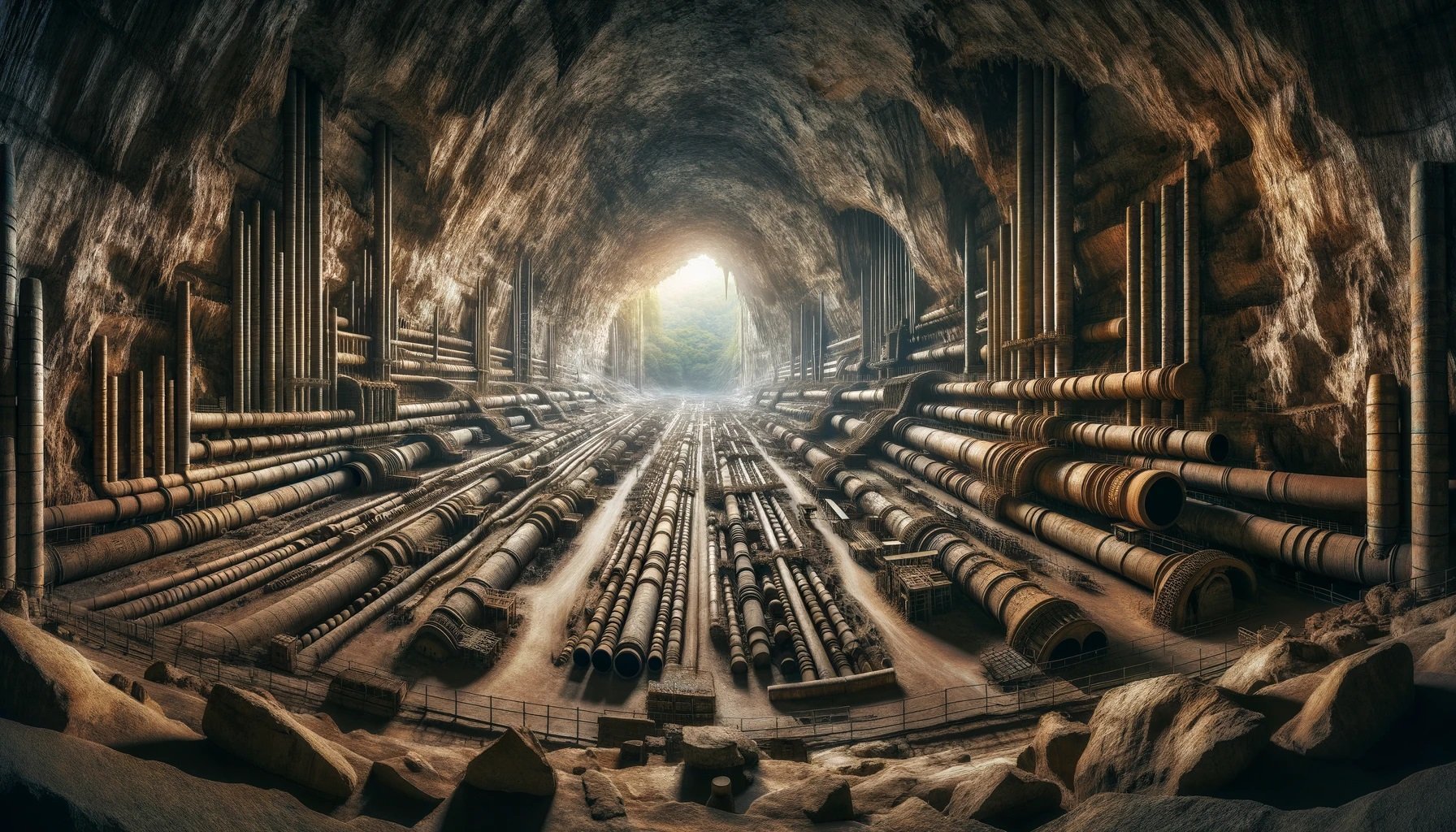
Jack: But it's. It was there, which was an interesting idea to just that they also included this. Now, sonar scans have confirmed this alongside, detecting numerous thinner structures deeper than the canals themselves, and the waterways that scatter in every direction beneath the city. So there's the canals on the surface of the city. And then scans into this through the surface get you to what seems to be smaller structures going in every possible direction, which would suggest localized distribution of water to all structures within the city.

Cristina: That is crazy. That's crazy. Advanced.

Jack: Crazy advanced. Way more advanced than we would think for something 9,000 BC, which is 11,000 years ago.

Cristina: Whoa. How.

Jack: Crazy. So those are likely thin pipes underneath the canals which are delivered in the water. Now, reservoirs are said to be in the city. They're mentioned in all the texts that the city had large reservoirs ensuring a stable water supply, which would indicate advanced hydraulic engineering as well, in order to distribute it. Now, sonar scans can't actually confirm this, although large anomalous shaped gaps within random parts of the city suggest these might have been reservoir. They're just weird gaps on the surface and structures are built around them, and they're not of any specific shape, but they're just holes.

Cristina: So the best guess.

Jack: The best guess would be that those would have been the reservoir. If so, the city might have been selected specifically because of the reservoirs. So they chose this location to build the city because they had had places where they could naturally collect clean water.

Cristina: Nice.

Jack: Now we get into something a little more interesting. The flood prevention systems. This is going to come in very handy later.

Cristina: What?

Jack: Yeah. Now, flood prevention systems are described as protecting Dwarka from floods, suggesting an early form of flood defense, or levees. Right. Scans show some distance far from the city, like away from the city walls themselves. Deeper down, thicker than the city walls. A second set of shorter perimeter walls with connecting canals and unknown structures surrounding them likely Water pumps to drain the water out of the city.

Cristina: That's crazy. What happened.

Jack: This also suggests the possibility of flooding being a real issue they faced. So they built ways to counteract it.

Cristina: But it wasn't enough for whatever happened to them.

Jack: You think that a flood took them out?

Cristina: I don't know. It's hard to imagine what happened to them if they were already prepared based.

Jack: On all the technology we're talking about. Flooding is not what took them out. They have everything in measure. You know, the colossal size of the flood. That would have to catch them off guard with this level of technology.

Cristina: Yeah.

Jack: And even then, they're ready to. If their structures are as strong and hard as they claim. The floods weren't gonna take them out. The floods weren't gonna remove them in any manner, shape, or form, so nothing was gonna happen. You know, go to the top of your buildings, and we'll drain the city.

Cristina: But something happened to them.

Jack: Yeah, I'm gonna get to that.

Cristina: Okay.

Jack: Now, building materials. Here's where it gets kind of iffy and hard to believe. Golden towers is a claim. Within the texts. Oh, palaces with golden towers were mentioned, possibly indicating advanced metallurgy and material strengthening techniques, which we can find the materials again, but we can't prove what the structures are made out of. It simply can't be proven, and it kind of exists in the text almost exclusively. Acquired materials from archaeological dives does in fact suggest dense reinforced gold. But this is actually. When it comes to gold in particular, it's kind of easy to do this with a lot of primitive techniques. We don't need particularly advanced anything. If we can create heat enough to melt other metals and mix them with. With the gold, that would dodge the need for any kind of advance, anything. Enough heat. You could just throw iron into the gold. You'll dilute the gold a little, but it'll still be gold. Yeah, and it'll be stronger. So it's not the. You don't need rocket science. Now the question is, what kind of reinforcement? None of the ones we found are particularly astounding when it comes to gold. There are many other materials that are astounding that probably shouldn't have existed at that point, but the gold wasn't one of them. So assuming these towers were made of gold. Well, you didn't do anything too impressive. And also, what the h*** would even be the benefit?

Cristina: Yes, you know, this is pretty.

Jack: Yes, it's pretty. But on the flip side, if you're so advanced, then you leave the realm of danger, especially with your walls. Being so defensive. And you land that. Why not make things look beautiful?

Cristina: Put a tower.

Jack: Why not?

Cristina: I guess you're not afraid of your neighbors, but then you have a. I don't know. Well, you're the most advanced as far as you know. As far as you know? Yeah.

Jack: Like, what do you. A couple of people with some sticks and rocks are gonna come and take your metal golden building. How?

Cristina: Yeah.

Jack: Additional materials include crystals and precious stones. Gemstones adorn buildings, which could indicate knowledge of decorative stone working. And again, more reinforced materials. Although can't be proven purely within the texts. No amount of sonar or archaeological dive.

Cristina: Has proven this, so they haven't found any of that.

Jack: Well, we can't prove that the buildings are made with gemstones. Yeah, we'd have to go to that level of depth underneath the ground and look at the building. We'd have to excavate the whole city out of under the water. Under the water's dirt. Oh, we'd have to pull the city out of under the water's dirt in order to look at the buildings. The problem is the city sank and crap fell over the city. The city is not just underwater. It's under dirt. We can't look at the city.

Cristina: Oh, okay.

Jack: That's why scams are so important. But because of this, we can't tell what the decorations look like, what metals are made out of. When we're doing dives, we're diving and reaching the bottom and touching dirt on top of the city, and that's where we're finding the materials we locate. We would have to drill into the dirt to reach the buildings underneath us. Now, again, no amount of archaeological diving or sonar scans could prove that the buildings are decorated with gemstones. We can find the gemstones.

Cristina: Okay.

Jack: We don't know what the buildings have on them, though, so only really excavating the city would prove this. Now, durable foundation. Coastal buildings suggest strong foundations, you know, to resist the sea's impact, in the case of storms, to resist flooding and all this kind of crap. So it would require innovative underwater construction techniques if you're on the coast. And the fact that they had walls for flooding proves that water was a problem. Sonar does confirm that below the city, there are additional structures almost always tied directly to buildings and canals.

Cristina: Okay, that's more water protection.

Jack: More water protection. This is assuring the buildings themselves aren't gonna have their foundation erode and fall. So they didn't just build up, they built down.

Cristina: That's pretty advanced. Oh, my God.

Jack: Pretty advanced and pretty deep down. If you're trying to stop a building from tilting or something, which would suggest, you know, additional reinforcement to withstand in a case of a flood overcoming the city walls. Impressive. Additionally, this. This leans into some really more advanced engineering. There are mentions within the text of earthquake resistant structures.

Cristina: Earthquake as well.

Jack: Yeah. So Texan implies that structures could survive natural disasters of all sorts, including seismic resistant architecture to withstand earthquakes and strong winds. Swaying buildings. How the h*** are they hard metals and swaying?

Cristina: They can tell that the swaying from the scans as well.

Jack: This is text.

Cristina: Oh, that's the text. Okay. That's crazy. That's crazy though.

Jack: Yeah. They can't tell that they can sway. Nothing can sway underneath. Tons and tons and tons and tons and tons of dirt.

Cristina: Dirt and water. That's crazy.

Jack: Yeah.

Cristina: Okay. Whoa.

Jack: But if this is the case, then it would suggest layered construction. So that means beams on top of beams on top of beams that aren't a singular beam so that they can move out of each other's place and instead of a giant wind, snap the thing. But also, if you have a giant metal building, no amount of wind is gonna f****** do anything to that.

Cristina: So you think the text is wrong?

Jack: Well, no, I'm sure they had different kinds of structures.

Cristina: Overall, I guess it's all pretty advanced. Whether it's swaying or not swaying. Like it's. It's kind of crazy.

Jack: Yeah, it's. It does definitely hint to at least our level of technology. Every. Minus giant metal buildings. We do not have the resources. If they did, how. Where the h*** did you acquire this to make entire towers. Skyscrapers that are one solid block. How the f*** would you have done it? The only way would have been to melt steel all the way up there onto the existing steel framework and keep doing that progressively up to make it one giant chunk. Weird. But other than that, you had buildings that were composed of multiple pieces to allow swaying. An earthquake is not gonna shatter a giant steel building. No amount of wind is even gonna push that slightly. But there's no way all their buildings were like that. Those had to be special buildings.

Cristina: Yes.

Jack: You know, you're burning a lot of resources. Yeah. You're destroy you. You. You're wasting material just to make one of those. So you would need all kinds of buildings in order to have a city.

Cristina: Unless they're also known for having mines nearby as well or something.

Jack: I'm sure most of this was mines. And there's no amount of mine. A single mining operation with hundreds of mines would get you one building. Maybe.

Cristina: Maybe. Okay.

Jack: Skyscrapers. Nah, it would get you one, dude.

Cristina: But they described having a tower.

Jack: At least many towers. Oh, many towers and many towers made of different materials, but many of them were solid, which is like how. How the h***. Oh, okay, so you used everything you had and there was nothing left?

Cristina: Everything and more. They were seven. Trading with a bunch of people too.

Jack: Yes. They must have been trained. With this level of technology, it's easy to believe that they were traveling great distances with some and delivering things to themselves.

Cristina: That's the only way. That's crazy.

Jack: Now, the city also had public spaces and temples. This is all mentioned within the text. And a lot of this could actually be seen on scans. Temples were described as aligned with celestial bodies, indicating knowledge of astronomy and its incorporation into building orientation. Now, although whether the structures detected are in fact buildings or monuments of sorts is unclear, sonar scans do confirm absolute alignment of a large portion of structures within the city with celestial bodies.

Cristina: And that's not just random?

Jack: That's not random. That had to be super intentional. Now this hints to a couple of things. This does hint to complicated astronomical knowledge. And? And some texts go as far as suggesting the awareness of objects deeper into our star system and even some outside of it. Which would require a minimum of interplanetary traveling technology.

Cristina: No, no.

Jack: A minimum. Some things today we could have never seen without being at the edge of our own star system.

Cristina: How's that powerful?

Jack: And they have knowledge of those things that we have only recently, within the last hundred years, come across.

Cristina: That one's hard to imagine.

Jack: It's in the text. That one we can't even deny. It's in the within. Old texts, they mention things we have only recently discovered.

Cristina: Oh, okay.

Jack: What things we have just stumbled upon in the last hundred years? They had 9,000 BCE they knew about. At least they knew about.

Cristina: How is that even possible?

Jack: They got structures aligned with crap we didn't know existed in our own star system, in the belts and s***. They got Planet Xmax mapped out somewhere. It's like get the f*** out of here. How?

Cristina: That's ridiculous.

Jack: You knew about some s*** we just theore still theorizing about. That's crazy. As for the public areas and the markets, Dwarka had public squares for gathering and markets, which implies well designed public spaces for trade and community activities. Text also mentioned trade with other like minded civilizations from both near and far.

Cristina: Like minded?

Jack: Yes. That doesn't mean that they were equally technologically advanced, but that they were at least friendly.

Cristina: Yeah.

Jack: Now it does claim that there were a few trades with rivals that they had in Peace treaties.

Cristina: But they don't mention who these rivals are.

Jack: They don't mention who these rivals are specifically. At least not as far as me writing those notes. Weirdly enough, they had like public polling areas in their texts as well. Pooling pool pools, public pools. People go swimming.

Cristina: Okay.

Jack: Without it having to be the ocean.

Cristina: Yeah.

Jack: Different from their reservoirs that they kept clean.

Cristina: Yeah. They have mad water stuff.

Jack: Yes. The city very connected to water.

Cristina: Yeah, that's pretty cool.

Jack: The outside all surrounded by water, at least in one direction within the city. Natural collections of water, natural water distribution. Water canals that travel on top of having a bunch of locations just to go in water that doesn't taint their drinking water.

Cristina: That is crazy. That's so advanced and so cool to imagine.

Jack: So sophisticated. Yeah, it sounds so elegant. And then you consider everything has water. Everything is made. Marble and gold and shiny metals and gemstones on everything. And then you consider current day designs in India that definitely took inspiration from structures they've seen in the past. And you consider all of their walkways are white, all of the buildings are gold, silver with green, red and yellow stones on them. And the natural water resources everywhere. Beautiful city. Had to be such an astounding thing to look at.

Cristina: Yes.

Jack: So mind boggling now. Now we start getting into something a little more interesting. Transport infrastructure as we've described. They had roads and avenues. Some of them were pretty broad roads nevertheless, which allowed for easy travel. Reflecting on well planned transport networks within city, they also had harbors and docks. Because of their position as a cold SO city. Dwarka's advanced harbors and docks worked for ship docking, pointing to a lot of maritime infrastructure and integration. But it also suggested many, because of the size of the coast and the amount of infrastructure along the coast, that there were not only their ships taking off, but many, many, many receiving ports. Okay, so there was a lot of ocean trade.

Cristina: Yes, there is a lot of trade. That must be how they got material. If this whole, if the text is.

Jack: Correct now one of the only groups of people I could think about that they would trade. That would be. This level of technology would eventually be the Mayans. How would you. Who else are you trading with that could cross the ocean in such vast repetition? They would need equal technology or somewhere near you at least. And that's, you know, they can get from Mexico to travel the water to India. So there's likely a trade line in between those two points.

Cristina: Like the way they made up.

Jack: No, just for them to get to. From all the way in Mexico to the ports over here in India. And then from India, they were probably getting easily to ports in Maya.

Cristina: Yes. Maya has mad material, right?

Jack: They had man material. Yes.

Cristina: Yes.

Jack: But it's not even about the material. It's just about the fact that they, at some point, could have easily been trading with these people. So there's definitely connections. What's weird is the lack of mention. That's where it gets iffy.

Cristina: Who they were in contact with. Who are these friendlier foes?

Jack: No. Why didn't the Mayans mention these people? Why didn't anybody mention these people? Why do we have to look specifically at India? They clearly were trading with people.

Cristina: There has to be. Maybe they mentioned them as something else. Like the people. The sea people was the same way. Like there was a different word that we had to look into that was.

Jack: Oh, yeah, we found the Aletians much later.

Cristina: Yeah. They always mentioned them, but we just. It wasn't the right words that we were looking.

Jack: Yes. So it's completely possible that they were being described under a different term. Yes, I believe maybe among some of the texts that looked arbitrary and random to us. Again, perspective matters. A lot of the time we get informed, go back looking, we're like, oh.

Cristina: So we gotta do that. Okay.

Jack: I mean, we're gonna look at Maya anyways, because we already know that they had cities developed to transport people to the shadow realm and bring people from the shadow realm to live amongst.

Cristina: That's pretty crazy discovery. Yes.

Jack: So we still have. There's a lot in the text that was just not obvious.

Cristina: Yeah. Yeah, we got that way later on from anything else. That's the most recent thing.

Jack: Again, we already knew that they had portals, but we had no clue that this was just right in front of our face.

Cristina: Yeah.

Jack: So it's possible they did mention trade with these individuals. But interesting, though.

Cristina: Yes.

Jack: They also had some bridges over canals, which is just interesting. Some. A few of the canals had breaks over them, thin breaks, which, you know, suggested easy mobility for vehicles and things over it.

Cristina: And both like.

Jack: Yes, very Venice, Italy.

Cristina: Yes.

Jack: Now, diving into some of their defensive situations here. We know the city walls were heftily fortified and tall, which was obviously for protection of the city, showcasing defensive architecture to withstand attacks. These are the inner walls. It had nothing to do with the flood walls.

Cristina: Okay.

Jack: The gates were fortified. Each entrance to the city was fortified, further enhancing their defensive capabilities. Watchtowers mentioned in text. And at each meeting point of the gaps leading to the gates, there are taller structures to either side.

Cristina: Yes.

Jack: Of where the gate would be. So where the gap exists to both sides of the gap in the wall.

Cristina: Some type of tower.

Jack: Some type of taller structure. That had to be a tower. Could have been decorative design. But presumably those are the towers they're talking about. Those are the towers are talking about. Which would help for ensuring surveillance, security and defense. I'm sure they were shooting right out of there. Something was a problem. And naval fortification, seaside defenses included potential underwater barriers, which we can see with the combination. This is a weird one. The flood walls that existed in full perimeter towards the water side, towards the coast were connected. This is the only part where they're connected to the wall surrounding the city. So there's two layer of walls. The smaller outer wall, which is for flooding, and the taller inner wall, which is for defense. Towards the coast. Those walls are connected with different beams and connect. It's a full different interesting structure that creates one giant. If we get attacked from the water, those people are more f***** than anybody could ever be f*****.

Cristina: They have protection for that.

Jack: That is a protection I'm talking about. The protection is that.

Cristina: Yes.

Jack: If somebody attacked from the water, they have their defensive wall and their flood wall as one giant series of pillars. And it looked like they just had thousands at this point of watchtowers, all aiming towards the water.

Cristina: That is kind of crazy. But I mean, you have to do something like that. Yeah, I guess if you're that advanced and that's your weakest spot.

Jack: Yes. So this was obviously for. For naval protection. There must have been problems. Now diving purely into texts and what they suggest. Their technologies according just the text go the extra mile. This gives us a better hint as to what we're talking about here. Keep in mind we can prove most of what we've talked about. So we can assume the texts aren't bullshitting because we can prove almost everything. So when we dive into the technologies, we have to question. Holy s***. Did you just start bullshitting? But it's tied in equal parts with all the stuff we can prove now. They had advanced energy systems. So free clean energy harness from natural sources, which included water. That makes perfect sense.

Cristina: Yes.

Jack: Solar. Okay. Weirdly enough, cosmic. What does that mean the Egyptians technology where they go into space and transport crazy amounts of energy.

Cristina: Mm.

Jack: It suggests they also had that they were maybe not as deep into space as the Egyptians were. All the way in the great Void. Literally creating an infinite amount of Dyson spheres to the point that we look up there and we just see darkness. But likely taking energy straight from not just solar, but rather sending things into the sun that weren't getting destroyed and bringing back mass amounts of plasmic energy. That's leaps and bounds of tech.

Cristina: Yes.

Jack: Just to accomplish something to gather energy like that. We are talking way more advanced than any other civilization without reaching the Egyptians and the Mayans. Definitely at least comparable to the Greek.

Cristina: Okay.

Jack: They're at least tied with the Greek.

Cristina: The Greeks are the ones with the ones not once I forgot there was like pillars that helped gather energy. I can't remember if that was Greek or Egyptian.

Jack: That was Egyptian.

Cristina: Oh, okay.

Jack: Egyptians had mastered energy. Okay, so that was the. Are you talking about. I forget what the obelisks.

Cristina: Yes. Did they have something like that as.

Jack: Well that there's no mention of it here.

Cristina: Oh, okay.

Jack: But they definitely. I'm assuming they must have had something comparable or something slightly more primitive. Again nobody's with the Egyptians when it came to energy.

Cristina: But plasma energy you said what?

Jack: That is still way more primitive than going across all of space and creating Dyson sphere that enclose multiple stars.

Cristina: Yes.

Jack: At no point is this the mention of a Dyson sphere. At most they're sending something into a star to capture energy. A Dyson sphere would be so far ahead of sending something into a star that like this is primitive by comparison.

Cristina: Yeah. Okay.

Jack: Now it's still way more advanced than any city that exists today. This will s*** on any technology we have ever seen in person. Any technology anyone alive today has ever witnessed personally. This is way ahead of that. Still miles behind the Egyptians and the Egyptians were miles behind the Alicians, but still overpowered that is.

Cristina: Whoa.

Jack: Now here we get somewhere that we've not seen mentioned anywhere else. Flying vehicles referred to as vimanas. Vimanas. I don't know how I would say that. V I M A N a S Anti gravity and energy based flying machines capable of both local transportation and possibly inter regional and interstellar travel. Now we're elevating to getting closer to the Egyptians. Probably farther away from the Mayans. But we still don't have a true perspective on the Mayans because when we think about what we're talking about here, the Mayans technology would look closer to magic for us. While the Egyptians technology looks closer to our traditional sciences.

Cristina: Oh, science, yes.

Jack: So the Mayans are masters of crossing to the other side, while the Egyptians are masters of controlling things on this side. Two vastly different types of technology which as we found out with the Shadow. The Shadow gods. The crossing of technology is something important. Mixing of these two worlds matters. And there's zero mention of these Individuals having any connection to the Shadow realm.

Cristina: Okay.

Jack: To this moment, there's not. And I guarantee you through the entirety of what we're going to talk about, there's not one mention. They seem very, very, very exaggeratedly on the side of earthrealm, but technology wise.

Cristina: Interesting.

Jack: While the Egyptians had shadow people and Alicians had shadow people, and the Mayans had shadow people, and the Greek had shadow people.

Cristina: No shadow people. I wonder if there's any mention of Maga. That usually helps.

Jack: I don't know who built the city. It's unclear who was leading, which people were involved or anything.

Cristina: No leaders mentioned. Whoa.

Jack: No one specific. Just breaking down the city specifically. Maybe at some point. I'll try to see if we can find names or something. But as far as we know, there's nothing. No. None of this technology at least connects to the Shadow Realm or even Alphan. Just straight up tech. Straight up Earth Realm tech.

Cristina: Whoa.

Jack: Advanced. They're specialists. Clearly specialists in Earth Realm.

Cristina: No help.

Jack: Don't know.

Cristina: As far as we can tell. That's crazy.

Jack: We don't know. We have no reference point to tell whether they did or did not. But we just know all of it seems to be earthrealm based. If they had people of Val Fame and people of the Shadow realm involved, even those individuals were entirely focused on earthrealm tech, because that's all we're saying. And I guess based on the difference of technologies between Maya and Egypt, we can assume that the Mayan and Egypt were equal just in totally different technologies. Which would mean that these individuals are catching up to the Egyptians and the Mayans. Based on the quality and complexity of.

Cristina: Their technologies, they gotta be equal. I don't know. They sound ridiculous.

Jack: Yeah. And we can assume that the Greek were also pretty up there. The Greek, the Mayan, the Egyptian, the Elysians, and now the people from India, from Dwarka, at least. Very interesting flying vehicles. We've seen this nowhere else. But if you got portals, you don't need to fly anywhere. You can just pop up places. So none of those individuals needed them? Them. These people don't seem to have portals.

Cristina: But what does a flying vehicle mean? Like, what is it made out of?

Jack: It's a machine. I don't know.

Cristina: It's a machine. It's crazy. I don't know. It's just hard to imagine.

Jack: Imagine a car.

Cristina: But would it even look like a car? Would it look like.

Jack: No, it would look like their version of car. It looked like their ancient primitive.

Cristina: Not primitive, but ancient descriptions of what this Flying vehicle looks like.

Jack: No.

Cristina: Wow.

Jack: They just what it could do. It was capable of vertical takeoff. It could travel interstellarly. Which is nuts as.

Cristina: Yeah.

Jack: But we know there are people who could instantaneously cross the universe. So that's still primitive as compared to that technology. They did not have that sort of Egyptian teleportation tech that existed which probably wasn't even Egyptian to begin with. That was probably given to them by the Mayans who were the masters of creating portals and bridging gaps like that. Possibly it existed in the pyramids and the pyramids existed in both locations.

Jack: You know, that's the kind of thing that is like. Well, if you guys are sharing tech then that. That one probably came from this group of people.

Cristina: Yes, yes.

Jack: Knowing what they specialize in. They had advanced shipbuilding and maritime technology. So sophisticated ships, navigational tools, water defense ships, submarines for protection, trade and possibly automated. Nevertheless. So like no people are in there?

Cristina: No.

Jack: What they have AI navigating these ships.

Cristina: That's crazy.

Jack: This is in their text. Like this should just worked on its own. But again this is where we have to be like d***, bro. So scientists have to scientists looking through these ancient texts. I'd be like oh no. This is. This is a 100% just myth at this point. But it's like come on bro, we could do it. Why do we have to be the pinnacle always?

Cristina: I don't know.

Jack: It's weird. Weaponry and defense systems Here we dive into weirder things. Okay. We have interstellar traveling. That's right. We have automation. So AI. So some of that leans into. When you think about what it would require. Right. To interstellar travel you need mass amounts of energy. But if you're going straight into the sun and acquiring energy, you have mass amounts of energy. High energy weapons that include laser rifles.

Cristina: Oh my God.

Jack: Laser missile technology. Precision destruction capable of energy dispersion higher than current day nuclear weaponry.

Cristina: How is.

Jack: How are what and defense shield and barriers probably energy powered.

Cristina: No way.

Jack: So they can in. Now here is where it becomes interesting. The outer wall is way shorter and thicker. The inner wall is taller and thinner. The side of the wall connecting facing the water connects to both walls connect. If you were to draw this out, you could easily flick a switch and a dome would farm over with support. Weird. The structure without having to read any of this bullshit would tell you you could easily form a dome around it. How out of all the s*** that's weirdly the closest one to being proven. A weird energy shield.

Cristina: An energy shield. How are they doing this, this is way too advanced. Now I'm questioning the city. Maybe they were gold, I don't know.

Jack: Yeah. As we get into their tech, it starts to kind of go into the deep end.

Cristina: That sounds ridiculous. Maybe they're mining in the sky. Like why do they have to trade?

Jack: I mean, once we establish that they could do interstellar travel and they could acquire energy from a star.

Cristina: Yes.

Jack: Acquiring pure materials from space becomes easy.

Cristina: Yeah.

Jack: So you don't even have to go that far. You could just go to the first belt, start mining.

Cristina: That ridiculous. Okay.

Jack: The fact that they would have had to be able to exit our star system at all means the outer belt. Easy. You don't have to leave our star to get there. You just stay within our own solar system and you could mine the outer belt infinitely for all of infinity and.

Cristina: Have just infinite resources with this crazy advanced technology. They were letting people into their city. That's crazy.

Jack: Totally primitive people. But these people are going to come in. Nobody's going to hurt anybody. How I know he's going to come in for trade and whatever. The cities surrounding this location that are around today. And their historical records do suggest that although they weren't advanced, they had access to already existing advanced materials that they didn't have the ability to make. So they were going to places to shop for things they couldn't replicate. And these people weren't afraid to give to them because how the f*** are they gonna learn how to do it?

Cristina: They're not.

Jack: They could just come buy it from us and they'll always have to come buy it from us. For all of infinity they'll have to come buy it from us. Because they would never learn with their primitive s*** how to replicate it.

Cristina: That's crazy. There's no way they were like doing that with their ships or that.

Jack: No way.

Cristina: They were not using their technology.

Jack: They were just letting people come in and take the things that wouldn't be able to be used against them.

Cristina: Insane, insane technology.

Jack: Now when we revisit the automation and artificial intelligence, it makes way more sense that they definitely had access to all of these things. And it suggests that their automated systems were used to manage everything from city infrastructure to trade and defense. So AI could have been integrated to everything. What they had Internet?

Cristina: Yes.

Jack: They had a stock market, likely. And that this would choose prices that made sense and allowed every outsiders to come and trade. Allowed civilized equally powerful civilizations to come and trade and primitive civilizations to come and trade in a fair way that it's all calculated and you don't have to.

Cristina: I have to believe that the Mayans and the Egyptians had this type of tech as well.

Jack: Well, we know they did. We know they had AI and we know that at least the Mayans did, which suggested the Egyptians and the Elysians did, since they were always sharing. The minds at least had the ability to store all this data.

Cristina: Yes.

Jack: Which required sorting through it, which would require something with the ability and capacity to run through it.

Cristina: So they all had some type form of Internet and AI.

Jack: Yep. Interesting. And the Internet would probably suggest how the libraries made it to these separate locations. The Sphinx and El Castillo.

Cristina: It makes sense.

Jack: They just needed a hard copy in case of s***. Which did happen. So the hard copy did pay off.

Cristina: Yeah.

Jack: Interesting.

Cristina: Interesting. It's interesting that like Jesus knew about the technology too. I remember we learned that he just stuck to writing paper because it was more trustworthy than.

Jack: Yes.

Cristina: Using anything else.

Jack: Yes, yes, yes.

Cristina: He.

Jack: He did not trust. Using whatever current. And the fact it was. It sounded stupid at the time. Oh, he. And he found that writing was more effective at keeping secrets. And it's like, as compared to what?

Cristina: Dude, it has to be this.

Jack: It had to be this. He was trying to evade the modern mode of communication. Right? Now if we were trying to evade the government, we would do it by sending handwritten letters that would look like any normal male. Is how you would evade the technologies that are being surveilled by the governments of the world. That's exactly what he was doing.

Cristina: Yes.

Jack: Crazy Jesus was actively coming up. He was a rebel. And like, to the realest, most exaggerated. He was the rebel of rebels.

Cristina: Yes.

Jack: Yeah. He was the golden standard. Medical technologies. They had advanced health care. And here's where it gets a little weird. Genetic engineering capable. Capable of extending life, curing diseases and healing injuries instantaneously.

Cristina: How. I mean, I understand. But like all of them, they always. This always ends up. They all seem the same.

Jack: Yes.

Cristina: Once they reach a certain.

Jack: And it looks like when you think about it. Right. Who is super overpowered? All first world countries are first world countries and they're equally first world countries to some degree. Yes. Some are slightly better, some are slightly worse. But they're all First World countries.

Cristina: These ancient first world countries are all.

Jack: Yep.

Cristina: Like that.

Jack: They're all roughly equal. And yes, there's the one mega super like Russia, United States equivalent, which was the Alicians. Oh, we're all scared of you.

Cristina: Yeah, but. But everyone has their unique.

Jack: Yeah, but it's more or less there. Everybody's kind of on the cusp of the same thing. It's just again, we can think. The United States. Oh, they're strapped with nukes. There's the most dangero. I was like, all right, those were the Alicians. They had the most nukes. We'll just call it that. They had the most nukes.

Cristina: Yeah.

Jack: And so people wanted to trade with them the most so that they're on their good graces, like the United States. And people wanted to, you know, always be on their happy side. The Elysians all feared to the point that if you're gonna talk s***, you're gonna talk s*** secretly, you're gonna come up with a different word. Sea people. The sea people. F*** them.

Cristina: F*** the sea people.

Jack: I hate them all. The Alicia.

Cristina: There has to be word. I can't wait to find what these people are called. Really or not really. We know their names, but what other people were calling them.

Jack: What other people calling them and what they were calling other people.

Cristina: Oh, okay, yeah.

Jack: Now, computing. How do we get to AI? Well, they. According to the texts, they don't use the following terms. This is what it would translate to if we were to assume what it meant, which is the ability to compute infinite information almost instantaneously. They must have had quantum computing. They must have had quantum computing. It's the only way for any of this we are talking about to be.

Cristina: Possible once we get to sun power. Like, okay, okay, you must, you must.

Jack: How are you building anyway? No, it's not a stretch. In fact, quantum computing would be primitive comparatively. You must have had past the. Out of that threshold long ago before.

Cristina: You're taking energy from this within the sun.

Jack: Like, okay, you need something that can process making a material that won't melt. Like how?

Cristina: Like how exactly? Yes.

Jack: It needs to withstand the pressure and heat of the sun and then somehow have thrust enough to pull itself out from that gravity.

Cristina: That technology is the true advanced technology. Like, what is that?

Jack: Yes, yes, but also, that's still way primitive than a Dyson sphere. Yes, because the Dyson sphere that isn't collapsing and falling into the star, you must have figured something out. An instantaneous transportation. Crazy. These was leaps and bounds so far ahead of what could be understood. But yeah, definitely quantum computing. They also had environmental control systems, so controlling the weather, obviously, and environmental conditions to manage heat flooding, even manipulating the climate in general to have the most ideal climate at all times. Now we get to scaling, right? Now we get to scaling. Yes, within text alone. There's no way to conclude or prove this any other f****** way than reading it. One Part of this very easy science wise and terminology wise, we can compare this to other civilizations, which is dimensional physics. Opening and closing portals. Now we've gotten to portals. They have the ability to open and close portals now it does not mention at any moment crossing a portal to another realm. It sort of looks like folding space onto itself. So warp technology that allows them to cross huge gaps of space in short time.

Cristina: That's how they're traveling to the sun.

Jack: That's how they're traveling to the sun. And probably entering the sun effortlessly. Maybe it's not even that kind of tech. Maybe it's not something going into the sun in the same way we think maybe they're folding the sun in a way that allows them to put something in there, extract energy and unfold it and be safe.

Cristina: That is ridiculous.

Jack: Weird.

Cristina: That is so, I guess, possible.

Jack: Yep.

Cristina: So if you have that tech now.

Jack: We can compare that to other civilizations and be like, yeah, okay, sure, whatever. The other side that is mentioned in sync with this, we don't necessarily have equal, which is time manipulation.

Cristina: Whaaat?

Jack: Potentially mastery over time dilation.

Cristina: What? What does that mean? How?

Jack: Well, the text suggests that they can manipulate time.

Cristina: And what?

Jack: I don't know, it doesn't specify. Just talks about that being among their technological capabilities.

Cristina: That's kind of insane.

Jack: Yeah, that puts them way up there, right next to the Aleutians. And based on how long ago this was made, maybe.

Cristina: But no one can wrestle time. I mean, besides the necromancers.

Jack: The necromancers, exactly. So we know of people who can. And if the Elysians had access to the necromancers without ever explicitly mentioning time manipulation, they had access to it, they just didn't mention it. But the necromancers did. And the necromancers could easily, almost effortlessly, and it wasn't a problem, it was an afterthought. And the Elysians had access to the necromancer.

Cristina: Yes.

Jack: So they had access to time. We just hadn't stumbled upon this before.

Cristina: So these people possibly did the same. Because without a necromancer.

Jack: Oh, right. How the f*** would you do it? Without a necromancer?

Cristina: Yeah.

Jack: So they must have had a necromancer. But also, we know Jesus was fond of India.

Cristina: Yes. And we also know what's his name?

Jack: Hermes.

Cristina: Hermes likes to travel.

Jack: Yes. And Hermes was also fond of India.

Cristina: Oh crap.

Jack: And Hermes, although close to the Elysians, was a neutral party.

Cristina: Yes. Yes. So.

Jack: The homie, both the homies might have. They might have Traveled here.

Cristina: That's crazy.

Jack: Both the homies might have traveled and given tech or helped with developing tech. Teaching them, okay, you can't do what we do, but maybe we can make some technology that can, man.

Cristina: But, man, that's. That's too much. That's too much. That's more. I don't know. Time tech is just crazier than any type of tech there is.

Jack: Yes. I think it violates anybody f****** with you.

Cristina: Yeah. And yet they were f***** with. At least they had to be. Like.

Jack: Now. The question is, why isn't the city standing today?

Cristina: That is a good question. I want to know. Death friendly. I have guesses.

Jack: Go for it.

Cristina: I don't know. The Elysians didn't like what they were doing. They had to have enemies. Of course.

Jack: Other than the Elysians, what enemy could they possibly have that could do anything?

Cristina: If they weren't friends with the Shadow Realm people, maybe the Shadow Realm people didn't like them.

Jack: Who's gonna have the tech to f*** with us? Who in the Shadow Realm could possibly. We're talking. These people seem kind of ridiculous. Ridiculous.

Cristina: But they were taken down. Like, that's pretty. Like, whatever did do this, it's kind of crazy, whatever it is. It's very scary.

Jack: All right, so the likely possibility is obviously war and some kind of conflict. Now, trade rivalries. Dwarka's role as a major port city likely placed it at the center of competition for trade routes with other civilizations, which may have made it a target for civilizations seeking dominance over those Earths. In a geopolitical context, its strategic location and advanced infrastructure would make it a likely target for power struggles or military conflicts. But nobody surrounding them could have had the ability to f*** with them in any magnitude imaginable.

Cristina: So they could have taken themselves out.

Jack: Mentions of civilizations with equal or superior military power were perceived with the threat of invasion. This is mentioned within.

Cristina: Okay, so then someone else could have.

Jack: They mentioned equals. They were unclear about who those equals were, but there were people who they did fear.

Cristina: Okay.

Jack: Leaders of Dwarka had mentioned evacuation as a possibility to a large conflict with the rivals.

Cristina: That's how scary their rival was. They're like, let's just abandon everything.

Jack: Abandon.

Cristina: The most man city we have ever heard of was like, we just gotta get out. Yep, there's no solution here with this enemy.

Jack: Yep, yep, yep, yep, yep.

Cristina: What is that? Scary from what? Everything you've mentioned. What could possibly be more scarier than that?

Jack: Now, this is where the environmental controls and those really advanced water pumps kick in preemptive sinking is loosely. In different texts. Not one piece says explicitly. But some will mention flooding the city, some will mention sinking the city. Some will mention creating storms to protect the city. Some mentioned evacuation of the city. All of that is one scenario. So the water management systems that the city had were quite advanced, as we know. They included the reservoirs. They included the canals and flood defense systems. This indicates that Dwarka could have easily controlled natural water flows. And it's possible that this was used to deliberately flood and sink the city, ensuring rivals wouldn't capture their technology. It was about.

Cristina: This was the runaway situation.

Jack: This was a runaway situation.

Cristina: What?

Jack: But this tells us something very, very, very, very interesting.

Cristina: This is the second time we saw something like this.

Jack: Yes, exactly. Now, it's not a matter of, oh, the Elysians blood. No, these people sank this before the Elysians did.

Cristina: The Alicians were scared of something. They ran.

Jack: These people were scared of something and they ran. They sank the thing trying to get rid of the potential of whatever other f****** s*** it was. And this is long before Jesus. Now, this was built around 9,000, but this city went down around 2,000 BCE.

Cristina: And when did the Elysians do it to their own city?

Jack: Year one, year one. Which would be 2,000 years after this.

Cristina: What is happening? What could be a threat like that?

Jack: What could be a threat that something as overpowered as Dwarka and Elysium.

Cristina: Like, they look like they got infinite amount of power.

Jack: Yeah.

Cristina: What is scarier than that?

Jack: Unstoppable forces of nature.

Cristina: God.

Jack: Tier. The Almost the highest level we can think of when it comes to the Kardashev scale. At least localized level 4. Without counting, you know, bending the literal fabric of space time in the universe. What the f*** could you be dealing with that these people also had the fear of something stronger and actively sank super ridiculously advanced technology trying to avoid it being captured by something stronger. Who could be the rivals? And who are these people who are still lurking 2000 years after this city sank and made the Elysians paranoid? So then the creation of Jesus was only trying to stop whatever the f*** that was.

Cristina: So you think there's something bigger than the Elysians? Okay, what? That is so crazy. What could possibly be this?

Jack: They needed Hermes and Jesus and it still wasn't enough to somehow deal with whatever this other thing is. Presumably these people are still also around somewhere so deep and hidden.

Cristina: I would think the. I guess the biggest option would be Mel.

Jack: I guess. But the weird problem is we can't get information on that.

Cristina: I know we can't, but, like, that's the biggest. Like, maybe she can delete things. I don't know. Maybe she could delete things from her program if we're just in her program.

Jack: Well, at this point, I'm not even sure if it's still a program. But, like, I don't. I don't know what any of this means anymore. And the fact that, like, who can f*** with these people? This is two different cities of the most advanced anything that has ever existed in all of. Anything that we have ever conceived that feared something more complicated. And even the they made at the very end was so overpowered that it would on the entire Jesus alone. Would. On the entire Elysian civilization and every bit of technology they've ever had. And still that wasn't enough.

Cristina: It's gotta be the fairies doing their thing. The fairies are so advanced and we never actually know what they're doing.

Jack: Yeah.

Cristina: And look, we just know they're safeguarding the program.

Jack: Yes.

Cristina: This would make so much sense.

Jack: Yeah. The. It looks like the. The elves fail when we get to Jesus.

Cristina: Yes. But maybe not.

Jack: Maybe not. Maybe not. Maybe successfully breaking apart the group or how. Making them abandon their level of progress.

Cristina: Yes. Like, that's pretty.

Jack: That's.

Cristina: That's wild. Yeah.

Jack: Yeah. They're forcing these individuals to control. Alt. Delete.

Cristina: Yes.

Jack: You know, they're just forcing them to delete their own.

Cristina: Yes. Because, like. Or you'll get deleted.

Jack: Yeah.

Cristina: You'll delete it. Or you get deleted.

Jack: Like something is going. It's you or it.

Cristina: Yeah.

Jack: And it's like. I don't know. Maybe.

Cristina: Yeah. That makes a lot of sense. Because it's just too advanced to imagine something. Like, what possibly could they fear besides, like, being wiped out?

Jack: Yeah. Yeah. I don't know. I don't know. It's too. It's. It's incomprehensible that there would be an issue.

Cristina: Mm.

Jack: So these people flooded their city.

Cristina: Mm.

Jack: Snapped it off the side, sank it.

Cristina: Into the ocean, and then covered it up.

Jack: Well, no time did that. They just f****** sent it into the ocean.

Cristina: Yeah.

Jack: And time buried it. But it's like, leave it f****** down. Let's get the h*** out of here. They vacuumed the whole b****. They evacuated everything and just dipped. Crazy. So records. The earliest records of the city date back to 574, which mentioned previous records that got washed away and things that disappeared over time, dating its sinking to 1500s BCE. Somewhere between 15 and 1900s BCE, so about 2000 years before the Elysian sank their city.

Cristina: Mm.

Jack: And this kind of ties them to the beginning of other civilizations like the Indus Valley civilizations and whatnot that would then settle within the regions. I know. It's f****** weird, man.

Cristina: I think we have some. We're getting a picture of something at least. What could possibly be going on?

Jack: This puts the Elysians equal to the city of Dwarka. So that's two different cities, not countries. These are cities. Elysium at the bottom of the Persian Gulf oasis and Dwarka at the edge of India. Two highly advanced civilizations that just were.

Cristina: Taken down by themselves like nothing else.

Jack: Yeah. They themselves took. Sank their everything. And the mines ran away, the Mayans ran away. Probably to the Shadow Realm. Originally, we thought, because it didn't look like there was no trail. There was no trail outward. Our conclusion was they went underground, but they didn't need a trail outward if they just left the f****** realm.

Cristina: Yeah.

Jack: Which would explain that. And the Egyptians were like, f*** Earth.

Cristina: Yeah.

Jack: There's a lot of evidence of that. They're just like, we made rockets. We made this, we made that. And dipped. F*** everything.

Cristina: No.

Jack: Something. But no, no, because. No, no, it's not. It's not the elves or. If it is, it's not. It can't be the system logic we applied to it before.

Cristina: Why?

Jack: Because the Elysians took as much tech as they could underground underwater, and the Mayan took a bunch of their tech too. We assumed underground, but likely to the Shadow Realm. And the Egyptians took their tech across the universe.

Cristina: Well, we don't have the proof of what tech they took. Like maybe it's safe tech that the fairies wouldn't be bothered by and they probably destroyed.

Jack: Take tech that allows you to cross the universe. You're talking quite advanced. You're talking the most advanced of the most advanced. Something that could withstand the pressure of the deepest part of the ocean, is the weight of Earth on top of you and it not collapsing. We're talking advance.

Cristina: So what's going on? I don't know. Interesting.

Jack: Minus the fact that we have no proof of the Greek running away. We don't actually know where those people might be at this moment. Minus that. That's four different examples, two of which are colossally overpowered. Way more overpowered than the other two, which are the Elysians and Dwarka.

Cristina: Destroyed their crap and ran away.

Jack: Yep.

Cristina: Weird.

Jack: So what is it that everybody was horrified of that was so colossal it was more important to dip everybody? Full mass evacuation. That's four full mass evacuations.

Cristina: What's that about? What's that about? I don't know. That's crazy.

Jack: Yep. So there you go.

Cristina: I wonder if we'll find out. But like, I hope we do. I doubt we will.

Jack: But like, slowly but surely, I guess it's just crazy. I don't even understand what could be this overpowered. But for all this data, anybody who's interested, all this is available online. All this is available in different series of books. I'll tell you the names of those books again. You can find the lost city of Dwarka. You could find marine archaeology of the Indian Ocean countries. You could find excavations of Dwarka. You could find the archaeology of Bet Dwarka. And you could find archaeological survey of India reports. All are heftily including all of this information. And you can go through it yourself, find which details matter. And all of this is, you know, you could cross reference it with other data that isn't within the books that are mentioned. You could find a lot of the original texts.

Cristina: That would be so insane. I just don't understand. It's ancient and advanced.

Jack: Just like the Elysians. Yeah. Yeah, just like the Elysians. That's crazy. And this is just one we're going to be going through. There are others.

Cristina: Whoa.

Jack: Yeah. So, yeah, if you guys want to talk to us about this, anything you find while looking at this, feel free.

Cristina: To see a connection that we're missing.

Jack: Yeah. Feel free to contact us on our socials at. Just convopod on X, on Facebook, on Instagram, on wherever the h*** you want to type. Just convo pod and we show up.

Cristina: Remember to subscribe, rate and review. Let's share.

Jack: And word of mouth is the most exaggerated thing on Earth. Share it so that we also get hunted down by whatever this crazy force is.

Cristina: What? And this has been the Rambling podcast. Take nothing personal and thanks for listening. Bye.

Jack: Sabbath.

Cristina: Good morning. The podcast is hosted by Christina Collazo and Jack Thomas, produced by Lynn Taylor and published by great dots.info art by Zero Lupo and logo by Seth McCallister with social media managed by Amber Black.
Rambling 262: Baigong Pipes

What do the 150,000 year old Baigong Pipes tell us about the technology of the time? Where do the pipes come from and where do they go? What civilization ultimately developed this? The duo dive deeper into the Baigong Pipes in their attempt to connect it back to the elusive Eloai who was known to be around in that period.

+Episode Details

Topics Discussed:

  • Ancient Technology
  • White Mountain
  • Strange Cave Systems
  • Lake Toson
  • Pipes to the West

Official Website - https://greythoughts.info/podcast

Twitter - https://twitter.com/JustConvoPod

Facebook - https://facebook.com/justconvopod

Instagram - https://instagram.com/justconvopod


+Transcript

Cristina: Warning. This program contains strong themes meant for a mature audience. Discretion is advised.

Jack: Going live in 5, 4.

Cristina: What does live mean?

Jack: Welcome to the Rambling Podcast. Hi, I'm your host, Jack.

Cristina: I am your host, Christina.

Jack: And this is the show where we ground humanity's most absurd and baffling ideas. As ideas go, when they're baffled, or I guess the ideas are baffled, they're baffling ideas. We are baffled by the ideas.

Cristina: I'm very baffled.

Jack: So last time on Dragon Ball Z, we were talking about technology, old technology, and we came across some interesting things. We found out that India pumps out magical weapons. We found out that Jesus was in China. Jesus was in China?

Cristina: I think that happened.

Jack: Yeah. Well, he passed through China.

Cristina: Oh, okay.

Jack: And he left behind the tech for a Maduga jigger.

Cristina: Tornado watcher.

Jack: No. Earthquake. Yeah.

Cristina: Some other thing.

Jack: And we found out. I guess that was it. I'm not really sure. I know that matters.

Cristina: How is that important to Jesus? So many questions.

Jack: You mentioned Jesus.

Cristina: No, that's.

Jack: What.

Cristina: What? The thing. The thing that he did.

Jack: Oh.

Cristina: What?

Jack: I don't know.

Cristina: So many questions.

Jack: Yeah, that's a weird. It's litter. Like, it couldn't be anybody else. It was definitely Jesus.

Cristina: But why?

Jack: But why? Like, bro. What. What a weird, random moment. He really just passing through, I guess. I was just working on some earthquake detection tech. Casual.

Cristina: Does China just have an earthquake problem?

Jack: They don't.

Cristina: They don't.

Jack: I have no idea. Like, they.

Cristina: Which he was going there. So maybe he was working on this for Japan for some reason.

Jack: That actually. That actually holds up, to be honest. Maybe he was figuring this out on his way to Japan.

Cristina: Really thinking about the earthquakes over there. That's really preparing himself. Okay. Anyway, what were you gonna say?

Jack: No, that makes perfect sense, though. I. I dig it. Like, it does check out because we do have to figure out why the Just working with the stack. But it checks out. He was going to Japan. Japan has mad earthquakes. All their buildings are essentially built like the Midwest. Wait, now the Midwest is. It's like California skyscrapers. There you go. Everything, like, sways. Then again, New York also has it too, but it's simply because those buildings are exceptionally tall. So you need them to be able to sway in the middle of wind and earthquakes so they don't just topple down. Anyways, in China, we also came across an interesting detail. Now, in that episode, we were just going through a bunch of technological things going on, right? We were looking at the Greek technology and the batteries that were made in Persia, and we were Looking at the really comprehensive Egyptian energy systems. Not ones, all of the above staffs. But again, it's not a staff. It is part of an energy system we ignorantly call themselves. There's a lot going on. It's more complicated than our words that we're used to using describe, but yes. Batteries, energy grids, energy transportation and delivery and storage. A lot of stuff.

Cristina: Yes.

Jack: Telescopes looking far into the deep. Computing power beyond our comprehension. Great. Fantastic. But one of the pieces of information that we found relative to really old, old, old tech was in the form of these Chinese pipes. Right. And these Chinese pipes definitely baffled us. Not because, oh, old tech that suggests water systems and electrical wiring, but because 150,000 years ago sounds wrong for what we know. So we had three points of interest to look at last time. And the three points of interest included finding out how the Chinese were involved with Loi, which was also around 150,000 years ago. Finding out how India and whatever happened there was severely connected to making magical weapons. Something's weird about India that we don't understand.

Cristina: Yes.

Jack: As well as Boti's void, AKA the Great Void, and how the Egyptians have influenced. And there's probably stories that we didn't think of because we were trying to think of in a literal sense. And like, oh, we did this. No, we did that. The. Under the light of understanding what these things are in context, maybe if we dive deep enough into some Egyptian narratives that they've written down and we're like, oh, these are just stories. But it's like, no, there's an equation on the wall and they're telling us what the h*** they did with the tech. I'm sure that's somewhere we just gotta look through a lot.

Cristina: Yeah.

Jack: And also the last bit is the fact that it seems that the Elysians might have definitely had the ability to alter the weather as well, which was something we casually strode through. But it brings up an interesting point. The Bermuda Triangle over it has an undefined weird series of weather patterns consistently occurring. This falls well, well, well in line with where and what. Like where they would be and what they'd be doing to protect themselves on top of. So we're talking cloaking and weather and deep.

Cristina: Yes.

Jack: You're not touching us, you're not finding us. We are invisible type of s***.

Cristina: Although visible, but obvious at the same time because of the storm.

Jack: Okay. So the area around the Bermuda Triangle, the perimeter is the size of some of the largest continents we know. It's bigger than Australia. Okay, that's first Second, you're telling me you're gonna find a city roughly the size of New. Not even a city. We're talking a city that is smaller. A city then New Jersey. As in the small. One of the smallest. Isn't New Jersey's Rhode Island. Right. One of the smallest states.

Cristina: How do you know it's small?

Jack: Because we are talking about a city. A city of people. They didn't evacuate a country. They themselves describe it as a city. So you have an area the size of one eighth of the ocean it's in, and you're telling me even if it was the size of a state.

Cristina: Mm.

Jack: We pick the smallest state, which has hundreds of cities, and we put that into the Bermuda triangle. And it's 1% of it. Less than 1%. So is it obvious to find them, or would it take lifetimes, infinite technology, something that could withstand depth, and also find something invisible? After successfully traversing whatever weather conditions are happening, I think they're doing a pretty good job. Obvious is less than a word. We could be there, survive every bit of everything that they have provided for us, and we would still have to comb through hundreds of miles underwater. There's no chance, even if we could detect them invisible, that we would find them. Assuming it's the size of New Jersey, the state.

Cristina: Okay.

Jack: It would disappear. You drop New Jersey into the Bermuda Triangle. Gone. You wouldn't find New Jersey.

Cristina: Is that giant? Yes, it is. It is huge.

Jack: It's touching Florida, Puerto Rico, and Bermuda.

Cristina: Yeah, it's a big. Okay.

Jack: You would never find the city. You could drop Texas in there and lose it. If the city was the size of Texas, we would still never find it. I. I don't even do the. The overkill they have performed in disappearing into this one region because. Persian Gulf oasis. Good story, bro. Kind of easy to find it. Let's be real. It's deep. It's not large. Like, we can't get there. We know where you are. We could wait. We could wait. We could station ourselves around here. You got to come out. We could wait. But the Bermuda Triangle, Even if we decided to wait, where would we stand? Even if we could get down there and circle the entire Bermuda Triangle, how far away from any of the edges could you theoretically be? Hundreds of miles?

Cristina: Mm

Jack: D***, bro. Yeah, but that level of over. Who the f*** are they hiding from?

Cristina: Besides Jesus? I don't know.

Jack: They're not hiding from Jesus.

Cristina: You don't think so?

Jack: I mean, they're getting away from Jesus, but they're not hiding from Jesus. I'M I'm pretty sure the hiding isn't like, oh, Jesus is coming for us. Oh, I think it's like people are having visions of. Because of Jesus and like we don't want them to know we exist.

Cristina: They're scared of Mab. Mab? Is that how you say it?

Jack: Why would they be scared of Mab?

Cristina: She is a God. I don't know.

Jack: What reason do they have? Isn't she scared of them? It seems.

Cristina: Wouldn't that be a reason? I don't know. Because she could probably destroy them if she found them, if she was looking.

Jack: Well, the argument would be how do you. If there's a virus on the Internet, Right. We currently have the existing Internet and we currently have superpowers with access to it. Why are there so viruses? Well, it's because you can't really find something in the Internet. Not really. It's like it's a f****** Internet. Where would you look if it had the ability to just change its address consistently? How do you find out? Good. So presumably some clever AI that's discovered the system can consistently alter its data and move through undetected.

Cristina: What do you think they're hiding from?

Jack: I don't know that they're hiding.

Cristina: I don't think they're hiding.

Jack: I don't know that they're hiding. We have no proof that they're hiding. That's sort of just a theory we had. But at this point it seems more like Mab is the one who should be hiding.

Cristina: Why should she be hiding?

Jack: Because it seems like programs are successfully exiting the systems they were created for, which is a very Terminator esque apocalypse. Just.

Cristina: Well, we just know maybe one Yalda. Yeah, yeah, that's it.

Jack: But yeah, why would she even know about what evidence would she even have that the Elysians exist? Her one worry is Yalda. And now she knows what Yalda is doing to begin with.

Cristina: I guess. So what do you think then? They're just, hi. They're not hiding?

Jack: I don't think they're hiding. I think they're just like, leave us alone. We're doing important and you primitive creatures are just gonna be a nuisance. And anybody who isn't primitive, well, why do you need to know what we're doing? And again, Jesus. People are having visions of Jesus. That's the important part. Everything we've been working on is now exposed. As long as he's around us, we can't have him around us. To suppress exposure. Which because of their efforts afterwards, makes perfect sense. They were just trying to suppress his existence. So based on that we can understand they're not necessarily scared of Jesus. More so how annoying. And a lot of damage control. Yeah, it's like how annoying Jesus exists. Let's get on it. And a bunch of processes in order to do that. From the creation of Catholicism to the ninth Templar, changing narratives, altering Bibles, fighting public records and changing them. Giant project, whole group of people whose job is doing it. They created two entire sectors. Catholicism and the ninth symbol are entirely with this.

Cristina: And what do you think he's trying to do? Is he trying to get out into the real world too?

Jack: Who, Jesus? Yeah, not a clue.

Cristina: Do you think that would be where he's trying to get to?

Jack: We need some data on him in order to make any conclusion. We have nothing on him that isn't provided to us by the very people who were changing the narrative to begin with. Everything is to some third party source, which is like, oh, he did this, or he was there. And that's how we've pieced together all the extra details. But there's barely anything on him. Everything is just entirely like, well, these people were doing this allegedly because of him, so this must be the.

Cristina: Because it feels like he tried to get out too. If he could, that's even possible.

Jack: Well, he seems to be created for the purpose, so maybe he has an infinite drive in that direction.

Cristina: Yeah.

Jack: So we don't really know. There's not really a lot on Jesus. But going back to the fascinating detail about those pipes, Jesus irrelevant. Jesus creator, Jehovah. Interesting. Kinda sorta.

Cristina: How so?

Jack: Well, where he comes from, who he is. And more so looking at these pipes and the fact that his grandfather is somehow around that same time, we don't know where Eloi was. We have no idea where Eloh comes from.

Cristina: Mm.

Jack: We know that Jehovah comes from the Persian Gulf oasis. That is who they are. They are particularly Iranian people from the Persian Gulf oasis. So that specific area, I mean, the Persian Gulf nevertheless. So yeah, Iran. But eloi, Jehovah's grandfather, 150,000 years ago, goes ahead and creates the stone of Adam, but also 150,000 years ago, just so happens to be when we're nearest dating these pipes in China, that's around the same time. Yeah. 150,000 years ago these pipes were made. And 150,000 years ago, LOI creates the philosopher's zone. So two connect these two dots. Assuming that it's about a thousand years difference, there's enough time in that 1,000 years to develop advanced technology. Let's say the philosopher's stone and then change the entire infrastructure of your civilization. There is a thousand f****** years between. Just saying. It's one year. Really? We know that he began the process 156,000 years ago. So there's about 6,000 years time. I'm shrinking it to show how exaggerated amount of time he has between just coming up with the stone and the time that we date these f******. There was enough time that maybe he could have discovered it at point A 156,000 years ago. Keep in mind the time scale of this man. We're talking 3 million years. And all of this happened so close together. Millions and millions and millions of years. I don't f****** know. I don't know. There's some. I think it's because we're thinking age and we think human. They're not human.

Cristina: They're not human. Okay. Yeah.

Jack: I think that's the reality of the matter. There's some different biological ticker.

Cristina: Yeah. You don't even know if they die. They have to die.

Jack: I don't know. We have no idea. We have no idea. We know they evolve according to stuff, but we don't know if they die other than getting murdered.

Cristina: Yeah. Besides that. Okay.

Jack: We don't know if natural death. Alternatively we literally. But again, it's so conflicting.

Cristina: What?

Jack: Because then we have Asriel, the geneticist who figures out how to solve cell deterioration and thus solve death. How the h***.

Cristina: When was that? That was way after him.

Jack: Way after this. Roughly 12,000.

Cristina: So then that doesn't make sense.

Jack: It doesn't. It doesn't. I don't. Loi must have known something. Or as we established previous episode, there is an Eloi who was the grandfather of Jehovah. But perhaps there are many people by the title Loi. Maybe Loi is not a name. Maybe it is a rank, a title, a descriptor.

Cristina: But it's definitely a C person.

Jack: I guess it would have to be at this point. It's somehow connected to them. And as far as we know, the only Loi we do know, established and mentioned repeatedly, is the grandfather of Jehovah. Is the only reference we have to Loi that specifically uses the name in context, in location, in reference to. We have other mentions.

Cristina: Could be just people calling themselves Loi. Yes, I guess that makes sense.

Jack: In mythology, in scripture, in religion, a common theme is if this name shows up here and this name equally shows up over there, or a variation of it shows up over there, the characteristics tend to be almost identical. It's usually that, oh, they're talking about the same person in their own language and with their own ideas. So it sounds a little bit different, but it's ultimately grounded in the same basic idea. So it's identical to some degree. Mm, no loi fits this. That is very interesting. In trying to find out how loi connects to China, one of the rabbit holes I dove down is how do we have loi throughout time? Throughout a lot of time through. Like this m*********** must have seen dinosaurs, bro. Like, that's hardcore. Like, what the f***?

Cristina: It has to be different dudes.

Jack: It has to be different dudes. But then that creates a different problem. We're talking that many thousand millions of years worth of civilization that was advanced. We're reaching some complicated territory. What the. We're talking loi. We can trace this thing 3 million years back. There was that level of just like awareness also for a shadow person. Sure, whatever. They're not mortal in the same way. So is the loi that Susan first interacted with and the loi that Susan then joins or not joins but works with? Could be. Is it different?

Cristina: Why not?

Jack: I don't know. And we. Because we don't have a first hand account of like. Well, Susan just said this like, we don't know.

Cristina: But yeah, we don't know if any of them are this like. It could be a title. It could definitely be a title of person who's important that gets that title.

Jack: Yeah, for sure. For sure. But also Jehovah all the way to creation of Jesus 12,000 years back, all the way there. Still excessive.

Cristina: I could also be a title.

Jack: No, same person.

Cristina: How do you know?

Jack: Because I'm talking up to you that I've confirmed this. The point was to try to nail these things down. This was the research I was doing. I was looking.

Cristina: What about the guy that made there was a person who figured out how to stay alive forever. We know that guy.

Jack: Azrael.

Cristina: Azrael, her. Okay. That person was that before them? After them. It was after them.

Jack: That was during Jehovah's time.

Cristina: Okay.

Jack: Yeah.

Cristina: So it makes sense for Jehovah could be the same person.

Jack: Okay, no. So yes, it makes sense that Jehovah is the same person because all the accounts are the same person. But Jehovah first mentions we get are about 12,000 years ago. Asriel discovers this about 7,000 years ago. You still lived 5,000 years without discovering the cure to death.

Cristina: How do you know it's the same guy again?

Jack: Because it is a consistent mention. They are referencing the Same individual. They're talking about the same instances. It's the same people talking about the same memories. There's records of the same instances. There's conversations that happen with this guy and this guy. And then one of these people over there and they have a conversation. It's like, okay, this is the literal same instance. So this happens over and over. You can confirm, oh, yes, it's the same person he's talking about. Because this event would only be known by that person. This happened firsthand account. Okay. Those two people have first hand accounts. So we can trace all the first hand accounts. Jehovah's one guy. No way to prove Veloi. Also, we have so little on him. But Jehovah's one dude. I mean, we had this confirmed for the longest to the point that there's a single discrepancy. And we still are just assuming we were calling that guy Jehovah Dark, but it might have just been Yalda this whole time.

Cristina: Oh, yeah.

Jack: Like, that's how consistent he is. The one deviation, we're like, well, that's f****** weird because everything else is consistent.

Cristina: It's a different dude.

Jack: It's a different dude. The one dude, we labeled him as a different dude. That's how consistent Jehovah is. It's easy to be like, that's definitely him and then this other guy is definitely not, but, you know, shows up as the same guy in text. Even if we know based on all accounts he's met.

Cristina: Okay. But there's still a chance that this other guy is just a bunch of different guys.

Jack: Loi.

Cristina: Loi.

Jack: Yes. There's no account. There's nothing telling us he's not. And there's nothing telling us he is.

Cristina: Because there's not much.

Jack: There's not much. But we know he's around 150,000 years ago when we're dating these pipes to these ancient, ancient pipes.

Cristina: And what again did he have to do with the pipes? He made the pipes.

Jack: I know he existed at the same time as the pipes. I tried to associate these pipes directly to him.

Cristina: We don't have the answer to that.

Jack: Well, allow me to enlighten you with some interesting details relative to these pipes. These details are going to change a lot of what you know about life. So we'll begin by reiterating their name. The Baigong pipes in China.

Cristina: Mm.

Jack: So scientists are sure when looking at them factually, these are pipes. Derangement is too intentional.

Cristina: Okay.

Jack: They found these while looking for dinosaur bones. Let's reiterate. They're looking where you'd expect to find the dinosaurs, and you came across these pipes. Their idea was right. And then when they dated the pipes, their timing. Yeah, okay, fair. We're in the ballpark of when we would find this kind of residue made of this kind of material, because it's what's left. So these pipes were probably made around the time of dinosaurs. How the f***. Okay, great. Fantastic.

Cristina: Is that really what.

Jack: Yeah. Sweet. Except two details make this really, really, really fascinating detail. Number one, they're believed to have been created out of fossilized tree roots and tree trunks.

Cristina: What does that mean? How's that possible? How can you do something like that?

Jack: I'll say it again.

Cristina: How old are these tree trunks?

Jack: They believe they've been made out of fossilized tree roots and tree trunks. We are talking about trees. And Eloi and that he made his people or something made these pipes out of trees somehow. Additionally, they don't know what kind of trees because the combination of particles is unknown.

Cristina: Poor fairies, huh?

Jack: Additionally, upon studying it, the method used to force the roots to fossilize in this way must have been too intentional. This does not happen in nature. Every step of the process, how they're laid, where they're laid, their composition.

Cristina: These are not normal pipes.

Jack: They obviously they're not normal. They're pipes moving water and electricity 150,000 years ago. They're definitely as far from normal as we can get. Enter White Mountain. In fact, before I even show you White Mountain, I'll give you some descriptors about White Mountain.

Cristina: It's mountain though, right? I don't know.

Jack: Yeah, so the mountain is well noted. These places are all in China, by the way. White Mountain is noted for its strong pyramid like appearance, especially at the top. And this is. How do I explain it? You know what? I'll show you.

Cristina: You can't even explain it.

Jack: It's. It's a series of events I have to explain. And you need to look at it to understand. So allow me to introduce you. I don't know why it's called White Mountain. Probably because it's bread. This is White Mountain.

Cristina: What is that?

Jack: I just said that is White Mountain.

Cristina: That doesn't look like a normal mountain.

Jack: Well, I also said that it is well noted for its.

Cristina: Well, I didn't really say it.

Jack: Okay, so it's well known because it looks like a pyramid. Specifically on top, when it's unnaturally flat. But also when measured, all four sections are astoundingly flat. Almost like this mountain was made intentionally.

Cristina: It's a very Odd looking mountain. Yeah.

Jack: Somehow trees on it some. Again, this is a project that would have had to take thousands of years. Thousands, thousands of years. You have to shape the mountain and then you need these trees to grow on top of it to full scale. These are old trees. 2, 300 years old. Then you needed the mountain itself. And then you need the trees to be evenly distributed across. This is terraforming. We're looking at a terraformed mountain. But how? We can't terraform now. So we're like, oh no, it's just a mountain. It's this weird shaped mountain.

Cristina: But it's not.

Jack: I mean, look at the f****** mountain. Come on. How the f*** is that natural?

Cristina: What did they say? They think it's natural.

Jack: Yeah, they're trying. You know, humans must be the pinnacle at any given moment. So this couldn't have been done because we can't do it now. So it couldn't have been done then. But. But bro, the pipes couldn't have been done then either. And there they are.

Cristina: Yeah.

Jack: So let me tell you about White Mountain. White Mountain has three caves. And out of these three caves in White Mountain, two of them, the smaller two caves are collapsed and the third larger cave, about 18ft in diameter, open. You go in, walk a little tunnel. You get to a cavity inside that's about 30 by 30, you know, pretty spacious area. You could probably do some things with. In that chamber the pipes exist. So the pipes that I showed you, the Beijing pipes.

Cristina: Oh, okay. They're in the mountain.

Jack: In the mountain, in the pardon mat you can get to.

Cristina: Okay.

Jack: There are two different assortments of these pipes. One is a 40 centimeter in diameter pipe, very big, sticking out of the wall. It goes somewhere. It's clogged. So sending things in doesn't really help you get any deeper. But it went somewhere on the other side. Maybe 30 little pipes of different sizes from maybe like 10 centimeters to about 25 on average. Sticking out of the wall pipes.

Cristina: You have a picture of these pipes of the inside of the.

Jack: No, it's nothing complicated. You can picture what I'm saying.

Cristina: It's just as I'm saying, it sounds very crazy.

Jack: It's a wall with pipe sticking out in a mountain. It doesn't look like a mountain when you're looking at a photo. It's sticking out of a wall. It looks like a wall.

Cristina: Okay.

Jack: But down the hallway there's a. There's a cave and the hallway is wrong. So it's a cave. There's no tunnel branching out. And there's another empty cavity about 20 by 20 with another tunnel. 20 by 20 again another tunnel. And 20 by 20 for four rooms. 130 by 3320 by 20. None of the three 20 by 20s have any pipes in them. Only the first chamber does. The first chamber is the first one you walk into when you go through the cave. So that's in this artificial looking mountain with who knows the length of time. That's unrealistic for any one being to see the progress. Let's say you're human. You can bare minimum, you're the. Oh gee, you live a hundred years. This is still too short of a time to carve this entire mountain, shape it and have 300 year old trees grow on the side of it. This is not happening. So whoever began this didn't see it ever weird. Unless they did, in which case they weren't human.

Cristina: No. Oh, what's with the pipes though?

Jack: Don't know. I know the pipes are in there.

Cristina: Okay.

Jack: Not the slightest clue what is going on with the pipes. Mmm, weirdo.

Cristina: Weird. I'm so confused about these fairy trees now. Like I thought the fairy trees were fairy trees underneath it. Are there pipes underneath the fairy trees? I don't understand.

Jack: I never said fairy trees. I said trees.

Cristina: But it's so much like fairy trees are involved somehow. Yeah.

Jack: And the whole little mountain thing, the hill, that's very fairy. Fairy forts happen on the hill.

Cristina: Unless between the two trees the roots are pipes.

Jack: No, these were man or not man made. But these were artificial. It's structures that were created by people. They were done using trees. They were forcefully fossilized as I described before. But they didn't happen naturally this way. Which was literally part of the sentence that was in the article. These do not naturally occur.

Cristina: Well, they think that.

Jack: Right. Based on their own thing. These had to be intention. Also the shape of the pipes tells you this was not just roots to a tree. It's like somebody made the same shape over and over and stacked them miles connecting so that they're pipes. It didn't look like tree roots that suddenly atrophied and became a series of interconnected.

Cristina: Have you got any idea of what's.

Jack: Going on in that Russian doll cups? No, I don't. I told you what I know about the mountain. There's three caves, two of which are collapses. Small ones, one larger, one large one leads to a big chamber with these two different series. One huge pipe and a bunch of tiny pipes of different sizes. And then three additional rooms going further in. Not a. Not the slightest Clue weird, right?

Cristina: Yes. No hint, no nothing.

Jack: No tells, no nothing. Everything, every theory, every, everything is just people being like. Literally no dots connected. People being mystical. God made it or this or that or blah, blah, blah, blah. Nothing grounded. I looked at different angles. Nothing is just people being like. They literally can't explain it so much. It has to be aliens or mystical.

Cristina: Okay.

Jack: That's it. And not even like a conclusion. So what the purpose is just up beyond. It's that old beyond. Yep, Just beyond.

Cristina: Okay.

Jack: As humans do.

Cristina: That is so weird.

Jack: It is very odd. So knowing that, that's very odd. Ah, allow me to then show you the next exhibit.

Cristina: In China or somewhere.

Jack: Yes, they are all in China. And this one is called. This one is in Lake Tayson, also in China.

Cristina: It's in a lake.

Jack: It's another pipe. So let me tell you about this pipe.

Cristina: All silk, China.

Jack: Yeah. They're all about the same age.

Cristina: Okay.

Jack: In Lake Tayson. Be ready for what I'm about to say because although simple, very, very simple. In fact, I guarantee you've heard it before within the context of what you already know, this is going to get much more confusing, I assure you.

Cristina: Okay.

Jack: In Lake Tayson, the same pipe, right? This pipe, the one I showed you.

Cristina: Yes.

Jack: Is about 40 centimeters. Pretty nice, that pipe.

Cristina: Okay.

Jack: This pipe about 40 centimeters by Lake Tyson is about. Well, let's take a couple of steps back. Right.

Cristina: Ah, okay.

Jack: Lake Tyson. Chinese lake.

Cristina: Okay.

Jack: You know, old people surrounding it, making all the water so refreshing. Dirty look. But we're gonna say it's clear for the sake of the conversation. Clear, beautiful lake. People hanging around it, Tortoise attraction. Oh, my God. People love to come here. Because of the mysterious pipe.

Cristina: Oh, because of the mysterious pipe, I'm assuming.

Jack: I don't know. But this pipe in Lake Tyson. Well, Lake Tyson has three caves. And out of the three caves in Lake Tyson, two of the caves are collapsed. I'm sure you've heard something similar before. And out of those two collapsed caves, because there's three, the bigger cave that you can get into is about 18ft in diameter. What a weirdly specific size. And inside the cave there's a roughly 30 by 30 cavity with a tunnel that extends into another 20 by 20 cavity. And then again and then again for a total of four cavities inside of one cave. 30 by 30 and 320 by 20. The first cavity has the big pipe. I just showed you. Opposite side of that big pipe. I just showed you dozens of tinier pipes of different sizes, about 12 to 24 inches centimeters on average.

Cristina: Mm.

Jack: Weird. In White Mountain, we don't know where the pipes go to. Every cave goes downwards. Too weird. We don't know where the pipes go up. We find other pipes similar, but we don't know where they're going to or from. A lot of times they just dissolve in distance and okay, it's done. Something must have happened and destroyed it. Okay, but In Lake Tyson, 180ft from the mouth of the cave in the water, you can see the pipe continue into the lake, quite deep. Like, how the f*** did you put it down there? Not only that, in the cave, the pipes are opposite sides to each other, but they're all going east to west. In White Mountain, the pipes are also going east to west.

Cristina: What does this mean?

Jack: Both pipes are in Lake Tyson.

Jack: I'm saying this wrong, it's Tosin, but toast to son or something along those lines.

Cristina: What pipes?

Jack: Both pipes. Both different arrangements. The large one and the assortment of little ones.

Cristina: Okay.

Jack: Now in the cave we see them opposite side of each other. One is to the left and one is to the right. In the lake we see them both stretching off in the same direction. Although in the cave it's not like that. Those pipes were probably crossing the cave at some point. That's the only way they could both keep going in the same direction. They must have both. One of them has been cut off. But this happened. Then again, both of them were cut off. Presumably they all connected to each go not connected to each other, but they all go in the same directions.

Cristina: You have any idea how far these are from each other?

Jack: No. And cross my mind, look at them. They're all going from east to west or west to east, whichever side you want to call the beginning or the end, whatever. But again, it's weird formation.

Cristina: Yeah.

Jack: Exactly the same pipes. One really exactly the same size. 18 inches. Exactly the same size. And again, about 24 to 36 of different sizes, all between 10 and 25.

Cristina: Why is that important?

Jack: All going in the same direction. I don't know what any of it means.

Cristina: We have no pictures of these caves that these both locations have.

Jack: I did, but it was irrelevant. It doesn't give you an information. It. I literally showed you a picture from the cave, but it doesn't matter because you can't tell anything. The second picture is just in the cave. But like, what did you get from that? It's a picture of a pipe. Like I'm telling you, it's. They're all like that. They're so pointless. They're just photos of pipes. What they're for is the baffling part because otherwise it's just a photo of a pipe. So like I can find them for you if you need this thing before. That is the real question. We have 150,000 year old pipes stretching both instances from east to west. In both instances. In both instances there are three caves. And in both instances, two of them are collapsed. In both instances, the bigger cave is exactly the same size and it looks like the smaller ones would have roughly been about the same size. So all of these caves were intentionally made and the chambers inside them, why was the effort to make them look.

Cristina: So natural exactly the same.

Jack: You know what this has?

Cristina: What?

Jack: It has a lot of zoo hypothesis written all over it. Right. Hide the technology in nature and make it look like nature. Put it in places that they can't access. Hide it in places that they wouldn't look and make it look like the things they would normally see. Your pyramid. Oh, well, it can't look like a pyramid. It must look like a hill. Throw some trees on there.

Cristina: Okay.

Jack: Well, we need lines to transfer power farther and water farther. But these primitive creatures should not see it. They need to evolve naturally. Hide it. All of it needs to be underground. All of it needs to be in walls. It's crossing countries all the way from Egypt all the way into the deepest reaches of the west of the most eastern sides of the Middle east into the neck of Persia. Pipes stretching all the way east to west. Keep that in mind. East to west. That's exactly the line we're looking at.

Cristina: Mm.

Jack: We're looking at the Egyptians in the east, I mean, in the west, sending things to the Persians in the east.

Cristina: Who was China working with? Were they original?

Jack: The idea here would be that this line. No, they're not original. Or maybe they were. Maybe that's exactly where they started. But it looks like the development right as infrastructure takes place. I'm sure. Although we haven't found it because technology got better as they moved farther west. I think we could find these pipes not only in Persia, but specifically in Iran, specifically in the Persian Gulf oasis. I believe these pipes are literally the first beginning infrastructure to society from the civilization.

Cristina: Could see people. Yeah, yeah.

Jack: I think maybe they were Asian. I mean, ultimately they're still Asian, even if they're Middle Eastern. That's Asia.

Cristina: Okay. I mean, yeah, I guess.

Jack: But being more exact, they weren't. As far as we knew, they were Middle Eastern, not Oriental. But apparently we might be wrong and they Were probably oriental. And these pipes might have begun in the east and sent things west.

Cristina: If only we can find some of those pipes.

Jack: Or vice versa.

Cristina: Vice versa, yeah.

Jack: As they continued to migrate, they kept building it to send things back to headquarters, which was somewhere in China. Eventually they settle and develop what we know as the Persian Gulf Oasis, AKA the Palace of Alcaraz.

Cristina: Yeah.

Jack: And that becomes hq. But we know they go farther west again and land in Bermuda. When we find them, we think, oh, the Persian Gulf oasis is where you guys began. But when we find them, they are already the most advanced thing, way beyond where we could even imagine being now.

Cristina: Doesn't mean they started.

Jack: Doesn't mean they started there. In fact, based on how intelligent life seems to develop, they definitely didn't. If that's where they were intelligent, they must have started somewhere else and migrated.

Cristina: Yeah, that makes sense. Yeah.

Jack: It's always that way. Things we don't even think about because we don't have the context to think about them. They didn't start where they were. We found them when they were overpowered. Why would they stay where they were?

Cristina: That's true.

Jack: Where did they start? Well, we didn't know that. And we knew Loi was somewhere else. We found Loi because of some pipes that just happened.

Cristina: Some pipes.

Jack: So the theory is, whatever the h*** the Stone of Adam is, we have the instance of him using it, but we don't know the other situations in which he did, which probably had a lot to do with developing their own society. They probably use it to again, made primitive humans. But also, wow, how overpowered this tool I've made. I can do other things with it that don't include life.

Cristina: Okay. Because we don't know how these things were made.

Jack: Yeah. We only know the details that get recorded, and those were for their specific purposes. But that doesn't mean they didn't use it for other stuff.

Cristina: That makes sense. That's interesting. Why would it just be to make.

Jack: People if it's this level of overpowered? If you're bending reality to some degree, why don't we have things we don't already have? Wait, can I move clean water from over here? Over there? Well, make me a thing that could do it.

Cristina: Fossilized trees into a special kind of.

Jack: Fossil using a special kind of resin and special kind of particle that doesn't seem to exist anywhere else in that combination.

Cristina: That's ridiculous.

Jack: Yep. What trees did you use? Yeah, what do you mean? Unless there were never any trees? And the Philosopher's Stone making the pipes made it what it is. There wasn't anything. He's like, make pipes. Boom. That's what it meant, I guess.

Cristina: Like, we don't know.

Jack: So they're literally. No fairy died literally to make it, but the concept is still the same. Although this didn't use fairies, but it's still using. The problem we have is that we. We feel the need to connect fairies to either the trees or Yalda's stone. But the method is really what matters here, right? Yalda figures it out, and that somehow reaches the Elysians, who figure it out, or get taught it, or find it on their doorstep, whatever the f*** the case may be. They then explore with the thing. But the principal idea, even if the tools you're using aren't the same, the principal idea was the fairies. The humans were made by sacrificing the fairies. Making a philosopher's stone out of the fairies led to a stone identical in power to what making a stone out of the humans would make. Anything in Earthrealm would essentially be something that should have been in Elfhame, but is now over here. So the stone that Yalda had and the stone that the Elysians had are indistinguishable because they used the same ingredients. Ah, some s*** we didn't think about before. If the fairies get killed, make the trees, make Earthrealm. Everything in Earthrealm is made from the fairies. A bunch of people dying to make a philosopher's own is no different than killing a bunch of fairies to make a philosopher's own because they're made of the same stuff. Thus the same stone. Yalda couldn't do it without the fairies. Neither could the Elysians. But the Elysians use what? Primitive humans, but doesn't matter. Everything in Earthrealm is made out of the fae. Huh? The stones are identical.

Cristina: Yeah.

Jack: So when he goes ahead and manifests something out of nothing, Boom. Fairy trees seem to be made. But it's because the stone was made out of fairies, even if we're not calling them fairies, because they're trapped in this box.

Cristina: Okay, so it's not really fairy trees.

Jack: It's as fairy trees as it would be as Yalda's stone. It's literally the same thing. You take 20 fairies, break them, make 20 humans. Those are just fairies. It's the Boat of Theseus or whatever. The Ship of Theseus.

Cristina: Okay.

Jack: All the same parts deconstructed. You build a different boat. It's the f******. The same boat, I guess.

Cristina: That's weird.

Jack: That's what happens here. The Elysians used all the leftover parts of the boat. As all the parts got replaced, they just ended up there. So they built a boat out of all the spare parts?

Cristina: Mm.

Jack: Yalda thought he has the boat. He does. He had the original boat. But also you changed all the parts in the boat. Yes, you have the boat, but so do they. And it's the same boat because you use them to make it, but then you made the program out of them, and the program is just the same code that they're made out of. Yes, and then they went ahead and killed the equal amount to equal the same thing. It's just easier than trying to catch some literal Elfame creatures. But you already did the job. Now I just need to put them in the thing. Thus, we have two Philosopher Stones identically.

Cristina: Yes.

Jack: We didn't think of it that way, but anything made within earthrealm is no different than anything that existed before. It's again killing the code in the program.

Cristina: Yes. We still think the Adam and Eve are stones themselves.

Jack: Yes, both of them.

Cristina: Okay, are these the two stones you're talking about, or is that other stone a different stone?

Jack: That's a different stone, but it's indistinguishable from these stones.

Cristina: Okay, let's check in.

Jack: Yeah, it's three stones.

Cristina: Three stones. But also, we might. Santa might have a stone.

Jack: We don't know.

Cristina: We don't know.

Jack: He doesn't seem to need a stone, considering he has a perfect system established.

Cristina: Except I thought he had the story about his necklace.

Jack: I know he does. There's a lot going on with Santa. It's so complicated.

Cristina: It was his human form, for some reason, had the stone even before the magical powers part came.

Jack: Yeah, I think he used. And. Yeah, I think he used it until he didn't need it.

Cristina: Okay.

Jack: And I don't think that was. How do I put it? He had a weak version of a philosopher's stone, even if his plan was so immaculate that it compensated. Because it doesn't look like he killed anybody to do it. Not in any scale. Again, in theory, you could just make a stone with a lot of blood. It's like making a diamond blood, though. I know, but he had a weak version of when he was so op.

Cristina: Yeah, something's not making sense. I don't know. Okay.

Jack: Like, any stone is overpowered. Yeah, but also, it's possible that Santa's an Elysian at this point. Yes, he's too. He's too overpowered. Dude, anytime we talk about Santa, we're basically talking about some s*** that's equal or more overpowered than the Elysians. And it's like, dude, he had to be.

Cristina: But how much stones do you think there are in total?

Jack: We know factually about three, maybe four.

Cristina: Maybe four.

Jack: But there might be many. It's different scales. We're just thinking really overpowered stones, but that's unlikely. There's probably hundreds of millions of really tiny, crazy crappy ones. Then people just don't want to be consuming adrenochrome all the time. So maybe, you know, this little stone is less powerful than if I drank it. But I don't have to be a fiend and die and become a freaking nature.

Cristina: Okay.

Jack: You know.

Cristina: Yeah.

Jack: It makes perfect sense. Some people are like it. No, I need my fix now. Some people like, no, the. That, bro.

Cristina: But is it okay? Because we have all these pipes in China. They don't lead into any houses, though. They're just pipes just around nature for some reason.

Jack: So I answered this already, which is. The ones in White Mountain go into the wall and they cannot be traced because they go downward. So it's unknown where they would turn.

Cristina: But they don't have any idea.

Jack: There's no. We have to break the place and trace the pipe, which would then destroy its value.

Cristina: It's the same with the lake. No possible way.

Jack: No possible way. We see it in the water. If we go really, really deep. Like, we don't know how the f*** they got it down there.

Cristina: Mm.

Jack: And it's in the cave. But there's no way other than destroying and chasing.

Cristina: Mmm.

Jack: There's no way.

Cristina: Any stories on the lake, though? No secret labs?

Jack: Nope.

Cristina: Monsters?

Jack: Nope.

Cristina: Checked. Okay.

Jack: I give you what I got.

Cristina: Mm.

Jack: Nothing. Nothing. Nothing.

Cristina: All right.

Jack: So that's what we have. We have, definitely. But I was thinking the same thing, by the way.

Cristina: Labs.

Jack: There's something. There's labs.

Cristina: Better be lambs.

Jack: Yep, Sounds like labs. Sounds like these were formerly labs and then all the stuff was taken away so nobody else could get to it at the end. Including the pipes cut. Because the lake tells us. The lake tells us. They were both going in the same direction at some point.

Cristina: Yeah.

Jack: It's not. These go this way and these go that way. No, they were all. They were just crossing the room. Interesting labs.

Cristina: Ancient labs.

Jack: Ancient labs. Potentially what we're finding anyways. Yeah. That's what we have here for today. Just a bunch of. This is as close to loi as we've gotten, period. It's hard to find anything about this guy. It's loose.

Cristina: There's really nothing.

Jack: It's so loose it's barely anything. Anyways if you guys have any more details in the information I think you guys know you can contact us hit us up on our socials at just convopod on Instagram, on Facebook, on on.

Cristina: X on Twitter remember to subscribe, rate and review the show.

Jack: Yes and word of mouth tell people we have found caves inside of White Mountain that match Although everybody already knew about this it was more about just talking about the weird instances that match seem to connect Mountain and Lake Tosin both containing the big gong pipes very weird in the same formation both instances.

Cristina: Weird that is weird. This has been the rambling podcast. Take nothing personal and thanks for listening.

Jack: Sam.

Cristina: Good morning. Good morning. The podcast is hosted by Christina Collazo and Jack Thomas, produced by Lynn Taylor and published by greatthoughts.info art by 0lupo and logo by Seth McAllister with social media managed by Amber Black.

Rambling 261: Relic Technology

What precision technology did the ancient Greek use to locate Hyperborea? Is this the only piece of ancient technology left? Is there older ancient technology than this? The duo unpack the most impactful ancient technology that modern science has ever uncovered opening new avenues of investigation that might have been overlooked before.

+Episode Details

Topics discussed:

  • The Antikythera Mechanism
  • The Baghdad Battery
  • Seismoscope
  • Baigong Pipes
  • Damascus Steel
  • Astrolabe
  • Nimrud Lens

Official Website - https://greythoughts.info/podcast

Twitter - https://twitter.com/JustConvoPod

Facebook - https://facebook.com/justconvopod

Instagram - https://instagram.com/justconvopod


+Transcript

Cristina: Warning. This program contains strong themes meant for a mature audience. Discretion is advised.

Jack: Going live in 5, 4.

Cristina: What does live mean?

Jack: Welcome to the Rambling Podcast. I am your host, Jack.

Cristina: And I am your host, Christina.

Jack: And this is the show where we ground humanity's most absurd and baffling ideas. For real.

Cristina: For real, for real.

Jack: So last week we were trying to find out more about this place called Hyperborea, you know, where the Nephilim most likely were after we've established what the fact of all the information we've been uncovering truly seems to be, at least now in this new 2024 reframing. I guess every couple of years the narrative shifts into some new thing. Before it was mysticism, then it was science as, like, you know, astronomy and stuff, realms and junk. And now it's like. No, that was all just computer program. It's a simulation.

Cristina: It's crazy.

Jack: This is weird. But as you guys, anybody who was listening and you, Christina, as you guys all know, last week there was way more to talk about, but I couldn't get to any of it because there was absolutely too much to talk about. So instead what I've done is created an entire different set of information. Well, then I cut out that information and added to it to then be able to give what I was omitting originally because I thought it wouldn't make it, but none of it made it. So now all of what I was originally not gonna.

Cristina: It's all related to Nephilims?

Jack: No. Well, sort of.

Cristina: What's the bait? What's everything about at the end of the day? Or not really anything specific.

Jack: It's literally about everything we've been talking about. All of it. Yes.

Cristina: Not just enough.

Jack: Not just enough. It's about everything we've been talking about.

Cristina: Okay.

Jack: Yeah. And so my intention was to get to that, but that seemed to be a little bit of a problem because we had quite a bit of a content to get through. And hopefully that's not a problem today because we're going to try to actually get through all of those things. Things. So I'll begin by mentioning the fact that Hyperborea was a huge focal point for the Greek. They talked about it quite a bit.

Cristina: That's the name of the island that they're supposed to be coming from. The Nephilims, maybe.

Jack: I don't. I don't know if it was an island. I know it was.

Cristina: Or whatever. Like. Yes, the area far away.

Jack: Yes, yes.

Cristina: In the north.

Jack: Yeah, yeah, yeah, yeah, yeah. It's supposed to Be that. And so in originally, following this train of thought about the Nephilim, I came across something really interesting and weird. So what I'm gonna do is show you what it is first and then we're gonna talk about what it is real quick. So I'll have you now look at what do the people say? Example A or whatever. No, what do they say? Like, object, whatever. You know, when they're doing a presentation, like, look A or whatever.

Cristina: Yes. I don't know what it is, but.

Jack: You know what I mean.

Cristina: Yeah.

Jack: Okay, so let us begin.

Cristina: Evidence. Let's just say evidence one and two or something.

Jack: Yeah, yeah, yeah. Examples. Here are some examples. What would you say looking at this? We are looking at wheels. It looks like a wheel, right? Oh, now you're zoning in. What kind of a machine? What are we looking at?

Cristina: Clock lock box. Okay.

Jack: It looks like a safe. I can see.

Cristina: Yeah, A very fancy door.

Jack: Mm. Mm. That would be a really fancy door. And so this is the recreation of it. These are the recreation of this.

Cristina: What we have those rusty parts?

Jack: Yes. This is what it looks like as we have it. And working back from it, this is what we have.

Cristina: Is it very thin, though?

Jack: It's filled with many components. That part isn't necessarily thin.

Cristina: Yeah, but the box. That's the whole box. The one in the bottom. This one.

Jack: Both of these would be what the whole thing looks like.

Cristina: Yeah, but like, it's that length. Like, it looks like a book, maybe, or a safe where you can hide a book.

Jack: Maybe a safe where you can hide a book.

Cristina: Maybe. I don't know, because it looks like you can open it, but it looks very thin, like you're gonna put something in there. I don't know.

Jack: Well, I'll tell you exactly what this is so that you can comprehend the nature of the situation. This is called the Antikythera mechanism, and it is. Be ready for this.

Cristina: A.

Jack: From roughly the year about 2000 BC. This is an analog computer that can run computations of extremely high degree. And it most likely resulted in being able to navigate large distances accurately using the longitude and longitude of places in order to find and locate anything.

Cristina: It's a kind of computer.

Jack: It's a computer. It's a giant calculator of some sort. But not just calculator numerically, but it would, like, literally give you locations based on the numbers and the equations that you put into it.

Cristina: What exactly was the tech? I don't know. Like, what's it made out of? It just looked like a bunch of wheels.

Jack: Yeah, these are many different plates that work together. Kind of like if you had a clock. Think of a watch on your arm that's an analog watch that's still running metronome, essentially of exactness, trying to calculate time. An analog computer would essentially work the same way, but it would have. It's kind of like how people build it in Minecraft that you can have. Like, you're not really building a computer, but really they're having. If this thing moves this way, then that thing should move that way. And so that's what's happening here. And so that thing should move that way as a result of many of these other things moved this way will give you an exact that way, which would be the answer. It's a. It's a computer. It's an analog computer that you run all of it and will provide you with information that you didn't previously provide. So it could work like a gps, it could work like a calculator, it could work like a clock. It runs numbers and works in all facets of number running.

Cristina: Oh, okay.

Jack: Yes. And so it is quite possible that this is what they use to track many, many things, and that this is why they were a problem to the Aletians to begin with, because they.

Cristina: Wait, that's from the Greeks.

Jack: It's from the Greek.

Cristina: Because I don't think you said where that came from.

Jack: Oh, yeah, this is from the Greek.

Cristina: Oh, okay.

Jack: Yep, it's from the Greek.

Cristina: And they made it how long ago it.

Jack: The earliest possible date is about 2000 years BC, which most likely is incorrect. That's just the earliest likely. But in order to achieve this level of computation power, you must have been working at it for quite some time, which means it's most likely significantly older than that.

Cristina: Or they could have borrowed it from somebody.

Jack: It doesn't exist anywhere else. I'm talking about just the only things we found. We can't say we were because we have only found it there. No speculation needs to be had here, because they're the only ones. And we've seen more technological places that didn't have it. So there must have been better systems that we aren't aware of. This is just their system.

Cristina: Mm.

Jack: And we can. Like. There's. It's nowhere else. It's never been found anywhere else. Nothing similar to it has been found anywhere else. It's just Greek.

Cristina: Okay.

Jack: They did not borrow this. They invented this. But they most likely used this to find the Nephilim. This is probably how they got there and back consistently.

Cristina: Is there More than one of these there, though?

Jack: There are several, yes.

Cristina: Okay.

Jack: Yeah, it seems to be a high society piece of technology which you can obviously just attribute to the Greek gods research group.

Cristina: You think they were searching for the Nephilims?

Jack: I don't think they were searching for anything specifically. I think science and science related things had them going places and investigating weird things. I don't think they were necessarily looking for anything. It was science. I mean, maybe, but again, we don't know.

Cristina: Okay.

Jack: That would be highly speculative. Without any additional information, we don't know what this was being used for. We just know what it could have been used for. And until we get like something that tells us it names it directly and said, oh, this is how they found the thing, like, this is just technology we know of.

Cristina: Okay.

Jack: So in doing that I realized we've done all of this and like, I don't know how this never came up, but I also guess we never really directly tried to interact with their technology, anybody's technology from that time. We just read about it and I'm like, wait, why don't we look at.

Cristina: Some of this more different Greek technology, More technology, okay.

Jack: And it began with like, oh, the Greek. Because why would we focus on the Greek if there's way better people out there? Right?

Cristina: Okay.

Jack: Like this is primitive next to some of the things we're gonna come up with right now. Yeah, this is. No, this is the bottom of the barrel. Oh, they were obviously like, that's what I'm telling you. This is definitely not borrowed. This is primitive next to some of the s*** we're about to come through, which is older than this. This is primitive next to crap that's older than it.

Cristina: So we're going back in time?

Jack: Yeah, we're essentially going back in time to look at some really interesting things. And the location to a lot of these things is very telling. So let us begin with a concept that we call the Baghdad Battery. So the Baghdad Battery is essentially a portable drone battery. Not even a battery. It's an energy generator which uses magnets, it uses copper coils, and it uses water to create a magnetic field in order to then generate enough electricity to then light bulbs and light electronics. It is a very interesting.

Cristina: It's very strange, like, but it's a battery. Like it was being used as a type of battery.

Jack: It's a portable generator. Portable generator, yeah, like it stores energy but also generates energy. And it works in such a manner where it has the copper coils, you fill the bottom with water, it has the Rotating iron rod.

Cristina: But then what did they do with these batteries?

Jack: Power things.

Cristina: Like what stuff? You have no idea.

Jack: Presumably things that required electricity. Again, I am telling you what I do know. We're discussing the objects. I don't if I know what it was used for. You're gonna get that information, okay? I assure you that much. But I know this much. It's a battery. And when we recreate it, it's actually so sophisticated that we needed to find it in order to recreate it. Because before finding it, this basic concept of how to generate electricity seemingly with nothing, mm. Would have been something we thought impossible. Super basic. Looking extremely efficient and generates enough of a power source that you can power small objects with it, allowing you to carry this to the middle of the desert, for example, and power something inside of a cave.

Cristina: What can that possibly be, though, that they're powering?

Jack: It's portable. Anything, anywhere. You can take it anywhere. It's not stationary. So it's not for a thing. It's for many things.

Cristina: Yeah.

Jack: Is for whatever requires electricity that needs a small supply. So whatever they had that required electricity, assume that was powering it if it was small enough. This was found in Iran.

Cristina: Okay.

Jack: Iran is Persia, specifically the part of Persia where the Elysians come from. There are many of these. This is abundant as f***. Look at how many different variations are found all over the place. And more densely the closer to the neck of the Persian Gulf oasis you get.

Cristina: But like they're all different shapes and sizes too.

Jack: Yeah. Ultimately the same. Not two different size. Like we're talking that they aren't necessarily too, too, too big. They're the size of a jar. We call them a jar. So the size of like a vase or something like that, you know, very simple, basic idea. But it works. And we didn't come up with it ourselves, we had to find it. So great. Battery source suggests a lot of electronics existed in small, like small energy required requirement electronics. And there are many, many, many, many, many. This assumes that perhaps the Iranian people of that time, which was Persia, because this is dating far back from B.C. we're talking thousands of years in. It assumes that they had a lot of portable things, maybe phones, maybe light bulbs. Again, you go into a cave, you want to mine it or something. You strap some lights, you connect it to this thing. Now you got light in there. Maybe it could generate like fire or heat. Maybe you're trying to stay warm when it's cold in the desert.

Cristina: Imagine that.

Jack: Yeah. It could be any number of things. This could power which in return the Persians have portable batteries. And that obviously took me to the next logical conclusion, which is, well, where were you getting the electricity that you're storing in here to begin with? This could generate, but you could also store massive amounts of electricity in here. Which then takes us to the obvious. The pyramids of Giza, which are the bigot generator. Right. Without talking about any of the teleportation technology, which is only inscribed upon the walls, we don't know which of these chambers work in such a way to use the teleportation, although it's suspected that it's the centerpiece. Right. Especially because it has many quantum annotations on the walls.

Cristina: What?

Jack: But the rest of it, again it's a, it's fascinating that this pyramid serves as two examples.

Cristina: How far is the pyramid to those jars?

Jack: The pyramid is way before that. We're talking like 5,000, 6,000 years BC which is roughly a thousand or 2,000 years before these jars.

Cristina: But like what the locations though are they how far?

Jack: Oh, oh, they're near each other. Iran, in Egypt or close. Close.

Cristina: Okay.

Jack: And all of that was considered per Persia. That was all one empire.

Cristina: Well, it's pretty big empire. And what was happening with the pyramid was in the sensor.

Jack: They think the two things that this has are many quantum equations in the center chamber and then the rest of it is built of quartz and is built of electrical magnetic equipment, can store and generate energy in mass and presumably can receive energy from this chamber, which makes no sense because it's a closed off chamber. It receives energy from the outside and it receives mass energy from this chamber, which seems to be the main spot that it would receive it from. Which makes no sense because the chamber is completely closed off and has nothing in there other than quantum annotations, which suggests some hefty, hefty, hefty unknown tech happening.

Cristina: That is awesome.

Jack: Yes, yes. And there's actually a couple of explanations on how these things work. So it generates its own magnetic field which can then generate electricity accordingly.

Cristina: That has to do with the outside of it.

Jack: Yes, well it's structure inside and outside are both highly important.

Cristina: Okay.

Jack: Yes, very, very efficient. So diving specifically into the pyramids, I'm going to read you some details about how they function. Now, the electrical magnetic concentration. The pyramid can focus electrical magnetic energy in its internal chambers under its base, which essentially hints at its capability of generating and manipulating a huge magnetic field and then in return creating the energy necessary so it can generate the energy, not just the magnetic field, but the.

Cristina: Energy itself generates it stores it?

Jack: Yes. Then it doesn't store it. It generates it and has all. All the facilities to move it. Now, this is where it gets interesting. Because it was unknown most of this, how it would work, until we come across Nikolai Tesla. And Nikolai Tesla had a particular obsession with these because he wanted to be the other. He wanted to make his own power sources. We know his power sources are the most efficient, which is why they're not used. Because we don't need efficient. We can't profit off of that. So we buried him so that we can profit off of electricity.

Cristina: So was he inspired by it?

Jack: He was inspired by it. And his work ultimately highlighted how exaggerated this was. So going into the materials that they're made out of, there's an abundance of quartz crystals, two for limestones, which are all capable of conducting and generating electricity and can insulate electricity from escaping. So it's essentially a trap that can generate a bunch of magnetic field, draws electricity in, and then it cannot escape. On top of the fact that it seems to be able to receive electricity from where, who knows? But that's not how it. This is three different ways of acquiring electricity.

Cristina: Whatever this electricity.

Jack: Okay, whatever this random chamber is that's getting electricity from where, then the. The magnetism that's pulling electrical magnetic energy from the outside in. And now let's quickly dive into Nikolai Tesla. Now, he managed to replicate the distribution of the energy wirelessly through obelisks. These are tall tower things, and these towers send electrical currents from the top. Kind of like if you made a really tall metal rod and that would get hit by lightning bolts and stuff.

Cristina: They were metal towers.

Jack: He managed to create metal towers and send electricity that's stored in the metal tower, not stored in the metal tower. But if you connect the metal tower to, like a battery or something, he managed to send electricity to power things wirelessly from the metal tower. So one metal tower to the other can share electricity. Now they have equaled out electricity. So if obelisk 1 has the electricity energy, it's. It's the one with the electrical power. Obelisk 2 has 0. You then power obelisk 1 and allow it to send the current, and you power obelisk 2 to receive it. Now, although they'll lose in the exchange because you need to send it, that's energy being used. Instead of one obelisk having 100% of the energy, both obelisks have 80% of the energy, divided in half. So 40 and 40. You manage to get the energy across with no wires, with no Infrastructure with nothing. You just sent it directly.

Cristina: When was he doing this?

Jack: Nikolai Tesla was doing this. He did. He discovered this and created it in 1884 when he established this discovery.

Cristina: Okay. And you think he's based it on.

Jack: He did. He claimed this in his own notes. He was clearly visibly. And his patent used a lot of this information. He was visibly obsessed with the pyramids. Yeah. He was not. It's not. I think. No. He himself consisted. He would go there and study them all the time. Yeah. He was just trying to figure it out. Which worked because he managed to create a electrical system that required no infrastructure other than obelisks in order to distribute energy. And you got to understand that losing 20% of the energy when you're generating it essentially from thin air doesn't matter like where is it coming from that you're losing it to begin with. Right. And so on top of these systems, he also theorized he can take solar energy in mass as opposed to the theorized waster of it. Like Washington believed that the capturing the sun would be one of the least efficient ways because we couldn't wrap the world up. Nikolai Tesla believed that that's a stupid idea because you don't need to wrap the world up. You just need enough solar power to power the thing you're trying to power. Which makes sense.

Cristina: Yeah.

Jack: Just however much energy you need. Just make it a little bigger than that so you have a little extra.

Cristina: That's why we need an infinite amount of energy.

Jack: Well, it depends on what these people were trying to accomplish. As opposed. But his system was highly efficient and based entirely off of the things on the pyramid. So Tesla's work on his electrical magnetic pyramid and Tesla's towers were inspired by the structures of the pyramids of Giza. And he was aiming to harness additional energy from the Earth directly, not just the magnetic field and whatever teleportation system was occurring here. Enter the resonance energy transmission. The third function the pyramid discovered by Nikola Tesla as well.

Cristina: What?

Jack: Upon trying to figure out where the extra surplus would be coming from. So the Great Pyramid of Giza has an acoustic device designed to harmonize with the Earth's natural vibration and convert this into microwave energy.

Cristina: That sounds a little. A little insane. I don't know. That's so weird.

Jack: Yeah. Yeah, yeah, yeah, yeah. And so some of the chambers and passageways were precisely positioned to maximize acoustic properties, which Nikolai was actually easily able to replicate once he needed. Once he knew there was something missing to getting more energy in, he realized that if you take all the elements into account. He's pulling some out of the air and then he's using some essentially put with fire, you could say by pulling it out of.

Cristina: He really did this. He really. And it's really based on the Ferret. That's so crazy.

Jack: Yeah. And Washington then bought all his specs and buried. Buried all of it. He bought the patent off of Nikolai Tesla and then totally disregarded because he wanted to make a profit. So this information wasn't even buried by the Elysians or the Egyptians. Modern day man suppressed this technology in order to make a buck. Yes. We have an energy crisis because we built the planet off of greed.

Cristina: That makes sense. That feels right.

Jack: Yep, yep, yep. Now we know that in Persia specifically, the Egyptians were an elite group within Persia to the point that we refer to the Egyptians as their own group. We don't even relate them to the fact that, yes, they were technically within Persia, but they weren't the Elysians. They are a different group from within Persia who worked exclusively on forms of energy. Catching energy, storing energy, moving energy. And the closer we get to the Elysians, the closer we get to this technology, like the batteries. But then when we go towards Egypt, the closer we get towards Egypt, the closer we get to generators, not batteries. Okay, interesting. So the energy was being created in Egypt and moved to Elysium.

Cristina: Oh.

Jack: You see how the image is starting to build?

Cristina: Yeah.

Jack: The closer we get to one, it plays out one way, the closer we get to the other. Mm, it plays out another way. So we can basically pinpoint who's making it and who's receiving it. Because the obelisks seem to be what's missing around the pyramids. But there's all the positions for them to exist, including the big pyramid itself being the most obvious obelisk. It's the tallest point around and also most likely where it's all coming from. So they don't need the batteries in their region if they're directly getting the electrical currents wirelessly. Yeah, but you can't teleport that across huge countries. You need to be able to deliver it. So maybe trucks packed with these batteries can then take them. Or this technology allows them to then, without having to build huge infrastructure, deliver the technology to generate small amounts. But you just keep sent because again, there's so many. The closest.

Cristina: But they have teleportation.

Jack: Presumably all of this is taking place prior to that, obviously. Otherwise why would they need any of this if they could just send it there? Yeah, obviously this would have to. Obviously the batteries must predate the. The teleporter. Because how are you even gonna power a teleporter to begin with? That's a huge amount of energy required. You gotta bend space. Assume they had the energy to do that first and that it wasn't literal magic. So, yeah, they must have shared the energy locally, but then given them the tools to continue to have energy again. You could. With the batteries, you could generate electricity. Not a lot of electricity, but if you had a f*** ton of it. Which, again, the closer you get to the neck of the Persian Gulf oasis, the more we find. Which kind of fits the. Oh, over there, they don't need them. Over here they do. And in the middle, you'd see an average amount.

Cristina: Yes. Yeah.

Jack: Kind of works.

Cristina: Yes, it does.

Jack: That's beautiful. Except them working on these things was a small part of it. That's what takes us to the ancient staffs these people had. What all of them work. They're made with copper. They've got copper wiring and they can generate electricity themselves.

Cristina: They're holding these staffs.

Jack: Yes. You can use these to create electrical currents and to move electricity. These are the tools of people who work with electricity. Which, weirdly enough, happens to fit the very visuals that commoners painted of the Sun Gods, which was that the Sun Gods, particularly all had staffs reminiscent of these objects, which are coil. Coil induction systems.

Cristina: They look like wizards. I don't understand.

Jack: Yeah, it looks like wizards. And basically wizards is what you need to look like to work with electricity.

Cristina: Yes.

Jack: And to a normal.

Cristina: Electric powers.

Jack: Yeah. And to a normal person. So you have a hat to protect yourself, a really complicated hat that's diced, diverting anything from hitting you. Then you have a staff meant to generate and wield electricity. Then you and your elite group of people are working in this place where every night they can see the electricity that they can't see during the day. And it looks like a thunderstorm is continuously, always happening. It's like, oh, no, the wizards hang out over there. Those are the gods. Obviously, a normal human is going to look at this and be like, those are gods. They have to be. You have to be. There's something else. You're not gonna f*** with them. Those are gods.

Cristina: Mm.

Jack: But no, as you start painting, this picture starts to kind of reel it way in.

Cristina: And it's like, crazy thing, though.

Jack: It looks crazy, but when you ground it in, the fact that it's just a coil staff that allows direction and production of small amounts of energy. It's essentially an inverted version of the battery it allows them to. While the battery stores it. This doesn't store it. You could generate it and use it in a moment. You can't use a lot, but again, it powers things instantaneously. Perhaps if you're working inside pyramid and you got to repair something. This is an easy way to send electrical currents, test things out, go to people's houses, do something that allows them to cook their meal or something. I don't know. I don't know what this could possibly have been used for. But again, diving into Nikolai Tesla's awesomeness, he managed to completely understand the mechanical systems of each one of these details.

Cristina: He made his own.

Jack: Yes, well, he does. How he invented the coils that he used for a lot of these. Yeah, the copper coiling systems were invented by him and then used by George Washington. But yeah, so these are called dyad pillars, and the dyad pillars themselves are capacitors.

Cristina: But those are Egyptian's version or his versions.

Jack: These are Egyptians versions. And him explaining the systems and how they work. Because we got to see his versions as just normal coil systems.

Cristina: Oh, okay. The coils are what's based on these?

Jack: Yes. Everything we use to conduct and capture and transfer electricity at this moment to this day is identical to what you're looking at here.

Cristina: Okay.

Jack: Okay. So you can see right here how coils are essentially used in order to wrap electrical currents. This has a negative and a positive. And then you can see when we go to the same system, coiling, he can explain the detailing of how there's a negative and a positive system. There's an out and there's an in, equal to how our current systems have an out and an in. And then that negative positive charge allows with a two system to power and charge a battery, although it itself doesn't store, can create, generate and distribute it. And so this is essentially the same designs that they had, that you can send out electricity even if you can't store it within the device. So this, this staff must have predated the Baghdad battery. It was the first portable way to have electricity. And then the battery became the first way to not have to use the electricity when it's portable instantaneously, but rather deliver unused electricity.

Cristina: It's prob.

Jack: Like, yes, you could house way more. Yeah, yeah, yeah. In the battery. You could power a house. With the Baghdad battery, you can power a small house, an apartment. If you have a two, three bedroom apartment, that Baghdad battery can power that place for a day with one fill of water, so you can the next day fill it again. And have another day worth of electricity.

Cristina: And you think the staffs are just used around the pyramid.

Jack: The staffs are. It's unknown what they're used for, but the staffs are at least, bare minimum, a portable version that cannot store electricity. You can generate electricity on the spot, no matter where you are, but not a strong current. So it works for like if, let's say you attach a light bulb to the top of one of these, you can go. And now you have. Instead of needing a fire or a lantern that could. In a cave, this just fumes that you're inhaling. You just walk in with a staff that's essentially a flashlight. Okay, so now you've created a nice. You can go and have a stove outside that's electric and you just put this next to it and you could like have a barbecue if you want.

Cristina: that's interesting.

Jack: Yeah.

Cristina: Okay.

Jack: Presumably if you had cars, you could attach this to a car and allows you to power the car without having to store energy. And it would just be indefinite energy happening within the car. It would be consistent. And the moment you deactivate this, the car doesn't have any electricity. So it's just a really over. But you can't store it. But you can generate it on the spot, like the battery, except the battery can also store it. Now the battery creates very little electricity. You can't do a city, but you could do an apartment. You could power things with it.

Cristina: We still have the jars, though. But we don't have the staffs anymore.

Jack: We have all of the above. What do you mean?

Cristina: Oh, we do? Okay. I thought he was just basing the staffs on the pyramids or something.

Jack: No, he looked at the staffs and understood what their purposes were. Okay, yeah, all of the. Think I like, test like once they're personal. And he figured all of it out. Oh, all of this is just in places for us, you know. Now that's just batteries. Like I said. This is gonna get weird as we keep going. It's gonna get really complicated. So I'm gonna show you the next piece, and then I'm gonna tell you where it came from. That's more important than even what it is. So I want you to tell me what you think this nifty little object is. This is. Keep in mind, everything here is technology.

Cristina: That is technology. See, it looks like. Are you storing something in it?

Jack: Maybe? So to describe it to the. To the listeners, this basically looks like another jar. Really fancy, elegantly designed. It has dragon head sticking off of one side and what looks like frogs.

Cristina: Frogs, yeah.

Jack: Capturing whatever's falling.

Cristina: Water. No, it's not water.

Jack: It uses water to a degree, but itself isn't reliant on, like. It's not water about. It's not about water. Okay, so I'll get to it. Explaining the mechanical nature of it. This is a free hanging little wire. It's heavy. It's very, very heavy. It could barely be moved unless you're applying quite a lot of force. This jar goes on to a very stable surface, something that isn't gonna move.

Cristina: Mm.

Jack: And when there is a tiny, tiny, tiny. Because of the weight, when there's the tiniest, tiniest of vibrations, it shifts away from the vibration, which then forces in the direction of the vibration as the bars inside. At the top angle, you can see there's bars connected here at the top. When it moves one way, it releases a hinge on the mouth. All the mouths of the dragons have little pelts, pellets that are in there. And when the bar moves, the weight distribution. Opening the mouth, it falls. Now, it's almost imperceptibly tiny. Imperceptibly tiny that you standing in front of it can watch one fall and never have felt what it felt. It is an earthquake detection system. It is a seismic size. A seismoscope. And the seismoscope, it's very fancy. It's not just very fancy. It might be among one of the most accurate to have ever existed. And its original creation came to be in, like, well, recorded. Again, it's not so impressive. What it is. It's how it came to be. To allow me to tell you, Zhang Heng's seismoscope was created in 132 after the death of Jesus. Right. Very interesting. Very important information. Specifically with the fact that it was found and developed. Well, it was not found. It was created in China by this philosopher, Ching Heng. And so it's essentially the first earthquake detection system and quite sophisticated. Like today, we use electronics to recreate what this is doing with not a single bit of electricity, not one ounce of it. None of this matters until I frame the next sentence.

Cristina: Okay.

Jack: In his manuscript with the details, kind of like if you read Stephen King on writing. The first half of it is just as an explanation of his life, and then the second half is his instructions on what he believes. Good writing constitutes his manuscript explaining the construction of this device, which could be replicated right now. But we use electricity to be a little more efficient and get a little farther, by the way. It's super precise. It'll tell you exactly where something happened. Anyways, he claimed. This is so specific. He claims the original concept that he later perfected was brought to his. To the attention of his grandfather by a Persian man on his way to Japan. A Persian man on his way to Japan was already working on this concept. A traveler coming through. And his. He interacted with his grandfather at some point, and it seems that maybe for a year, two years, or whatever the case might be.

Cristina: He said this is after Jesus.

Jack: Yeah, He. The creation of this was created after Jesus. Yes.

Cristina: How many years?

Jack: 132 after death. This is 132 years later. Okay, follow the sentence again. It was brought to his grandfather's attention by a traveling Persian man on his way to Japan.

Cristina: Mm, sounds like Jesus.

Jack: Sounds like Jesus. Very specifically, sounds like Jesus. But the man hadn't figured this out. The man and his grandfather. Again, he perfected it. The technology was. It came to exist by this man, by Zheng Heng, not his grandfather or the guy. They just came with the ideas that he ultimately perfected when he really looked into it and studied it.

Cristina: Yeah. This architecture or whatever was just interested in that for some reason. I don't know why, but interesting.

Jack: Really advanced tech just happened to cruise on by. Interesting, Interesting. Very specifically. Sounds like Jesus.

Cristina: Yes. You said, like, the place was going to be important. I didn't understand.

Jack: Yeah, no, none of this matters. This is a useless piece of device. Because again, it's just really clever design, but we can understand how it works. It's not astounding. It's the fact that you kind of figured this out way long ago, but he wrote it all down. It's like, oh, wow, you were impressively ahead of your time. But no, he wasn't. Somebody else apparently was just so happens.

Cristina: To be in this area where everything is happening. Okay.

Jack: Yes, yes. Now this gets a little more interesting.

Cristina: What?

Jack: Because I'm gonna show you just something very fancy. Very fancy. What do you see here?

Cristina: Drains.

Jack: Looks like drains, right?

Cristina: Yeah.

Jack: Some sort of a pipe system.

Cristina: Yes.

Jack: Nifty. You can see it's layered. There are multiple lining up. Why would there be more than one? Who knows? But there's more than one.

Cristina: There's a lot of them. Yes.

Jack: This is another instance of, obviously we know what it is, and it's not surprising what it is.

Cristina: It's where it is.

Jack: No, no. I guess, time wise, it's when it.

Cristina: Is what it is. Okay.

Jack: This is the most important win of all the wins by miles. We're not gonna come across A more important when than this when? Because right now we're talking about something that we shouldn't have access to.

Cristina: Melons. No, not too crazy.

Jack: The. The earliest possible date for the Baigong pipes is estimated to be about 150,000 years ago.

Cristina: That's hard to imagine the picture.

Jack: 100,000, 150,000 years ago.

Cristina: Where's that location now?

Jack: These metal pipes were in China. Some contain copper cylinders inside. Others are hollow and move water. Designs nearly identical to the ones found around the palace of Alcaraz at the Persian Gulf Oasis that have been dated to more recent times, about 5,000 to 6,000 BC. These pipes in China are about the earliest 150,000 BC. We are talking such a colossal difference. It is possible. It is absolute. We don't know where Eloi was when he was contacted. We don't know where his civilization was. It is absolutely possible. We just found out the origin location of the Elysians. And the Elysians, at least if we trace it to Eloi. Take us to China. Ooh. We've been looking in wrong places because we were looking at the only places we could see anything. But if we want to find things about Eloi. Might be in China, it might be in China. The Elysians are descendants of some crap that came from China. According to this, which is structures exclusively found at the Persian Gulf oasis, these pipe systems are only found in China and in the Persian Gulf Oasis in this particular design.

Cristina: Okay, and these are older.

Jack: These are significantly older. These are about 140,000 years older. What? This points us where to look. Yes, that is useful.

Cristina: What is happening there? What was happening there?

Jack: I think we just got our first, after maybe a year, maybe longer, our first look into where we can start to actually try to find LOI accounts, not passive mentions that pop out of a scripture. And then we have to bounce off of a single drawing and like sort of kind of loosely connect. No structures that maybe he most likely was around or directly responsible for creating. Interesting, huh?

Cristina: Yes. Is there more really ancient things like that?

Jack: No, that is, like I said, that is the most important.

Cristina: Oh, okay.

Jack: As the oldest, that is the only thing that old we have ever found that completely throws into question any narrative about when society began. But again, we know humans began about a hundred and thousand years ago. And then about 150,000 years ago we had like truly advanced stuff. Not advanced, like scientific, but like things that say, oh, these creatures are gonna be something.

Cristina: Those pipes are ridiculous.

Jack: Yeah, yeah, yeah, yeah. This totally defies anything would have understood this was not possible for humans. It could not because we were not. We didn't exist yet.

Cristina: Yes, we couldn't have.

Jack: We couldn't exist yet. Interesting. Right. So this next one doesn't even have an image because it's more of a style of metal. But it's fascinating exactly what it is. It's called the Damascus steel, which is a medieval Middle Eastern type of steel which had exceptional strength and the production secrets of which have been lost. So it's. It cannot be replicated. We have the metals and we cannot replicate how this was made. We. It must have gone through so many different. And it's exceptionally strong.

Cristina: Okay.

Jack: Some really exaggerated thing. We've gotten close and imitated it in other ways. But Damascus steel is something we cannot replicate perfectly. We just get close and we make our own variant.

Cristina: And how old are these?

Jack: Unknown. Oh, it's unknown because the way of the methods and the data for it doesn't exist.

Cristina: We just have the location then.

Jack: Well, this takes us back to the same place. This was in Iran, back in the Persian Gulf. That's the same s*** over and over. So it's unknown how to replicate the steel. And it's assumed it one it has. It contains many different metals and it must have gone through several cooling and heating processes over and over and over in order to create the level of strength that it is. On top of mixing these in the right amount in order to create some almost indestructible level of metal, it was primarily used. And this is very interesting. It shows up in swords a lot. And as the metal seems to be the strongest variant of any metal. When you see movies about a sword breaking another sword, that's what they're referring to. This unbreakable steel that cannot be unsharpened. It stays equally sharp forever. You throw a feather up in the air and you can slice it clean. That kind of crap.

Cristina: Cool.

Jack: And this is that. Now the earliest signs of this metal show up in Iran. The most recent signs of this metal show up in India. This is valuable information for specifically one reason. The Indian versions of these seem to have different rune designs on the blades, while the original Iranian versions just had text written on them. This suggests that a lot of the forgers of the magic weapons came from India and that when we're talking about the Excalibur, a man had to travel to where it was improved, which was India, which was given to extra something. And now considering what a rune might really be on this exceptionally hard piece of metal, if we remember our narrative has Shifted. A rune is some sort of data. It's a symbol with data. And this is an exceptionally hard piece of metal. You've mixed a unique sort of reality bending series of information, and you've brought the exceptionally invincible version of the code, and then you put them together. You can't destroy it, but you can rip through anything that you shouldn't.

Cristina: Like fairies, though.

Jack: Like fairies. A rune, presumably, is a code. And just like Yalda managed to use things, codes, the philosopher's son must be some kind of compressed information that allows you to interact with things you shouldn't. This seems to be right up that alley.

Cristina: Yes.

Jack: With the people making it being the Indians. The same people who used to take a crazy trip to Mount Cough. Why did they need Mount Kaf? Why did they know about mine Cough? Maybe some individuals were actually in cahoots and somehow buried it. Because again, we looked at the wrong thing. When we were looking at the Indians, we were wondering if they had rituals for blood. And then we stopped looking, and then they just kind of came up a couple of times with Shiva and things like that. But again, we didn't. It didn't dawn on us that way. You're coming up more than once, and now they come up again, specifically with what's probably the Fragrach's origin, the Excalibur's origin, Kildania's bows origin, every fairy killing weapon. It seems like fairy killing weapons were probably not even made by fairies, but by people who understand the code well enough.

Cristina: Okay.

Jack: This one isn't about how long ago it was. This one is about where and how it was.

Jack: Two locations we've sort of ignored now prominently important.

Cristina: India and China.

Jack: Mm.

Cristina: I want to know more about China, but if we can find anything else on India, that's pretty cool.

Jack: Yeah. There is a piece of glass that is older than 3,000 years old. It has three inscribed lines on it, and it seems to be a part of a telescope.

Cristina: How old is this glass?

Jack: I just said over 3000 years old. That's where I began.

Cristina: Oh, 3000.

Jack: It's over 3000 years old and it's part of a. It seems to be part of a telescope. And based on the inscriptions that it's lines dividing it, it seems to have been designed with the intent of, again, lining up with other glass. The magnification of this one is times three. And if you were to add different, presumably different levels of magnification to it, you would have quite a long distance to look.

Cristina: And that is what they found.

Jack: This is. Yes, it Is exceptionally old.

Cristina: We're looking in the sky.

Jack: Far, far in the sky.

Cristina: So long ago.

Jack: Yeah. This one basic. But deducing what the inscriptions on it mean, the angle of the lines and where you'd want. Essentially the idea would be that all three gaps here are to line up with different. Because again, they're different widths. So you could adjust this lens according. And presumably the other lenses were also divided in such ways that they each had more and more magnification. All three of these sides have different magnification starting at 3, 6 and 9.

Cristina: How do you do that?

Jack: It's just different widths and how you warp the glass. It's kind of like if you have a bottle of water and you fill it up and then it warps kind of the image. Or if you're looking at somebody half in water, half out, and their body's all shaped weird, it's because they're either being magn to be wider or being magnified to be really skinny based on the shape of the glass. That's how magnification works. You bend glass. So this presumably is part of a bigger structure with a lot of other pieces of glass. Bare minimum three, that must also have similar inscriptions on them to create crazy magnification. That could in theory see quite far with no electricity. Probably significantly farther than we can see now.

Cristina: That's amazing. I wish you can see what it actually looked like.

Jack: Yes, that would be quite useful. And then that takes us into the very next thing. The astroloop. An intricate device used by ancient astronomers to navigate. Now, what's complicated about this tool is it doesn't just suggest navigating oceans. And that's the big weird. Like. Like. Did we find the thing?

Cristina: What?

Jack: Yeah. It's very elaborate. It kind of looks like a clock for the listeners. Kind of looks like a really intricate watch. Has many different layers.

Cristina: Very fancy orange watch. Or not watch. What's that thing called that you use to travel?

Jack: What, a map? A compass.

Cristina: A compass, yeah.

Jack: So. So what's complicated about this is that all the layers separately create a 3D navigation system. You can angle this and look in any direction and it will create three dimensional lines that you can travel. Why would you need to. How would you travel three dimensional lines of gravity? This was created by the Egyptians.

Cristina: Oh.

Jack: Why would you need to travel in three dimensional space? How?

Cristina: How?

Jack: Gravity pulls us down. So we're always walking on a flat plane. Even if you got an airplane, you wouldn't need this because you'd still be watching the world from A flat angle. As you're flying, you just need to know what's ahead or to your sides. You don't need to know what's up or down because there's nothing up with you.

Cristina: So this is to be used in space.

Jack: This is to be used in space. Which then brings into question the piece of glass we just saw, which was located in Iran, where the neck of the Persian Gulf oasis is.

Cristina: They were probably watching the things in the sky that were traveling. Well, the Egyptians, not even things.

Jack: It was people, they were watching people. This is a giant, really comprehensive. Once you get into the tech we have, a lot of this s*** just becomes obvious. And if you see how the lines overlap, you get a really comprehensive three dimensional layout. It's the same image over and over so that you can twist different caps, thus creating different angles that are only existent in three dimensions.

Cristina: What they were space traveling. They had to be.

Jack: They had to be. Had to be too advanced. Absolutely too advanced. And then this takes us to the last bit, which, which is. This is so complicated. I don't understand how the f*** any of this happens. As you know, we had those pipes and those pipes were very, very old.

Cristina: That's itself is pretty complicated, but okay.

Jack: Yeah, yeah, yeah, yeah, yeah. So the system with the pipes, as ancient as it was, later led to something a little more useful. Right. Directly following those systems, enter the Casabet Kanat, which is the oldest and largest Kanat, which is essentially a water system. And it's engineered to sustain life, to provide water and cooling systems without ever using an ounce of electricity.

Cristina: What is this?

Jack: A water system?

Cristina: Water system. Okay.

Jack: The thing about this is it's scattered specifically around Persia, like everything else. And the most recent possible date is about 800 BC. And the oldest possible of these is being 5 to about 5000 years of age. And they were extremely developed, which suggests that they are part of a comprehensive system that has been worked on for a very long time. As you get farther away from the Persian Gulf oasis, you come across these systems, but all in Persia, which means, well, we already established our own and they work efficiently, but as we keep going, we've gotten better and better. Every time we do it, it's better and more efficient. Every time we do it, it's better and more efficient.

Cristina: So what are these for, though?

Jack: Water.

Cristina: Just to have water to drink water?

Jack: Yes. It would move water into homes and you wouldn't need electricity.

Cristina: Oh, okay.

Jack: You would have working faucets, you would have working showers. You would have.

Cristina: That is too complicated.

Jack: Yeah. And it Requires nothing but gravity. Gravity is making all this happen. They're using the down current, then forcing it into an up current. Not only that, this eventually got exploited into something even more complicated than then allows for the same system with nothing but air in order to create cooling systems inside the house and be able to send hot air into the house during the cool season.

Cristina: What?

Jack: No electricity required?

Cristina: And that's as old?

Jack: This is about as old. It seems that these two systems were created in tandem. Highly advanced, super sophisticated, and doesn't require any, Any, Any electricity to power. This proves everything right now is a scam just so that people can charge you for s***.

Cristina: Okay.

Jack: These systems exist and can be made efficiently. More efficiently than a power grid.

Cristina: Mm.

Jack: This is cheaper to make than a power grid for a single house. Your house could be designed in this format. Have nothing, no electricity. And this means literally, Literally, literally. You would have nobody sending you electricity, nobody sending you water. And simply with some nice angular things, you would have the pressure necessary to have water anywhere in your house. And you would have a central cooling and heating system that is just the opposite of what it is outside at any given moment.

Cristina: That's way more perfect than what we're doing now.

Jack: Yes.

Cristina: We have to pay somebody.

Jack: Yeah, 100%. This requires nothing.

Cristina: It just happened.

Jack: Self powered. The universe does it for you.

Cristina: Why don't we live in that?

Jack: Because we got to charge people for stuff in order for people to make money.

Cristina: It's crazy.

Jack: Yeah. This is way more efficient. Every house with this would essentially destroy the need for AC and the need for heaters.

Cristina: Trash.

Jack: Yep. And these are. We can find these in existing structures, but we don't continue to build them because it's inefficient. We can't make money from it.

Cristina: Oh yeah. Okay.

Jack: No, it's definitely more efficient. We just can't make money from. We can't charge somebody if we can't calculate it. And we're looking for ways to charge people.

Cristina: That is sad. But that is. That's real. That's real.

Jack: Yes. All of these.

Cristina: A lot of it looks like sci fi.

Jack: Yes. But all of it is real. All of it exists somewhere. We can go look at it in person. We could just touch it. It's there. Weird.

Cristina: Yes. The past was living in a sci fi world that we don't even. We're like trying to figure out right now.

Jack: And we are like, no, it was aliens, because they couldn't have been smarter than us. And it's like, shut up, man. Like, be quiet.

Cristina: You have no Idea.

Jack: You don't know crap. You just want to be the pinnacle. And you're not. And that s*** makes you feel weird. I don't know why.

Cristina: It was getting close.

Jack: Tesla got there.

Cristina: Yeah.

Jack: Then Washington bought his pan and was like, f*** that. I can't make money off of this. The white man. I know it was one white man with another white man. Whatever, Was a good white man. And then the greedy dollar wanting white man, whatever the case may be. Anyways. Anyways. So this is essentially what I wanted to discuss before. I was gonna focus on the more important of these, which were obviously the pipe systems, the heating systems, and the weapon systems. Gonna focus on China and gonna focus on India. But because I couldn't fit that. Now we had an entire episode of all the tech I found.

Cristina: Okay.

Jack: Of which all of it is impressive. It wouldn't have fit into the one episode. Maybe eventually I would have addressed it again, but here we are. That episode was too big. And this is now a whole episode based on this. So the ancient technologies, relics, and structures that are way more advanced, and we can go prove by just walking there and looking at it. It.

Cristina: That's crazy. And they're also. They're ancients.

Jack: Nothing on that list is younger than starting at a thousand years ago. Nothing. And the oldest being. Yeah, no, it's weird that Jesus just casually cruised through somewhere and gave somebody a way to detect earthquakes. What the. But, yeah. Marked with some dude's granddad. So, yeah, that's where we are. If you guys just go. Go look at all this stuff, bro. Type in the names. I don't mention all the names. Just find it as you go along. You figure it out. It's all there. All of it. You can find us to talk to us about these things, tell us your ideas and whatnot on all the socials. That's just Convopod on TikTok, on X, on Instagram, on Facebook.

Cristina: Remember to subscribe, rate, and review the show.

Jack: Yes. And word of mouth is the most overpowered, exaggerated thing that has ever existed under the sun. You can tell people, hey, look, you're paying way electricity than you should if your electricity bill is exceptionally high, especially when the winter comes because you're either powering a little electric heater or because your gas system is going a little harder because you're trying to warm your house up. And you, for whatever reason, don't live in Korea, where they figured it out and put the heating pipes underneath the floors, which is obviously the way to go. But Americans are stupid, so they didn't do that.

Cristina: But it's too much anyway. Like, even if it was a dollar, that's too much.

Jack: Yeah. Any money when free is the comparison.

Cristina: Yes.

Jack: You can lower your bill to zero if you just install this actually significantly cheaper system that would only require you to cut some holes out here and there. That's it. You would just need, at best, a tool to make a wide enough hole. And the hole doesn't even really have to be that wide because the consistency of air would do it. They rely on the fact that air exists at all times and not just when you hit a button. So it would just because we can't charge people. So, yeah, you're paying too much for heat and you're paying too much for electricity. And like, at the end of the day, even if the Koreans learned how to warm their house properly by putting the heating directly underneath, they're paying. Like, that's too much, bro. You're paying. That's more than you should.

Cristina: This has been the Rambling podcast. Take nothing personal and thanks for listening. Bye.

Jack: It foreign.

Cristina: Good morning. Good morning. The podcast is hosted by Christina Collazo and Jack Thomas, produced by Lynn Taylor and published by great dots.info art by 0lupo and logo by Seth McAllister with social media managed by Amber Black.

Rambling 225: UFOing

What could the real explanation behind UFOs be? If there are beings other than humans involved in these UFOs, which beings are they? And why does it appear that the Egyptians lead back to so much interesting stuff? The duo continue their deep dive into the UFO phenomena in an attempt to better understand and rationalize away the inconsistencies.

+Episode Details

Topics Discussed:

  • Flat Earth
  • UFO Sightings
  • Atlanteans
  • Reptilians
  • Egyptians UFO
  • The Sea People
  • Government Technology

Our Links:

Official Website - https://greythoughts.info/podcast

Twitter - https://twitter.com/JustConvoPod

Facebook - https://facebook.com/justconvopod

Instagram - https://instagram.com/justconvopod


+Transcript

Cristina: Warning. This program contains strong themes meant for a mature audience. Discretion is advised.

Jack: Going live in 5, 4.

Cristina: What does live mean?

Jack: welcome to the Rambling Podcast, the show where I'm your host, Jack.

Cristina: And I'm your other host, Christina.

Jack: And on this show, we discuss humanity's most absurd and baffling ideas. I imagine, as I say, that there's, like, real, like, sound music playing that feels like something like wonder. Like wonder. You know, like link opening link from Legend of Zelda opening a treasure chest.

Cristina: If you weren't specific on what link you were talking about.

Jack: Rhett and link.

Cristina: Oh, my gosh, yes. Like, Retin.

Jack: Yeah, Immediately can. A different link. There's more than one Zelda that I can think of.

Cristina: Really?

Jack: Yeah. There's the Zelda that's also somebody's daughter.

Cristina: Yeah.

Jack: Whose daughter? Zelda.

Cristina: The actor guy.

Jack: What actor guy? Tom Cruise.

Cristina: The guy who killed himself.

Jack: Ledger. Comedian Robin Williams?

Cristina: Yes.

Jack: Okay. Wait, he called his daughter Zelda?

Cristina: Yes.

Jack: Really?

Cristina: Yes.

Jack: He's the guy who did that?

Cristina: Why not?

Jack: Now, my question is, was Zelda a name before the game?

Cristina: No.

Jack: Or even if it was.

Cristina: Come on. He had to. There's no way he didn't.

Jack: Robin Williams was old as s***, bro.

Cristina: So he.

Jack: He had to have missed that age. He had to have. Dude, dude, dude.

Cristina: When was the first Legend of Zelda?

Jack: The first Legend of Zelda was somewhere in the 90s, maybe, like, late 80s.

Cristina: How old was he in the eight. Late 80s.

Jack: He was, like, 20s. No. H*** no.

Cristina: If he was not, like, if he.

Jack: Died, let's say 2015, and he was about 70 years.

Cristina: Was he.

Jack: How.

Cristina: You know what?

Jack: You know what? Yeah, check his age. Let's confirm. Let's confirm.

Cristina: He was a gamer, man.

Jack: He could not have.

Cristina: Gamer.

Jack: He could not. He was not a gamer, man.

Cristina: He was a gamer, man.

Jack: Let's find out.

Cristina: You just want to know his age.

Jack: Just his age. We're gonna piece this together.

Cristina: He died at 63.

Jack: At 63.

Cristina: 2014.

Jack: In 2014. So we'll round one year and say 2015 to make this math easy. Okay, so we jump back, I guess we don't really need to do that. We jump back 20 years, and it's 94. Right.

Cristina: So for no, 10. 20 years.

Jack: Yeah. From 20. From 2014, we jump back 20 years and 1994, and he's there, 43 years old. So we take away 10 extra years to make him. To put him in his 30s. This is in the 80s. He would have gotten into gaming in his 30s. No, I guess. I guess.

Cristina: No.

Jack: He could have.

Cristina: He could have.

Jack: If he played Atari and like that, then. Yeah, yeah, it checks out. He would have played it when he was older. He would have played it.

Cristina: Maybe it's like the craziest thing that's happening right now. Like, it's. The newest games just were made.

Jack: So. No, they weren't just made, but he. He survived having played the original games and then gaming collapsing and then Miyamoto essentially saving all of video games with his creations and support for creators.

Cristina: Oh, my gosh. He was bigger geek than that.

Jack: What?

Cristina: He was not just a video gamer. He was a pen and paper role playing gamer.

Jack: No freaking way.

Cristina: They don't say the game, but I'm assuming Dungeons and Dragons, right?

Jack: Like there's many RPGs that's those things like the realm of Arda and stuff like that.

Cristina: Pen and paper role playing.

Jack: Yeah, it's the same concept. You just did do this one on a message board, but essentially you could do this with a pen pal.

Cristina: Whoa. Yeah, okay.

Jack: It's the same concept. You're just sending back and forth. The continuation to the story. In fact, the method of doing this began in that form originally. It later entered the forums because the Internet happened. But this was originally a sort of game you played with a pen pal where you can. Or you wrote a story.

Cristina: I'm finding so much about him though, right now. He was into anime and collecting figures. He's such a geek. He was such a geeky.

Jack: Whoa.

Cristina: Whoa. What a geek.

Jack: Robin Williams.

Cristina: Awesome.

Jack: Yeah, it's pretty cool. I dig it.

Cristina: Okay. That's very random.

Jack: He was into all kinds of things, man.

Cristina: Yep.

Jack: What a chill guy. Was he a Weeb?

Cristina: He was a Weeb.

Jack: He was a Weeb. He was a Weeb. But was he had kids, right. Or was he like an incel. And we had no idea he had Zelda, which was his daughter.

Cristina: Yeah.

Jack: And that's how he got here.

Cristina: Yes. And I think he had two other children. I'm not sure.

Jack: Okay, okay, okay. That makes sense. Now the question is, would he have been an incel if he wasn't a famous comedian? If all other aspects of Robin Williams remained intact except him being a successful comedian, if he was the same personality, all the same traits, except he's like really good at factory line working.

Cristina: Does he have to be good at it? Can you just be a factory line worker?

Jack: That's what he applied. All because he still has all the same wants and desires to be good at something. Okay, so he's just doing that and he's Just like manager and some like that. Okay, so he's that guy. He's not. Robin William, the greatest comedian of all time. Great actor, drama and comedy. Great stand up and. Yeah. If all that's out the window. Is he an incel or is he just a guy?

Cristina: He might.

Jack: I don't know who. Who likes all those things but is still like cool and chilling. Could have bagged the same chick. Could even bag the same chick that. I guess that's my ultimate question. Could you have gotten the same woman or in any case with that woman? Is the question, is she a gold digger?

Cristina: I don't know. I guess they met doing the same thing. Is she a gold digger?

Jack: Is she a comedian?

Cristina: I have no idea.

Jack: Interesting.

Cristina: I have to go look up his life.

Jack: Where? Assuming that Robin Williams wife is a comedian.

Cristina: Assuming? Yeah, she's some type of actress.

Jack: Writer. Comedians and the date writers all the time. So do actors. Apparently writers are the easiest people to date.

Cristina: Oh, he was married a few times. Three times.

Jack: All writers.

Cristina: The last one, I don't know what she was because it doesn't say. Oh no, the first one either. The second one was a film producer and philanthropist.

Jack: Okay, so no comedians, but yes, somebody in show business.

Cristina: Just one. Well, I guess the other two were normal human beings. Who knows?

Jack: Normal people normal, but normal people see celebrity. He's exceptional. You gotta see celebrities all the time to get over it. That seems to be the thing. People are weird about famous people.

Cristina: Yes.

Jack: So his being famous has a huge thing to go. Like I guess the question here because in the middle of thinking about this, my psychology on it broke up a million times and I considered all the different perspectives of. It's not just whether he would be an incel, but maybe he could get somebody who isn't that same person. What if she's just a gold digger? You know, like that conflict immediately formed in my mind.

Cristina: But if she was a normal person, then would he still be able to get a normal person?

Jack: Yes, because the normal person is somebody who would just easily say yes to celebrity. That's another problem. Okay, so you can't measure it based on normal person because they'll most likely. Well, I guess not most likely, but how good is your game?

Cristina: Okay.

Jack: You know?

Cristina: Yeah.

Jack: Like without you being super famous.

Cristina: Yes.

Jack: Are you capable of getting this one person who only said yes to you because you were famous? Could you get them without being famous?

Cristina: Yeah, like even the first one was probably like even if he wasn't famous at the time, she could probably see that he was Going to be a star?

Jack: Well, it depends. It depends how young he was, how far away from he was. There's no way to tell. Some people are exceptionally talented and never go anywhere.

Cristina: He said his active years, though, was. The start of. His active year was 1976. The year he got married with her was 1978. So did she see something?

Jack: Yeah, I guess that was his first role. What did he do?

Cristina: It doesn't say. It just. He started, I guess, actively becoming a comedian or actor or something.

Jack: A comedian is, I think is where he began. Says if that's where his career started. He got married, what, three years later?

Cristina: Yeah.

Jack: Then no, that lady was there though. This is like high school sweetheart or some s***. It's fire. So she was just the real human who was in it. Just cuz she knew him?

Cristina: Yeah, I guess. Yeah, yeah.

Jack: So, okay, debunked. He was just a geek.

Cristina: He was a geek. Okay.

Jack: Yeah. That's all. He. He was definitely not an incel. Because then if he was, he'd be unfortunate. No, that's crazy. That's what people say. I heard that joke a couple of days ago. I was like, what? I hang out on 4chan and I'm not a mental. But no. Yes. There's this perception that incels hang out of 4chan.

Cristina: How do we know you're not an incel.

Jack: How do what?

Cristina: How do we know? The listeners.

Jack: How do the listen.

Cristina: Oh, besides that you're married to a roach. I don't know if that's a positive thing or a negative thing.

Jack: It was. It's a female roach.

Cristina: It's a female roach. I don't know, like, it's just weird. So I don't know. That counts. That doesn't count.

Jack: No, I'm saying I'm not an incel. For sure.

Cristina: Okay.

Jack: I could bag the b******, but you bag the roach. Yeah. You judge. What the f***?

Cristina: Yeah, I guess, I don't know.

Jack: You a specist?

Cristina: What it was your plan to murder them without any, like, interaction with them?

Jack: I had nothing to do with any of that.

Cristina: You were very encouraging.

Jack: I was. I am. I'm not that guy.

Cristina: Oh, maybe you are not that guy.

Jack: I'm definitely not that guy.

Cristina: You are that guy and not that guy.

Jack: Doesn't matter. So look.

Cristina: Yes.

Jack: Those are aliens. The insoles, probably. I was thinking more of the roaches.

Cristina: Oh, okay.

Jack: The. Regardless of what the case might be.

Cristina: The roaches back to Reddit. Somehow leading to aliens. I don't know. No, no, okay.

Jack: No, no, no. The roaches. The roach People. The cockroach people from Mars.

Cristina: Question mark.

Jack: That sounds right.

Cristina: I feel like. That's right. Then he destroyed Mars.

Jack: Replace it. Yeah, okay, okay. It wasn't the moon. What's on the moon? I'm sure.

Cristina: I think we put prisons there and.

Jack: We saw something on the dark side. I don't remember what we saw. Probably more prisons.

Cristina: Cat people.

Jack: Cat people?

Cristina: Lizard people. Well, that's not important. The aliens on Reddit, Is that what you're saying?

Jack: No, the roaches are aliens. And my point in saying that is it's possible that in the past we have seen. This is totally. By the way, last week we were talking about UFOs.

Cristina: Yes.

Jack: And we just started talking about cockroach people right now who happen to be in space. So I immediately just started to think that perhaps, maybe.

Cristina: Maybe what?

Jack: These roach people could have been some of the UFOs we've seen throughout time. And guess what we've seen less recently?

Cristina: What?

Jack: UFOs.

Cristina: I think we've seen less UFOs recently.

Jack: Yes. There was way more in the past, and then they've slowed down. Which in return just means that destroying that planet of roach people has reduced the number of total UFOs sightings.

Cristina: Which makes sense, I guess.

Jack: Makes perfect sense.

Cristina: I think we killed all the lizard people, which probably have UFOs. Who knows?

Jack: Well.

Cristina: Or not.

Jack: Very interesting fact that you'd bring that up, because it seems. It seems that a lot of The UFO people, ufologists believe reptilians are some of the UFOs.

Cristina: What do you mean?

Jack: That there are reptilian UFOs. That some of the UFOs that we have seen are reptilian people. Why?

Cristina: Because they saw them, I guess. Right. Is that the story? They've seen these aliens and they look like lizards?

Jack: I mean, I guess you could argue that the grays could also be reptilian. Or do they have gray skin?

Cristina: But if it's scaly, wouldn't that just mean they're reptilian? Like they don't have skin? I guess it'll be gray.

Jack: Yeah. Yeah, that's what I mean. Is it skin that they have or is it scaly?

Cristina: I don't know.

Jack: No idea. Anyways. Anyways, so I was thinking about UFOs and I was thinking like, the people who usually believe in UFOs are usually the same people who believe in flat Earth. There's a lot of crossover happening. So I got curious and started diving into flat Earth and trying to understand what the idea is behind flat Earth.

Cristina: And that's Gonna help you with aliens?

Jack: Well, I know that they kind of believe in the same things. I figured if I understand flat Earth a little more, then I'll understand UFOs more and then I can get like the psychology behind it because there'd be some crossing lines or whatever. And so as I'm going through flat Earth ideas, one current day idea we've discussed in the past, Earth exists. It's some sort of floating disc in space with a dome over it. There's an ice wall surrounding the edges of the dome. The dome is optional now because there's two different variants when we reach the dome. One version is the disk ice wall. You get to the ice wall coming out of the back of the ice wall too far for humans to reach because it's too cold or too hostile, or people don't want you to go there because laws or whatever.

Cristina: Land.

Jack: Yeah. No, it's the beginning of the dome that goes over your head.

Cristina: Oh, okay.

Jack: And it goes over the entire. And all the skies in space and everything are splattered on the dome and we rotate beneath it and so we see different parts of the top of the dome with the sun on one side, the moon on the other, or I guess the moon moves at a different rate on that dome.

Cristina: Do they think we live in a simulation or something?

Jack: No idea. And the alternative is the one with the land on the other side, where on the other side of the ice wall is more water and more land.

Cristina: I'm just glueing it on.

Jack: Well, yeah, I guess. I guess that's more than one variant as well. So I guess we'll say three different options because yes, there is a limited amount of space in one version of this and there's just a lot of it held away from us here, trapped inside the ice wall.

Cristina: Okay.

Jack: But there's also the idea of like. Yeah, it just goes on forever and we're a tiny little piece caught within this ice wall.

Cristina: That's weird. I don't understand that makes the least sense. Although it all doesn't make sense. Like if it's live, it's unlimited. Why? Why be trapped in one spot?

Jack: Either somebody trapped us without us knowing.

Cristina: What's the advantage?

Jack: Don't know. It would be. It's. I mean, it's something so intelligent it managed to trap 8 billion people. It's beyond our understanding.

Cristina: Are we like an ant farm or something?

Jack: Exactly. Think about it. We could totally be.

Cristina: Yes. Okay, that makes sense.

Jack: Yeah. Like it's. Who knows? Or we just happen to be in a spot that's protected from some sort of condition outside of that wall, and that has allowed us to exist and develop long enough to question why we're in here. So there's no actual influence directly on us other than we happen to be some of the creatures that developed on Earth and happened to be protected from some worst thing that happens to exist out there that would have stopped our development longer ago. Maybe catastrophes happen out on the other side of the wall all the time, but the tidal waves can't reach high enough to come over the ice wall. And so colossal tidal waves that consistently destroy no man.

Cristina: Oh, so weird. All right.

Jack: You know, don't destroy us.

Cristina: The first one, though, is really strange because, like, do they think someone made this?

Jack: Some people do. God.

Cristina: It's hard to imagine. Okay, but then he's a physical thing, right? Like. Or not physical, but he's some kind of scientist.

Jack: Well, I mean, it's already theorized that God is some sort of scientist.

Cristina: Okay. If he's, like, what would be the point?

Jack: What would be the point?

Cristina: Yes. To put us in a globe and then have everything perfect. Like, it's really like we're just pets. Yeah.

Jack: Sort of trapped in a. In, like a cage of sorts.

Cristina: Yeah. Although I guess in all three options, we're just trapped in a cage as pets in some way.

Jack: No, in one of them, we're not. It's just absolute chance. There's nobody trapping us in here. We just happen to have developed inside of this container.

Cristina: Yeah, but aren't the. Isn't the government trying to keep us from discovering the truth that we are?

Jack: I guess more options spreading out would include the version in which now they're not. They're really not. But it still happens to be the fact, like, they can't be behind every conspiracy. But looking into flat Earth and trying to comprehend how flat Earth works, I came across those. Right. But I also wanted to find the origins of flat Earth, Weirdly enough. Weirdly enough. Flat Earth in current day seems to be essentially a religious belief from olden day, because early Egyptians and Mesopotamians all believed it was also a disk floating on an infinite ocean.

Cristina: Okay, but did they? There's proof that they did.

Jack: Yeah. I mean, their depictions suggest that. Which happen to be on pyramid texts and coffin texts depicting large oceans encircling land. It just happened to also be that way. They just believed it. It just happened.

Cristina: Yeah.

Jack: So interesting. I didn't know.

Cristina: Very strange.

Jack: Yeah. Like, I knew it was a belief of the past, but this is almost a ritualized belief. This is almost religion.

Cristina: But how can you tell it's religion?

Jack: Because they're believing it with faith. And they're ritualizing the preaching, thinking, exercising the thought of. And telling other people of it and studying it.

Cristina: They're studying flat earth. They have flat earth research written on their walls.

Jack: They have flat earth concepts and ideas written on walls. I don't think there's, like, science going on.

Cristina: I don't know, like, some numbers involved somehow.

Jack: No, it just seems that they were, like, studying flat earth.

Cristina: What does that even mean?

Jack: Just. I guess studying is the incorrect word. They're writing down their ideas of what a flat earth could encompass.

Cristina: Okay.

Jack: Now, the Israelites had the added belief of a dome as well.

Cristina: I wonder what that comes from.

Jack: And they believe that the dome separated them from heaven.

Cristina: Of course it does.

Jack: Yeah. Not that the dome is heaven.

Cristina: It separates us from heaven.

Jack: The dome separates us from heaven. That's. That's a very Creature being studied. Visual.

Cristina: Yes. Something about the dome does feel like that.

Jack: Yeah. It feels like you put an ant in a bubble and you're watching it.

Cristina: Like people who keep Ansa's pets. And that thin, thin little. I don't know what that thing is called, but I've seen it. I don't know, in commercials. I think my brother owned one. It's like dirt. It's a plastic. It's like a thin glass of dirt and ants are in it.

Jack: Yeah.

Cristina: And you can see, like, how they're living. You can see the tunnels because it's thin, but it's. Their tunnels are clear because they're digging.

Jack: Yeah, yeah, yeah.

Cristina: I have no idea what that's called, but that thing.

Jack: Yeah. It has the same kind of feel to it, this sort of being watched through the glass idea. If the heavens are above that and God is always watching us. What?

Cristina: Yeah. It's weird being watched. Is that what they all think? Although, I guess the whole idea of aliens is us being watched.

Jack: Yeah. But it's weirder that this almost leans into religion because the alien thing comes in later.

Cristina: Mm.

Jack: There is a lot of this. God is on the other side. Heaven is on the other side.

Cristina: Because he's watching us 24 7.

Jack: He's watching us 24 7.

Cristina: He's watching us.

Jack: Exactly. Well, the issue then begins when we go back to the Egyptians as opposed to the Israelites.

Cristina: Why? What's happening with them?

Jack: Well, the Egyptians really definitely believed that they were seeing things in the sky, floating the same way that today's ufo.

Cristina: I don't know what that is.

Jack: Today's UFO people believe in. These are images of hieroglyphs on the Egyptian. In many Egyptian sites, Ancient Egyptian sites. These are hieroglyphs. These. Okay, so this right here is believed to be symbolizing an alien spaceship. It could be anything. That's just a line in an oval shape. Yeah, this orientation is confusing.

Cristina: But there's a person in a ship or I guess that's what people.

Jack: Some sort of something.

Cristina: Something in a. Something El.

Jack: Yeah, it looks like something.

Cristina: Yeah.

Jack: And again.

Cristina: That'S the one where it looks like there's a bunch of different things happening there.

Jack: Yeah, there's a bunch of flying things that are weird.

Cristina: There's a helicopter, there's a tank. These are not alien. Those are.

Jack: No, these are just the future. This actually, this one brings up an interesting conversation in which. Are they just seeing the future of something we know? We. I still hold the theory that we're wrong about something down the line with the history about the Mayans, the Egyptians, the Atlanteans, and the old equator. Because I don't believe it was just like. Just for Jesus. I don't believe it was just for Jesus. There was something. Something was coming for them, and that's why not having Jesus. There was important. You know, it was about hiding Atlantis and hiding perhaps the Garden of Eden. But topic for another day. This right here, the order of this is a helicopter, either a submarine or a tank. And then a spaceship is showing progression, and one of them goes way into the field. Is this speculation or is it based on witnessing the future.

Cristina: So hard? It's so random, because right next to it is like some type of bug all the way over there, like this thing. It's very random.

Jack: And like grass.

Cristina: Grass. Like. Yeah, it doesn't. It could be nothing.

Jack: Yep.

Cristina: I don't know. It could just be a symbol.

Jack: Okay, this could be a hat.

Cristina: There's a little one under it.

Jack: Yeah, that actually looks more like a hat. Is that a spaceship abducting a hat?

Cristina: I don't know. What if that's flat Earth? Do they have. Where's their photo of the flat Earth?

Jack: Oh, I didn't even consider that. I don't know, because this was the point.

Cristina: The hat eating a hat.

Jack: Yes. Well, now you think about it, that does kind of look like flat Earth, but. And again, what is that?

Cristina: I don't know. Because that could be the sun. And he's offering something to the sun because he thinks the sun is a God. You know, that type of stuff.

Jack: 100%. What part of that makes you think.

Cristina: That'S the sun because it looks like it's round and there's light. The lines look like sun rays.

Jack: What part of this is round?

Cristina: The top part.

Jack: You mean the half?

Cristina: Yes, people. Kids draw suns. Like really dumb looking too. Like you're not questioning like how, what they're making sun. There's a tiny part in the bottom.

Jack: I don't think that's the sun. This is clearly something else. That one's a stretch. That's obviously something different.

Cristina: That's. You think it's a alien?

Jack: I don't think it's an alien. I think it's something that's definitely not the sun.

Cristina: It's their God.

Jack: No, it could be. Yeah, it could definitely be there. Or not their God. It could be somewhere that their God is looking through.

Cristina: It's an eye.

Jack: It could totally be an eye, actually. Yes. That's exactly how they do their eyes, isn't it?

Cristina: It's an eyeball looking at whatever he's offering.

Jack: But the argument is that this is also a ufo. A ufo, of course, yes.

Cristina: It looks like an eye, so it's probably God's eye looking at the offering.

Jack: So, yeah, here's a collection of that stuff.

Cristina: That first one is weird.

Jack: That circle.

Cristina: Yeah, that could be anything. Like there's so much birds next to it. Like maybe that was just another attempt to make a bird and it's just really ugly. Just a really ugly rock looking bird. I don't know.

Jack: So the UFOs that they have seen line up with the fact that the people who believe in flat Earth today are the same people who do believe in UFOs. That theory checked out so hard. I found that the people who believed in flat Earth in the past also believed in UFOs in the past.

Cristina: Okay, but we don't really know that for sure. Like we can't talk to these people and be like, is that what you painted? Are those UFOs?

Jack: Well, let's break it apart. Their system can be converted to letters and then you could figure out what these mean. It was an Alphabet of sorts. It was consistent hieroglyphs told stories with words. So they always had to say, we've cracked their hieroglyphics. Language.

Cristina: We know what they meant, but these are being questioned. They're not like this is for sure aliens, are they?

Jack: Well, when we have one off imagery like that. But for the most part we can tell what they're saying about these things, even if we don't know what the thing they're referring to is. Because there's no other reference to the thing. Yeah, you get my point. Like, the rest of the language makes sense. It's just, what the f*** do they mean by this thing that they've never talked about ever and has no context? Clue.

Cristina: That's very strange.

Jack: You get my point. So when we see these images, you'll see the writing that tells you the narrative and the idea. It was here. This is what I think it was. But it's like now they're using words you've never had encountered, so it fuzzes out into nothingness. The language has been cracked, but you still can't compensate for words that have never shown. And if they have no words for themselves, they're just, for the first time, coming up with it.

Cristina: Okay.

Jack: It's a little hard, right?

Cristina: Yes. Okay.

Jack: Now they definitely believe that there was something going on. Some of these images are weird shots in the dark. Other ones.

Cristina: Yes.

Jack: Obvious ones.

Cristina: Yeah.

Jack: You think any of them are obvious?

Cristina: Not that obvious.

Jack: Like the one with the freaking chopper in the submarine. That next one was obviously what it was. Just that looks like order.

Cristina: It could be the present, though. Like, that's not a. That doesn't scream aliens. If it looks so similar to what.

Jack: We have, it's being UFOs, not aliens.

Cristina: Oh, UFOs.

Jack: Yeah. It could just be a UFO. Just unidentified object.

Cristina: Okay. Okay.

Jack: In that progression, like I said, I think it's just telling us a future.

Cristina: UFOs, but not aliens.

Jack: Yeah, yeah. It doesn't have to be aliens by any means.

Cristina: Okay, then. Yes.

Jack: That's, in fact, in my argument for most of this is that it's not aliens. I don't think it's coming from outer space.

Cristina: It's us. It's kind of sort of in different times.

Jack: Kind of sort of. I think in the past we see. I guess not in the past. When we look at these hieroglyphs from the Egyptians, we also see the same ideas and not even just hieroglyphs, but when they have. When we look into the writings and they're describing in Arabia. In Arabic. In Arabic, they're describing in Arabic things that come up, like the unicorn and like Pegasus and like the sea people. The context seems to be very similar to the ancient hieroglyphs. It would be surrounded by what, by crops? Like the grass we saw. It would be out in nature. That's why there's insects out there.

Cristina: Okay.

Jack: And so the same idea would apply to where you're seeing the sea people. You're always coming across them on top of mountains. Where there's woods, where there's trees, where there's nature, where there's birds. So it kind of falls in line that although later they have a literal word to describe the flying thing. They were talking about the flying thing in other contexts. We were seeing other technologies that were from the Atlanteans.

Cristina: Is that what you're saying?

Jack: That's. That's. That's my theory on this. Because again, they shared the technology, so they showed up. They didn't just show up one way. It wasn't just all this magic looking s***.

Cristina: Yeah, they had tech.

Jack: They had the ability to move their entire civilization from the Persian Gulf oasis to the Atlantic Ocean.

Cristina: Okay?

Jack: They're up there. And so we see their genetically modified things and we're like, that's badass. But we see they're totally not animal machinery and technology, and we are baffled. We can understand a horse with wings. You're like, oh, we've seen wings. We've seen horse. That's kind of weird. It's a horse with wings. What do you do when there's just a disc floating and they come out of that? You're like, oh, what did I just witness? Okay, you've never seen any form of technology ever? And then they roll up to you on a flying saucer and then a light happens and they're just in front of you like, Tad.

Cristina: It's like, whoa, crazy. Okay, so, yeah, I guess it could not be aliens and still be UFOs.

Jack: Yeah, yeah. It's just crap we. We're unfamiliar with, but it kind of checks out with the greater narrative. And then when we look at certain things, like the context behind hieroglyphs showing us spaceships and Egyptian. What is it again? It's not Arabic. It's Arabic. Arabic. Arabic. Okay. Showing us in Arabic texts in the same context, except it seems that almost things are swapped for Pegasus or Unicorn. Then we're talking about interesting lines crossing where it's potentially the same thing, just discussed in different forms and different times. Now it's really weird. And what's weirder is that there doesn't seem to be mentions in those contexts in hieroglyphs where we see a. A horse with wings. And there doesn't seem to be context in Arabic with ancient Egyptian texts where they specifically mentioned UFOs. It seems to be like, strictly, yes.

Cristina: But like, how do they believe in Flat Earth and the Dome and all that? And you can see all these things, and that's what brings up space.

Jack: Yeah, that brings up a lot of questions. Right.

Cristina: Yeah.

Jack: Like, if they're so accurately mapping out what's happening above and simultaneously believing that the Earth is flat, how's that possible? Unless it's exactly the truth.

Cristina: Or they figured it out eventually. Like, one could be older than the other.

Jack: Interesting idea. So the concept would be that these original group of people eventually figured out that the Earth was round.

Cristina: Maybe. I don't know. It's hard to tell because I don't know anything about all the different things they have written on their walls.

Jack: And there are many.

Cristina: Yeah. And how many had. Like, it's probably gone from history.

Jack: Yeah. Just because it eroded over time. I'm assuming a plethora of things have suffered that.

Cristina: Yeah.

Jack: Now, I do think that we are seeing Atlanteans consistently throughout time because they've outlived us for quite some time. But I don't think that's all of it.

Cristina: You think there are other things?

Jack: I think there are other things. We took out the reptilians from Universe 2, because that's kind of how we got there. Because they were coming in from universe 2 through the core of Earth where they had their portal. You remember the whole shtick that happened.

Cristina: It's hard to say which one. They came from this universe too, actually.

Jack: Portal. And they were from the Mars of that universe, instead of cockroach people.

Cristina: Oh, okay.

Jack: Yeah. You remember. So then we took the planet, enslaved all of them, put them in prisons and the good times or whatever. So we go, we get rid of the Reptilians, we confiscate the technology. No more Reptilians coming through. Mainly because we destroyed that planet, which means we also. We destroyed Earth entirely. Because Planet X definitely crashed into that.

Cristina: Yes. Yes, it did.

Jack: And there's nothing. There's no more portal to come through. Oh, well. Oopsie. We made an oopsie. Yes, we made an oopsie. But we had Reptilians on this side that were not alien. They came from our core. We don't have Reptilians in space. People have also concluded this on the interwebs and in places like Reddit, come to the conclusion that it makes absolutely no sense to believe Reptilians come from space, because Reptilians, on average, come from the core of the planet. Duh. That's why we destroyed. Okay, makes perfect sense. No, but they really believe that they live from the core. They came out. They're not aliens. No, they're Earthlings.

Cristina: That makes sense. Yeah, we have dinosaurs and stuff like they. There's animals that they Lost from. Or they have relatives too, like we and the apes. The same. Same.

Jack: So the argument is that you would need to be in locations where you can access the core of the planet. You'd need to enter locations that could take you through passageways to the center of the Earth. And locations that would allow you to do this would be one, the ocean and two, volcanoes, because they have magma tunnels.

Cristina: Okay. How can Italians go through that?

Jack: Well, the idea here would be we've seen UFOs like we discussed on the previous episode, to have the ability to traverse all form of terrain, go from water, but never air to space, to enter into. Well, this couple, and I forget where, was taking a photo of this volcano you see before you. And what they saw come out of those.

Cristina: They saw that come out of it.

Jack: They came out and then shot to the left. Interesting, Interesting. So looking deeper into that, I came across a couple of instances that people have described in seeing exactly the same things, usually around volcanoes in which something pops up just a couple of hundred feet directly above, just fly away and skadoodle in a random direction.

Cristina: You have a collection of photos.

Jack: No, this is the only one that was photographed. But people were like, yep, seen that before.

Cristina: Whoa. I live next to a volcano. I don't want to live next to a volcano. But that would be cool.

Jack: So this kind of fits the idea that there would be a ship that is coming in. I mean, it's freaking coming in and out of a volcano. First of all, the volcano has magma in it, and so it's going through that and just making it, which means that technology can just handle it.

Cristina: Yeah. But so far, all these UFOs are from planet Earth.

Jack: Yeah. We're not seeing anything in space. We're not out there to see anything.

Cristina: Okay.

Jack: It'd be crazy if we were.

Cristina: Lots of stories are like they came from out there and are visiting us here.

Jack: What story?

Cristina: People's stories.

Jack: Who's seen it?

Cristina: I don't think they've seen it, actually. No.

Jack: They've never seen a UFO come all the way from space. It would look like a dot.

Cristina: I'm guessing the aliens are saying that. I don't know. Or maybe they're just assuming that.

Jack: I think they're just assuming. Yeah.

Cristina: Okay.

Jack: I think there's any proof for something from outer space. All this crap like these aliens are.

Cristina: Telling them their backstories.

Jack: No.

Cristina: Oh, wait, some of them do. I'm pretty sure they're like, yes, we're from that sun.

Jack: Oh, yes, yes. That happened with. With Bob Lazar. And his alien friend, who we'll call Elvis, because that's the only one I remember from perfect Dark Elvis.

Cristina: Okay.

Jack: And Elvis was from Zeta Reticuli or some like that. You remember. This is the name of the planet that Bob Lazar's friend Elvis came from.

Cristina: Sure. But yeah, so there's that. But then you're saying maybe there's not that.

Jack: What, like rays?

Cristina: Like aliens from out there? No, I don't think they're that are visiting us. I mean, I mean, there could be aliens out there, but that doesn't mean they're visiting us.

Jack: Well, I do believe there are a couple of instances that are simultaneously taking place that explain away what we see when we see UFOs.

Cristina: What do you mean?

Jack: Well, I'll take you down the theory of events. My. My theory on the series of events. I believe first The Egyptians saw UFOs constantly. But those were the sea people they were showing us the sea people that they saw frequently. That was step number one. A lot of those hieroglyphs were just that it was them. Like, whoa. The sea people rolled up instead of a horse. It was in a. In a dark dish and the light shot out and they just like popped up and they were like, cool. We come to trade with you guys again. It was like, whoa. They didn't show up in a horse with wings this time. They showed up in a flying plate.

Cristina: Okay, okay.

Jack: Definitely. Now, I also believe that a large sum of the UFOs we see are actually literally technology controlled by the United States government. Like, yeah, they're testing. They're really testing. And they light all the time.

Cristina: How did they get those things?

Jack: Nah, some of the whacker we see is our own. Not the better. Oh, some of the wack is lamest. What was it? It was like a super advanced plane. It was a super advanced plane. That's what it was, bro. It was just a super vance plane. And they're lying to you and they don't want. They're scared of everybody. Our government's so paranoid. They're like, oh no, nobody can know about our secret tech. And copy it and copy it. And then we're gon are super $80 billion richer than we were before. But it was already 25 of our entire budget.

Cristina: Yeah, like who's gonna do that?

Jack: It's us, okay? Like, yeah, they got all the jets, all the sorts that you've never heard of and have no way of researching because they don't want you to know or anyone else to know. They're super Secretive super secret agent man. They do that with everything they do. Super secret agent man with everything. And then they give you the wackest s*** they could think about. They're like, what's the bottom of the barrel? Give that to the f****** people. Our government can go f****** invisible if we want. That's some real. That's not even secret. That's just how advanced it is that we know of. Yeah, like what? You got jets that could just disappear in the sky. Now apply that logic to something like way better. That's just what we know about. They got better. Simple. It's just f****** tech. There's a lot of it.

Cristina: A lot of it. Okay, yeah.

Jack: So we got the sea people who didn't. I refuse to believe they're just invisible in some other universe right now. There's some of them around here. They're roaming. We see some of them. That's probably the high. Some of the higher end stuff. We see that. Wow, looks so confusing. And like, how are they doing this? It just went from water to sky without missing a beat. How do you do it? Definitely see people to advance. It's gonna be crap we don't get. And yes, American technology, foreign governments with their own. That looks different because we lie. We get lied to by our government. They show us. Oh, their jets look like our jets. But it's like, what if they're super advanced and look different? I don't know. I haven't been over there. You're just making us think that we're strong, whatever.

Cristina: But then there's a lizard.

Jack: Then there's the Reptilians. They're still not. Everybody's just seeing them come out of the volcano. There's a million other places they could be and be heading. So you could see it going on.

Cristina: Okay, yeah, simple.

Jack: So now we're getting a collection of a bunch of different crap in the sky, all of which came from Earth. Yes, a crap ton of it. All of it came from Earth so far.

Cristina: And time travel, yes.

Jack: Thin places specifically are one of the best because again, you'll be traveling in a plane in the future where there's way more s*** in the sky because everything is run by AI and they're not crashing into each other. So you can have the sky flooded with things and somebody for a split second enters through a thin place, shows up somewhere in the past that they shouldn't have. They don't see it. The sky looks the same to them. For a split second it happened. You look up, see something crazy in the sky that Looks like an alien. Then it popped back into its time because it went through a thin place. Boom. The sky in the future is flooded with that. There's no way reality is absolutely stable. Entropy is real. Thin places are everywhere. We're just not populating every inch of everything. So we don't come across them often. Because most s*** is empty space. I am sure if we filled out way more of that empty space, thin place interactions that happen all the time.

Cristina: We would never know.

Jack: We would never know. Neither would the people on the ships or anything. You just flying in your plane, go through a thin place. It's a split second somebody in the past saw you. Now you're back where you should be. You never notice, even went through it. Your thing glitched for a split second and you're good.

Cristina: Interesting.

Jack: And now we're seeing the sea people just kind of living amongst us because why the h*** wouldn't they? We're seeing Reptilians among their trips to wherever. We're seeing ships from the future slipping through thin places. And we're seeing government technology probably aware of all this other s***. Also very paranoid on their own like, well we can't. We gotta. I guess they might even be right. We're over here making fun of them for over investing. They're the only smart ones. They're like these m************ can just, just go from water to land. We can't do that. We're so outgunned. Dedicate more money to the. We're too slow in catching case. Well, I mean let's be real. Any of these things that we've seen, dude, we have nothing that can. We don't. We couldn't conceive of how we would traverse lava.

Cristina: No.

Jack: We have no concept of what that is. If something could do that, it is invincible to us.

Cristina: Is there any amount of money that can help us fight lava over time?

Jack: Maybe. Maybe we'll invent something that could tolerate it. Yeah, some. You vet some sort of element, they could deal with it for sure. For sure fact it'll happen in the future, but it's not the fact now. Anything we encounter that could do that is invincible to us. It's indestructible to us. There's nothing we could do to harm it.

Cristina: No amount of money currently no amount.

Jack: Of money we'd have. I mean you could probably throw enough money at a guy and he would make it out fair enough. Means some amount of money will trigger a chain reaction of a bunch of geniuses coming together and solving the Problem. It'll happen. You could. You could solve it with money.

Cristina: I don't know. That's a lot. A new element.

Jack: Yeah.

Cristina: Yeah.

Jack: You dedicate in it. We could solve cancer overnight. Just give it to the right rich guy. Give cancer to the right rich guy. Guarantee you give cancer to a lot of rich guys. And then make it so only the. So the scientists only jump on it if the poor people get paid for us, I guess. Well, they'll throw all the money at the poor people, I guarantee you. And then all the poor people be like, yes, we agree. And then it's solved. And all the poor people have the cure for Cancer Institute. Rich people, they don't care about that. They just want more money. And they're invested in the freaking hospitals or whatever. Not the hospitals, the pharmaceutical companies that are selling the medications or whatever. More money. But anyways, I think. I think that's the collective image of what we're seeing, of everything. Yeah.

Cristina: And what about the dome lid that we have, or whatever you want to call it? Do you think that's there?

Jack: I don't know. Because everything I just described did not need to cross that. I have described nothing that needed to cross that barrier. Which is the craziest part. All of it fits, including the dungeon. As of now, all of the things could be happening. They're all UFOs, crap we do not know. Have not identified. Are not familiar with all these creatures, including the reptilians, the sea people, the United States government. And what the h*** am I missing?

Cristina: Reptilian.

Jack: Oh, and thin places, which are just. Yeah, the future people. So all of these things put together, that's for four different collectives happening simultaneously on Earth.

Cristina: Okay.

Jack: And none of them, not one crosses that barrier into, through.

Cristina: But we have. Does that not count? Yeah, that breaks all of that. Or does it? Or are. But I guess those people think they didn't really.

Jack: No, no, no, no, no. Well, the argument you are questioning is probably incorrect because look at it like this. Did you go through the Earth to the other side or did you go upwards? And who says you ever reached the.

Cristina: Dome when they touched the moon?

Jack: Yeah, who says the moon is. It says that the moon is within the dome. It's under it, not over it.

Cristina: It's under it.

Jack: Yeah. The moon is under the dome. They got to the moon, right? Yeah, that's underneath the dome. Cool.

Cristina: Okay, so anything around Earth is on this dome.

Jack: It's either on the dome or in the dome with the other stuff in the dome.

Cristina: Okay. And every star we See or not those.

Jack: The stars we see are on the.

Cristina: Dome and the planets are on the dome or they're not on the Or. You said it could be either or.

Jack: It could be either or. I don't know. I know that the moon and the sun are on the dome or in front of it.

Cristina: In front of it. Okay.

Jack: Difficult, because both. I've seen both depictions. I've seen a sun hovering just below the dome and a moon hovering just below the dome and those things kind of spinning around. So I don't really know where anything really stands when it comes to that. It could be either. Or.

Cristina: How does the sun get in front of the moon?

Jack: How do you mean?

Cristina: When we're spinning and you know, sometimes the moon, I guess eclipses. How do eclipses happen?

Jack: How do eclipses happen? Yes, that's. That would be, I guess, an argument completely against.

Cristina: I guess we're not trying to really argue about anything. We, at this moment, though, we're not trying to disprove flat earth.

Jack: We're not trying to disprove flat earth. We're not even trying to prove flat earth or anything. We're just talking that it seemed to have been the same people. And that did leave me to some conclusive thoughts about what we're seeing when we're seeing UFOs, okay. Which again is American. Not American, just government secret military weaponry in the form of flying objects. We're seeing the sea people who are ancient earthlings that are very technologically advanced lizard people. We're seeing Reptilians who've been here who the h*** knows how long. Reptiles live crazy amounts of time. They could have been here before the freaking. I mean, we'd literally considered that what they were using was magic and not just hyper advanced technology. We questioned it with the Atlanteans. We did not have a. We had to work our way back to technology with the Reptilians, we thought it was just magic. That's how far. So their s*** is older. Older.

Cristina: Are the cat people older or they're not involved in any of this.

Jack: Well, the cat people, I think might have just stolen reptilian technology because it looked too much like magic.

Cristina: But they're from here or not? Do we ever.

Jack: Cat people are from here.

Cristina: Yeah, but they left here. Yeah, okay. Because I know the only people they really involved themselves with were the Egyptians, I think. Or at least the Egyptians seen them.

Jack: Well, they were Chimeras from the Egyptians.

Cristina: They made them.

Jack: The Egyptians made them. It's a Planet of the Apes scenario with cats.

Cristina: Okay.

Jack: Yeah. First they made these chimeras. These chimeras. And overtook society. And that's why they forced people to worship them, make giant statues of them. And then the people also got smarter and stronger. The war happened. And then these people decided to split into two groups. The people who are gonna contain the humans under control for as long as they can, and then the ones who would leave with all of the technology and advance it. And. Yeah, that's the story of cat people.

Cristina: Okay, that makes sense. Yep.

Jack: Yep. Anyways, this is basically my image for what I believe the UFOs are when we see them in the sky. I do have one additional thing for you.

Cristina: But. What? What? What?

Jack: It is an old video of a.

Cristina: Of a cat person. Of a lizard person?

Jack: No, of an. Of a spotting. Like a people spotted a ufo. A ufo. And I remember seeing this very video a long time ago. And you probably saw it too. Okay, so here you go. Here's a video. I'm sure you've seen this before. Where these people are driving by the ocean and then they see that impossible formation of lights in the sky. That's absolutely freaking nuts.

Cristina: That could be us.

Jack: I think those are Atlanteans. This was over the Atlantic Ocean. That's multiple different sources of light all way off in the distance, hovering over the ocean. I think those are just aligned ends.

Cristina: That's pretty cool. Like it?

Jack: So, yeah, that's my theory. Showed you some proof, some. Some arguments, some thoughts, some videos, pictures, photos, photo evidence.

Cristina: Sure.

Jack: Of things and stuff.

Cristina: Sure were things.

Jack: Exactly. It was the most thingy of all things. I actually have one more thing to show you.

Cristina: Really?

Jack: Yeah. This is the literal last bit of it. So here is a map of the sightings, all the sightings ever recorded. And this is the United States of America, which is.

Cristina: So where most people are populating is where we're seeing them.

Jack: Yeah, essentially.

Cristina: Crazy. Crazy.

Jack: Yeah.

Cristina: We'd have more planes too, you know, but what?

Jack: Yeah, Interesting. Where there's more molar sky activity. We're seeing more UFOs.

Cristina: Yes.

Jack: What? What a coincidence.

Cristina: Although there are some cities, like. Look at that. If those represent cities, those are not being touched at all.

Jack: No, those places are not being visited at all. And those places are populated.

Cristina: Yeah.

Jack: Interesting. And now let's go down a quick list of the places.

Cristina: The top places, the seats.

Jack: Top states. Because the United States is factually the country with the most abductions. So let's go through the states with the most abduct.

Cristina: Okay. Abductions. Not even.

Jack: Not abduction. Sightings.

Cristina: Oh, okay.

Jack: These numbers would be absurd if they were abductions.

Cristina: My bad.

Jack: Okay, that's like so in 10th place, North Carolina, 2273 sightings. What we got Michigan, 2451. Ohio2907. Pennsylvania 3142.

Cristina: Is there ever gonna be like a real crazy jump?

Jack: Oh yeah. We could just ignore all of these and get to the fun stuff because then we get to these top number states up here and we get California.

Cristina: 11,000.

Jack: They have 11,202 sightings.

Cristina: That is ridic. But they're huge. California is huge. It's the whole one side of the state. That's not fair, is it?

Jack: Nope, nope.

Cristina: Like if it was like, wait, what was number one? That was number two.

Jack: No, California.

Cristina: That was number two.

Jack: No, CA was number one.

Cristina: What's number two? I want to see what's number two.

Jack: Then what's number two? I already got out of there.

Cristina: Because California doesn't count.

Jack: Why does California not count?

Cristina: Doesn't count. It's too long.

Jack: Number two is Florida with 5,113.

Cristina: How many?

Jack: 5,113.

Cristina: Interesting.

Jack: So yeah, that's what I got. I wanted to unpack some of the UFO things and see if I can make some connections. And I do believe, believe that there are actual connections to be made relative to UFOs and it's already hidden in all of the pre existing information we have. And it's all earth related, which doesn't in any case disprove flat earth, which is how it got to UFOs in the first place, as I was trying to figure it out. But that's concerning to some degree, I suppose. Again, like, what if we just haven't reached the dome? What if there is a dome and we haven't reached the dome?

Cristina: I don't. I don't know.

Jack: Right. Like how would we prove that wrong?

Cristina: Yeah. Until we reach it.

Jack: And here's the other part. This dome or firmament, what if it's not around the like attached to Earth? Specifically, what if we are in a dome, but it is what we consider our universe?

Cristina: That would be impossible to tell.

Jack: Well, that's the same idea behind like the infinitely long ocean and then just a firmament fixture over you. Infinitely up. If the oceans go on forever, then there must never be a point where the sky and the water meet. It just goes on forever too.

Cristina: Okay, Right. Then we wouldn't be in a dome.

Jack: Yeah, it wouldn't be a dome. And we can never reach the top. Yeah, because there is a top. It's just infinite and unreachable because there's no. You couldn't scale up anything to reach that thing. You have to go. Go straight up. I suppose a plane would do it. But then why can't planes. Why aren't planes hitting the dome all the time? They can't reach. But what about rockets? There's so many holes here.

Cristina: We're not trying to prove where this robot.

Jack: Yeah, yeah, yeah. Anyways, anyways, I do believe that this is a good explanation for UFOs. All of it comes from Earth. It's all some form of tech from one group of advanced something or another. And also thin places from the future. The end.

Cristina: The future.

Jack: All of which topics we've discussed in the past. And you can talk to us about them on all our platforms, contact us, tell us what you think. What are these UFOs? You can hit us up at our Socials JustConville pod, at TikTok, at Facebook, on Twitter, on Instagram.

Cristina: And remember to subscribe, rate and review.

Jack: The show, because words of mouth. It's the best thing to have ever happened.

Cristina: Are you speaking like that?

Jack: Why wouldn't I?

Cristina: Does someone who might like the show know about it? Yeah, more of the same thing.

Jack: Because word of mouth.

Cristina: Exactly. Okay, this has been the Rambling podcast. Take nothing personal and thanks for listening.

Jack: Bye now. There's nothing underneath the Gulf coast other than a bunch of old structures. And in the Bermuda Triangle there is also a bunch of remnants, but it. We can't. We can't really explore the true depth of it. So the argument is they either moved there or the Atlanteans were two groups of people.

Cristina: That doesn't make sense, does it?

Jack: Well, for example, the Portuguese are two groups of people. The Brazilians and the Europeans.

Cristina: How close are they?

Jack: They are across the world from each other, literally. Some are in Europe and the others are in South America.

Cristina: Good morning. Good morning. The podcast is hosted by Christina Collazo and Jack Thomas, produced by Lynn Taylor and published by great dots.info art by Zero Lupo and logo by Seth McCallister. With social media managed by Amber Black.