


Rambling 264: The Journey to the Far East
/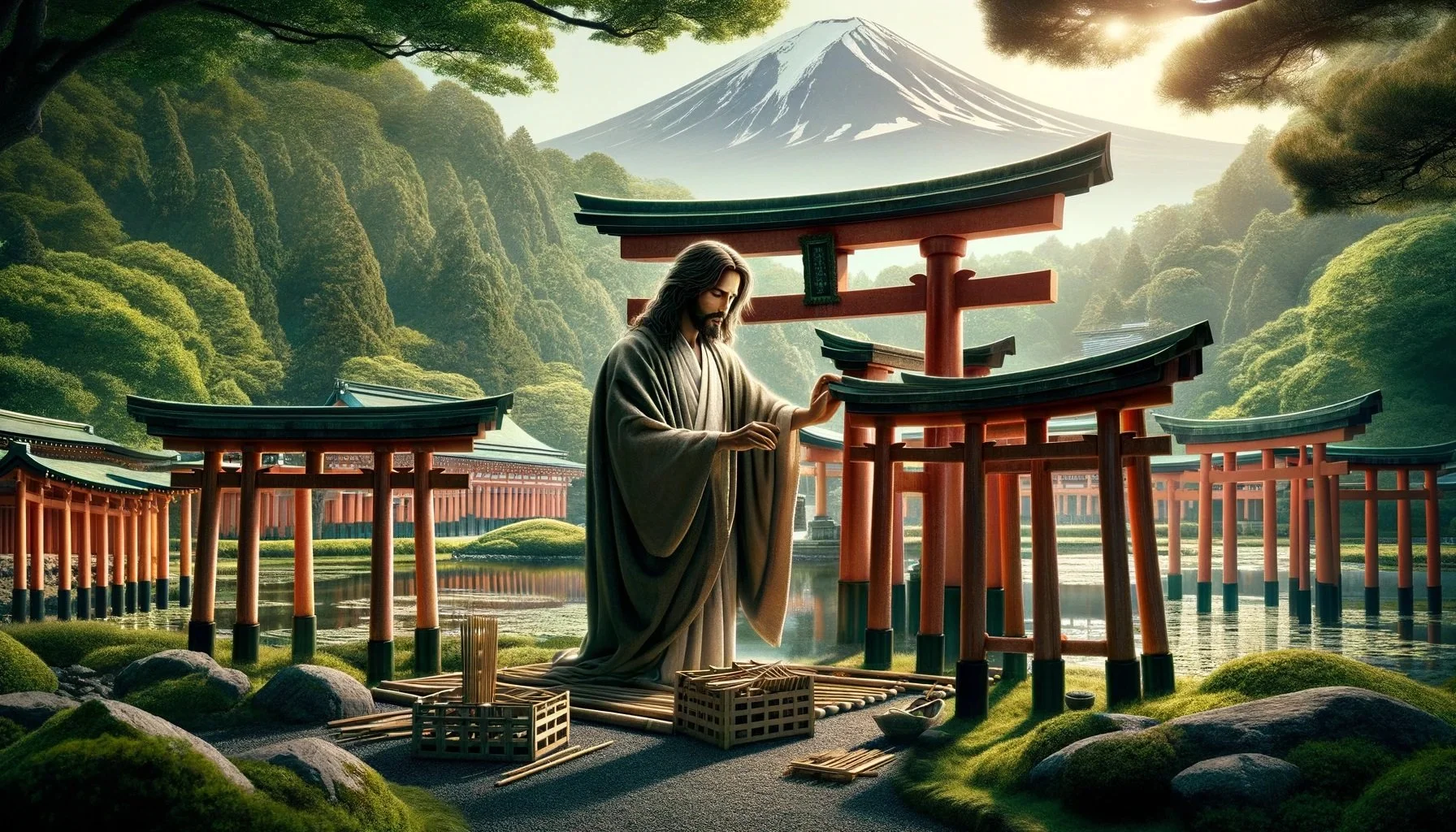
On his way to Japan, where did Jesus stop? Why were these locations selected? What did he do while there? The duo unpack some of the inventions Jesus began developing on his way to Japan where he erects the Shinto Gates. What the duo discover by having all the data at once is more than either of them could have ever predicted.
+Episode Details
- The Trip to Japan
- The Stop in China
- Creations while in China
- The Purpose of these Inventions
- Paper
- Compass
- Shinto Gates
- What was the goal?
Official Website - https://greythoughts.info/podcast Twitter - https://twitter.com/JustConvoPod Facebook - https://facebook.com/justconvopod Instagram - https://instagram.com/justconvopod
+Transcript
Cristina: This program contains strong themes meant for a mature audience. Discretion is advised.
Jack: Going live in 5, 4.
Cristina: What does live mean?
Jack: Sam Foreign. Welcome to the Rambling Podcast. I'm your host, Jack.
Cristina: And I'm your host, Christina.
Jack: And this is a show where we ground humanity's most absurd and baffling ideas. And today we have some absurd and baffling ideas to. To ground. Obviously what you think was gonna happen, bro, but not for Rizzles. Look, last week on Dragon Ball Z, we were talking about how there was some stuff about, like.
Cristina: Were we not talking about Jesus?
Jack: We were talking about Jesus and how, like, Jesus had gone and been like a bunch of people.
Cristina: Oh. And he died. For reals.
Jack: For Rizzles. I think we found where he got involved. Died is a weird. In this case. But, you know, he transitioned.
Cristina: Yes. Okay.
Jack: He transitioned when he was an elder man. He finally transitioned into a vampire. I don't know. I mean, I guess. You know what? I think he did that while he was alive.
Cristina: Oh.
Jack: Or while he was here alive. His loose term at this point. Because death stops being possible at some point. You know, that's kind of the issue there. Death stops mattering. So he's not like, dead because he's.
Cristina: He's something else.
Jack: Yeah, he's like, beyond, I guess. That's crazy, right? That is what he's kind of doing. Transitioning. Because death is only a concept that exists within the earth realm, not the shadow realm or not logically for what we think of it in the earth realm as.
Cristina: Yes. You don't really know what it is. Like in the shadow realm.
Jack: Yeah. Like if we die in the earth realm and we just enter the shadow realm. That wasn't that.
Cristina: Is that what happens? That's what it seems like happens only.
Jack: For people who have adrenochrome, which that means it's some sort of code or something. Or for people who have. What was the other thing?
Cristina: Some people just stumble into.
Jack: Yeah, some people wandered in.
Cristina: So.
Jack: Dude, what a weird method. Series of mythological events that are written and, like, dude, it strings across. I was a. I got like, a whole plan. I got a whole plan for a discussion. But let me, like, vent and stress about this. It stretches across the world, dude.
Cristina: What stretches this.
Jack: This narrative about this series of events and these people referencing each other subtly. Dude. And I keep seeing it, and I comb through crap and I see a little bit here, a little bit there.
Cristina: And I'm like, what the.
Jack: Dude? Like, how did you random guy in a hole somewhere know about dude over there Mountain that He's never spoken to anybody simply because of some magical deity who communicated both of you. And then we got like. Like, yeah. Sometimes like the Bible is. Seems to be considering that there's other religions based around like weird. Real. Right. There's real weird and whole religions are based around it. And you're like, what the is this thing even supposed to be? But at least it's solid. The Bible is just science's perspective and narrative on it. Outside the point. The main point being the fact that this crap stretches across the world. And like two completely random individuals with factually recorded things. They wrote the same thing in two random locations because the same individual told them. And then we see it and it's like those men could not have talked to each other.
Cristina: That kind of logic from the Bible.
Jack: Or men from like other mythologies that have like, you'll find one that's all the way here in Shinto and you'll find another who's out here in Native American spiritualism.
Cristina: Okay. Talk about something similar.
Jack: The identical same thing. And they wrote it exactly the same way. And it described the same thing in their own language exactly the same way. That kind of weird consistency of like this could not be a coincidence, but like what's really going on. That kind of like that stretch across everything. But then when you follow the strings, it's not even like mystical. It's weird. And like, yeah, obviously there were people that were better than us in the past.
Cristina: Yeah.
Jack: But like the. In the level of webbing across this whole. It just baffles me when I go through it farther and farther and farther. Like there's no end. It's real narrative. It seems if it was a right you would just come across the end of the story.
Cristina: Okay.
Jack: Because somebody made it like the Bible has an end because it's a shaping of something. It's a telling of beginning, middle and then. Yeah. But not this. It really just seems like a random series of things all interconnected.
Cristina: Still going on.
Jack: Yeah. It's just life happening.
Cristina: Yeah.
Jack: And us investigating by looking at how they put things and worded things in it. Cross referencing instead of assuming that they were all one. And then you get a story where they're really communicating and having the same messages and literally sometimes saying the literal same thing. And it's like, what across Earth from Maya to Egypt. Get the out of here. Dude.
Cristina: That is pretty crazy. Yeah.
Jack: It's like, dude. What? Absolutely nuts. Anyways. Following that same train of thought that we've been following forever. We're talking about Jesus and the different people he's been and just trying to exercise the idea of like how can we approach looking at Jesus? But in doing that and having that discussion, I realize we can actually follow those same things. Right. So instead of following that specifically the individuals, I looked at what those individuals were influencing. And that's going to be a discussion for another time.
Cristina: Okay.
Jack: Those individuals being, you know, Mithras, Mani and those people. But what I thought was a more interesting path to follow is not the names he assumed, but where. Under these names, I suppose would be the idea where and what or not where what specifically what it is. Other things like the seismoscope that he made in China or they started making China. What other things of that nature are there? If he's out here being sciency, are there other things? That was the question I wanted to answer.
Cristina: Huh? Are there other things like he made things and left them in random locations?
Jack: Well, the problem is how do you find this information? Right? That's the biggest issue.
Cristina: He's not him. Like he has different names and. Different.
Jack: Yes, different. This is why going by. This is why following these names of Mithras and Jesus and it doesn't make any sense, especially because he's not recording anything and these narratives about him are incoherent anyways. We gotta find the other way. Who isn't talking about a messiah like individual and is describing a sciency individual. Like the guy who made the seismoscope. His story was very basic. It's. My grandfather had some sort of research partner who was a traveler and together they were trying to develop it. Not some religious messiah guy or anything. You got to keep in mind he was interacting with so many different people in different ways. There are people who saw him as one and that's the one we're most familiar with. Religions don't die, they keep going. But ideas change and alter and we don't necessarily know who discovered everything or who made everything or who invented whatever the h*** you know.
Cristina: So there's other places that he was just seen as some kind of scientist or ever. You found some of these things?
Jack: I found some of these things. I basically used the quantum computer and asked it to find me grounded occurrences of Jesus across, I guess the time when Jesus would have existed. Grounded occurrences. This is any description that would fit.
Cristina: So it's not actual Jesus. Like in these things. Maybe some of them have Jesus.
Jack: The problem is it wouldn't make sense for it to literally be called Jesus because one, we're talking different languages, two were talking people who weren't considering him any kind of God or deity of any sort. People who were working with them perhaps under even other aliases.
Cristina: Okay?
Jack: So essentially those mentions, every single one of these instances that we're gonna discuss right now fits the following. They all came from a traveler to the east. All of them, all of these specifically that we're talking about today were created in China. And all I guess, I guess we'll leave that last. That third detail is a secret for the end.
Cristina: Okay, but why is China the important part? Why is it all connected in China?
Jack: That's what we're gonna talk about.
Cristina: Okay.
Jack: That's hopefully what we can conclude. The trip, if you must know, goes as follow. It starts at Iran. I'm talking current day territories. But if you want to go old school, Persia, India. So it starts at Persia, stops in India, then stops again in China, then stops again in Japan. Right now we're focusing on one of these four, China and China, because China had. Whatever we're about to talk about.
Cristina: Okay. It's a lot.
Jack: It's interesting. It's a lot. What is a lot? We'll find out how we fill this hour out. So it's weird. Important details to know. Jesus began preaching when he was 30 years old and he allegedly got crucified around the time that he was 33 years old. That's three years of preaching.
Cristina: Okay. That's important.
Jack: That's information. Additionally, Jesus Christ, bare minimum, the slowest possible pace. I did the math. Walking, walking an average pace, walking without stopping. It would take you about 108 days worth of a straight 24 hours a day, non stop, no sleep. Right. If you divide the day into three sections in which you, you walk eight.
Cristina: Hours these days for.
Jack: To get from. Oh yeah, to get from all the way from Persia to Japan.
Cristina: Okay.
Jack: If you were to walk about 104 days of continuous. You don't sleep, you're droned. It doesn't stop.
Cristina: Okay. Also considering the travel through water.
Jack: Yeah, Just, just walking. If he can. I mean he can walk on water. Come on.
Cristina: Oh, okay.
Jack: Walking.
Cristina: He's just walking through the water.
Jack: He's walking a straight line.
Cristina: Duh, duh.
Jack: Of course he could just walk there. So you can walk a straight line. Never mind the fact that we know in all of the mentions of him, he has the ability to essentially leave here and pop over there. So he has portal technology done. But shortest possible situation, he's walking. Right. I don't know how relevant this is, but it would take him between coming from Persia and Getting to Japan a continuous 108 days. If you were to break that up or. So you have about 300 and some days, which is about a year's time. You'd be walking for about a year. If you spent eight hours walking, you slept eight hours, and you just chillaxed for eight hours. Because how are you making influences if you're just always walking?
Cristina: That's gonna. That's just a year.
Jack: That's a year. In one year, he could successfully walk all the way to Japan and have 8 hours in each day to dedicate to walking. 8 hours in each day to dedicate to just hanging out wherever he is and sleeping in the area wherever he is.
Cristina: That's ridiculous.
Jack: Yes.
Cristina: Especially how, like that math can make sense. Once he's on the water, there's no. He's not sleeping.
Jack: Very little water. There's very little water.
Cristina: Okay, so he's making that trip quickly.
Jack: He could probably. I was actually thinking about this too, because how is he making these settlements of people who will forever be loyal to him, Assuming he's walking at this pace, just messing around with numbers. I know he can move faster than it, but if he was just moving at the pace of a human, then you'd mess with it sometimes with the timing. Right? You'd make like, oh, for a week, I'm like, every day nonstop push through, and I'll see how far I can get. And then the following week, I'm just gonna. Wherever I land, I'll have an entire week where I don't have to go anywhere. And I'm just gonna talk to people and build this thing because I gotta come back this way. And they're gonna be here for me when I do that.
Cristina: Where is he coming back?
Jack: He does come back, and he's gonna pop up anyways all the way out there in Japan. So he's gonna have to come back after he dies anyways, which is totally relevant, as I'll explain later.
Cristina: Okay.
Jack: But it takes him a year. It would take him a year. Less than a year, but almost a year to walk eight hours a day all the way to Japan, have eight hours to himself, or to do whatever he wants with and sleep eight hours. Meaning in those three years that he was preaching, every bit of these events is absolutely possible because they fit within the time frame of those three years. Okay, that's crazy. It was a realistic amount of time. He can stop. He can take time. He can talk.
Cristina: Stories of him preaching, they never said he leaves.
Jack: Not the ones that take place with him over Here. And they probably only take place with him in a brief amount of time. Which is the dumbest part about this whole process in the Bible because that means you were this whole everything. Essentially. Essentially. Let's picture this how it really goes. Yeah, how it really goes. Cuz we gotta also remember, Christianity is just the one that could. So it's the one that got confiscated to defend. But think about the logic. This guy didn't really give a s***. He made a bunch of random ones and Christianity just kind of took off. He had no personal stake in which one of these worked out.
Cristina: Okay.
Jack: But we also zoned in on the one that he made work and it's like, well, we gotta twist that narrative and they're the ones spitting it out. So let's take over.
Cristina: Mm.
Jack: I don't know what the problem was.
Cristina: I forgot the point too.
Jack: Yeah. Anyways, he could definitely arrange his week differently and had time to definitely control people. And if in this three year period he only spent one year in Israel, then like that still works because he traveled two years.
Cristina: You travel to you. Okay, okay.
Jack: Because it's a one way trip. That's two years it would take him. I mean it was a one way trip. This one year. It would take him two years to get to Japan and back from Japan.
Cristina: So are there any stories of these people that saw him again since he's going and then coming? Or is he going through different ways so he's never seeing the same people? This is a huge land to be crossing anyway.
Jack: No, I think he's crossing the same people. I think the point of these cults is that.
Cristina: Oh, okay. So you have stories like that though.
Jack: Maybe at some point I'll come up with stories like that. But that's for when we're talking about the. The religious names that from last episode when we're actually going to dive into their influence independently and what those people thought he was capable of. Because right now we're talking about the inventions.
Cristina: Oh yes, let's do the inventions.
Jack: Yes. That's the point of right now. The inventions that this man in that two. And the point is within that two year he stopped in China and had enough time to on. I don't understand how he did this. Was he just handing out blueprints to random. We're interacting with people in this manner where he was messing with the schedule in such a way that allows him to. But also he's moving quite quickly. Yeah, look at how he's just walking. We're talking high tech has the ability to do quite a bit. Doesn't have necessarily Elysian technology to their degree, but is an Elysian himself.
Cristina: Why give anyone anything?
Jack: He doesn't have to give anyone anything. My point is, how quick is he moving? Is this year's time condensed? Could he do it in six months because of reasons. Because of transportation and so he could fit more and so he spent longer in different areas that we're like. Well, no, he had to figure it out.
Cristina: Travel like Santa Claus or something. Like, how is he doing?
Jack: He's op, dude. These are two OP people, the way he travels. But Santa Claus is more likely than not just using Elysian portals.
Cristina: I guess Jesus could be too.
Jack: Not even Alician portals. He's using necromancer portals.
Cristina: Okay.
Jack: Because he's cutting through the top to make it across the world instantaneously. He's trying to get right back here, but without moving. So he. He had some other s***.
Cristina: So Jesus can't be doing that.
Jack: I mean, he could be, but it's not. Jesus could, but then he wouldn't have.
Cristina: To go to every single spot. He could just go from where he was to Japan in one.
Jack: Yeah, yeah. Here's the true fact about that. That he did in fact have to travel, right? So he doesn't have instant travel the way that some Malaysian zoo or Santa Claus or other. Yeah, yeah. At least not at this point in the story, as far as it goes. So he had be traveling from one to the other in this order, which is why there are these stops between the two points. There are two other points. And that's like. Okay, so he paused. In other places he rested. He needed to relax and stop. Assuming he moved faster than. Yeah, he had way more time and he spent way more time in places because again, that year is only really about a year, and it's only really about a 300 and like 25 days or so. Okay, so there. If you were to say a whole year, then you still have like two months left or something like that, you know, so that's nice. There's a lot of time to be flexible with. But how is he traversing this land to begin with anyways? He traversed it enough to come up with stuff. And that is the primary point here.
Cristina: That's what I want to know.
Jack: We get to China, and for whatever reason, this man decides to talk to some people and he. I don't even understand. All right, so in 105 AD China, the invention of paper happened. I didn't know this fact.
Cristina: Okay?
Jack: Now, it was created by a man, Kyle Luna, who claimed an Eastern monk shared their revelation with his grandfather.
Cristina: If that sounds familiar. Yes, pretty much the same story as the other dude. I think it was his dad.
Jack: But still, that's why the year 105 matters. Jesus wasn't there maybe at 05.
Cristina: So his grandpa met a traveler.
Jack: Yep.
Cristina: And through his revelations he said, yeah.
Jack: That the man had revelations that he was just trying to come up with. I mean, I'm using wording that gets passed down and like it's a game of telephone. So this can't be accurate. But ultimately what they believe they said was that and. Yeah, the invention of paper.
Cristina: Ridiculous.
Jack: Mm. So a man named Kai Lun developed paper alongside some Eastern monk who was just passing by. And they, you know, in his revelatory conversations with an Eastern monk, it came to him. Oh, yeah.
Cristina: Oh, yeah, Paper.
Jack: Yeah.
Cristina: Do you know what that first paper was made from?
Jack: Yeah, it was made out of a bunch of random ingredients. He had a whole process that involved tree bark and involved some salt, some this and that, and blend, crush and blend it. And then he would let it soften and then he'd have like a flexible thing after you squeeze it. But it's a very familiar story.
Cristina: Yes, yes, it is.
Jack: Now, digging deeper into the same story. There was a lot of controversy around this story.
Cristina: Why?
Jack: One, it was quickly taking over the world the moment it got created. But before that moment happened, because every paper is everywhere. But before that moment happened that it was taken everywhere, there was one issue with it, a really weird issue that doesn't even make a lot of sense, and it's that there were conspiracies, that this was a way to suppress or hide information.
Cristina: Paper, paper.
Jack: Now, this becomes kind of accurate when you consider that oftentimes they were writing information on tablets and paper were thin, that you could hide easily, so you can conceal a lot of information. Interesting.
Cristina: What? It's very strange.
Jack: Very strange. Very strange.
Cristina: So people thought it was paper was a conspiracy?
Jack: Yes. Not only was paper a conspiracy. Now allow me to rewind back. If you follow paper being a conspiracy, you find out that 20, 30, 40 years back, for whatever reason, somebody tried to introduce something very similar to paper. And again the same problem arises, this fight back of people think this is a way to suppress information, or somebody does.
Cristina: That's so strange. I wonder how. Why, what's going on? I mean, I guess too like that makes sense, but it's such a strange thought to be so fearful of it. I don't know, but it makes sense because it makes sense because Everything, every technology is like that. TikTok came out and everyone's like, the government is gonna do stuff to us or whatever. China. So the Chinese people had conspiracies on China too. Or these people outside of China, like, ooh, those papers. That's dangerous.
Jack: I don't know if the people outside of China have this problem. I have no idea. Although there were arguments about that that I did come across.
Cristina: Really?
Jack: Yeah, well, there were instances that were very similar and some quite relevant, but otherwise, it's the idea of that paper is ultimately being used conceal information. Now, across all of these Chinese and essentially many Asian provinces and areas, generally speaking, between China and Persia there, there's a lot of ground there and a lot of people there. And there is almost nothing through any of it. It's just a black hole of no, nothing, nothing anywhere between point A and then before you start getting into oriental areas and then that's where suddenly, oh, yeah, history is still around and stuff like that. But before that, like that whole area leading until you start looking at weird things like paper and you find out that although, yeah, no, there's nothing about any significance in any of these countries until you get back to Iran and you find out their fight with paper was the same.
Cristina: What?
Jack: Yeah, there was a lot of. Well, paper is gonna be a way to undermine the authorities and be able to hide information from the authorities.
Cristina: So who's more scared, though? Is it people thinking the government's gonna use paper to keep secrets from them or the government thinking people are gonna keep secrets from them with paper?
Jack: I don't know what government thinks this. That's my only question. What do you mean, what government believes paper is going to be used to.
Cristina: Hide in this past? The conspiracy thing you're talking about.
Jack: Yeah, but I'm trying to figure out what government that is. Why are they scared of paper? Well, there is an answer to that question.
Cristina: What is the answer?
Jack: But the answer is not in obvious places. The answer actually goes all the way back to Egypt.
Cristina: How?
Jack: Well, in Egypt, there was a slight mention once in a weird hieroglyphic tablet with scribbles on it. And the deciphering of what's on there essentially breaks down to use paper to trade and then an unknown unquote to symbols that look like a computer and radio waves coming from it. Now, can you tell me what that means?
Cristina: No, I have no idea. That sounds like gibberish. I don't know. Are they predicting the future?
Jack: No, they're saying newspaper to hide from being tracked.
Cristina: They're using a computer as a symbol.
Jack: Yeah. There's a box that looks like a screen and then three dashes that look like radio waves. But the part they can break apart easily is use paper to trade and then you got what's obviously just a computer. So trade to avoid what? What are those other two things? That's obviously a computer to avoid being tracked. Now this is insignificant. It doesn't make any sense outside of context. And we have no context except over here on the other side of the world. Or not the other side of the world, but farther west from that point or east, I guess east. Farther east from that point we get to China and they have the same fear from the people's perspective. Keep in mind these things written were from high society in Egyptian culture. So they were saying it from the point of view of the people who knew people were trying to hide information. So from our point of view and reading it there, it doesn't seem like anything. What are you talking about? Sheets of paper and then gibberish. Something that doesn't make any sense.
Cristina: Did the Egyptians not trust the.
Jack: No, the Egyptians know that people were using paper to hide some information. This also probably enlightens us on how some individuals managed to steal information. It was more likely than not doing it through primitive untrackable means because all the technology was easily trackable. Now pull this back slightly and tell me what is the weirdest part about the one piece of tech we do know Jesus made? It's non electronic and does everything really complicated electronic technology does.
Cristina: How does that relate though?
Jack: It cannot be tracked because it does not have an electrical magnetic signal. If I were to run a regular earthquake detection system, you could tell I'm running that because I need energy for it.
Cristina: Okay.
Jack: Not for the seismoscope. But also that same logic applies to paper.
Cristina: Okay.
Jack: If I'm moving data and information in a technologic kind of way, then there's probably some sort of trace, but not if it's with paper. You'd have to see me holding the page and read what's on it.
Cristina: And the idea is that he made the paper or he helped someone make this paper.
Jack: They knew that this was possible. Yes. Time secrets from the government to hide secrets in general. I think Jesus was hiding among very people who were being observed by these high society individuals who were trying to find Jesus.
Cristina: Was it really at the end of the day, not.
Jack: Egyptians and the Alicians.
Cristina: Relations, all that stuff?
Jack: Yeah, probably. I think Jesus was just living among those. I think he was finding out ways because Again, if they have this ability to traverse land so easily and to get anywhere, to get to the other side of the earth, nonetheless, like China is nothing that's next door.
Cristina: Yeah.
Jack: So they can watch, they can observe, they can get anywhere they need to. So he needed to invent ways which takes us to Shinto gates, which happen in Japan. This isn't related to the rest of the things on here, but the Shinto gates that happen in Japan, which are essentially what, another way to move outside of things they're used to. A Shinto gate has no electric field. He somehow figured out how to just build a thing.
Cristina: Mm.
Jack: And no energy. You couldn't find it. You gotta know exactly where it is. How many are there? If you built one in the middle of f****** nowhere, how would. How would anybody know? He figured he kept finding ways, okay. To make non electric things. They had the exact same function that electric things had. Deletion. Somehow evolved without paper. Because.
Cristina: Very strange. Okay.
Jack: Yeah, but when you think about it, we had a culture here that we're aware of current time, that also essentially evolved without the usage of paper. And it was the story, the people who tell stories and knots. Their entire language, their writing, their ideology, all of it is captured in knots that they make on strings, and that is writing equivalent. They communicate this information. They look at it and instantaneously see all the nuance and know what it means.
Cristina: It's complicated. Okay.
Jack: And those people evolved without paper, without variety, written language without word. It was unnecessary. And we keep thinking in the dumbest way as possible, but the. One of the reasons there might not be Elysian writing is because the Elysians didn't f****** evolve using writing. Duh.
Cristina: They're using something else to share their information. Yeah, because we know they were sharing their information. So you're saying it's not the way we think.
Jack: They were sharing information, while the people they shared it with used the way they were familiar with. Which was. Well, you know, these guys had hieroglyphs and they did that thing. And these guys liked paintings and they did that thing.
Cristina: We have no idea what the Elysians actually gave that was telling this information.
Jack: They did. The Alicians had a way of communicating. Presumably the Elysians learned how to speak, at least in these languages, or had some method of bridging communication. I don't think it was random. Then again, the way. I don't know. Because the way Lucifer makes it sound like it's like, throw it out there and see what happens.
Cristina: So what are they? Like, maybe they. I Don't know. It's too complicated. I don't know, because now I'm thinking, like, what if they're telepathically sending these things to other people? Like, we don't know how they work.
Jack: No, I don't think it's telepathic. I think it's definitely some kind of physical thing that's taking place. The other. The only other example we have is still a physical thing. The knots, the Brazilian people who. Not things like. That's still physical. I'm sure they have a physical thing. They do.
Cristina: Okay.
Jack: We just can't think of anywhere like, oh, yeah, it's obvious or whatever.
Cristina: It'll never be obvious. I don't know. Unless there's a story out there that says something.
Jack: No, I don't know. I haven't looked at that. But, like, how would we. I would need a reference point. Everything happens when I have the right reference point. Right. So we know it looks like secrecy. Living in secrecy makes perfect sense so far based on what we're looking at. So we got paper, we got the Shinto gates, we got the earthquake detector, and then we have a compass.
Cristina: Okay.
Jack: The compass has an unknown inventor to it. There were stories about where the schematics to create the thing in the beginning came from. It's believed to have happened about 150 AD that it was finally pieced together, but it's unclear exactly where it was found. Somewhere between 100 years earlier. So the schematics to make it. Now, there were stories about the schematics before they found the schematic somebody. So narratives about the schematics moved forward about a thing that could allow you to navigate.
Cristina: Mm.
Jack: And these thing. And this thing that allowed you to navigate. There was a whole detailed blueprint on how to build it. And it disappeared. And people talked about it, sailors talked about it, and they talked about a traveler who was an inventor. And he was just someone wandering. A wanderer described specifically as a traveler or a wandering teacher from the east.
Cristina: Okay. So another Jesus.
Jack: Another guy who seems to fit the idea. Around the same period of time with the same kind of mentality. This dude seems to be traveling. And weirdly enough, he reminds me a lot of Antonio Draco.
Cristina: Who's that?
Jack: With Alicorn?
Cristina: Oh, okay.
Jack: I think it was kind of just drifting about too, wasn't it?
Cristina: I guess. But he seemed more normal because he went through some weird adventures.
Jack: Yeah. To him, all this was crazy.
Cristina: Yeah.
Jack: He was like, holy. What's happening around me? This thing is crazy. I need to study it. Oh, my God. People want it.
Cristina: Yeah. And I think he ends up dying.
Jack: Yeah. He just dies because of this thing. Like there was no good. It. Only bad things came from this miracle thing, which also. I didn't even think about that. That's totally the fact of the matter for that.
Cristina: Yeah.
Jack: Only horrible. That was the moral of that story. I didn't even think about it. Since he touched this, nothing but a storm was unleashed on him that didn't stop until he literally died. It took him through war. It took him through needing to create an entire secret society because people are actively trying to murder him for it.
Cristina: Yeah.
Jack: Assassins and spies, people actively. Just full armies coming from random directions for you for this thing. It sucks to have alicorn.
Cristina: Yes, it does. Yeah. He died. I don't know. There was no good story. I mean, it was good to the people that he used it on, I guess.
Jack: Yeah, I guess.
Cristina: The random people.
Jack: Yeah. He totally. He helped people regularly.
Cristina: But, yes, he ended up dying from it.
Jack: If you keep it, you'll die with.
Cristina: It, which makes no sense because it's supposed to help keep you alive.
Jack: That's a weird one, right? Because as long as you have it, people are gonna come for you because they want that power.
Cristina: I guess that's. Yeah. Like, he didn't die of natural causes, I think. Right.
Jack: Got murdered.
Cristina: Got murdered. Yeah. Like maybe it would keep you alive forever as long as no one.
Jack: But, like, how? How you can't. You. How do you keep this a secret forever and ever and ever and ever and ever and ever and ever. Like you're gonna. Somebody's coming for you.
Cristina: Yeah.
Jack: That's the biggest problem. So there's no being at peace with this thing. It's like you're trading peace of mind for power. That's a trade off. Because somebody could take the power from you. And you're gonna try weird. Anyways. This compass made by Jesus or by this guy who fits a very Jesus, like this.
Cristina: The wandering traveler teacher guy. Yeah.
Jack: What makes this compass absolutely most interesting of all was when you look at what they believed it could be. It could do originally. And then I'm gonna start to explain how these other things work together.
Cristina: They work together. What? Okay. Okay.
Jack: Okay. Now, the compass is believed to be a more advanced version of a primitive Middle Eastern technology, which was particularly great for travelers in uncharted lands and sailors because it allowed navigating where you were not familiar with by always knowing which direction was north.
Cristina: Okay.
Jack: Yes. The particular language that matters there is that. It's very useful for knowing where you are when you don't know where you are. Sounds casual enough, but very important because.
Cristina: He doesn't know where he is. Continue.
Jack: Well, if we pair this alone with the Shinto Gate, is that a way. He's literally gonna bring himself back. He can navigate to where it is. He knows how to track the location of these gates. And the compass is a literal tracking mechanism that requires no electricity. And he can use on both sides to get right back to wherever the f*** he wants.
Cristina: Oh, okay, so you're saying it works on both sides.
Jack: Gentle Gate uses no tech and he can use a no tech compass to get to the Shinto game. Interesting. Yes.
Cristina: What? But then how do you come. How do you fit the paper into this?
Jack: Well, the paper is. There's a lot of messages being across and everything we're talking about are schematics. Were schematics recorded in these ways for the Elysians? Or is he intentionally teaching people how to write so that he can create the tech in schematics that can't be tracked, like compasses, like.
Cristina: So he can find those schematics without them worrying about them getting to them.
Jack: He can make the schematics in ways that are harder for. They can't be tracked. They have to find the paper themselves. Okay, you can't track the paper. There's no signal. It's just paper. And he's teaching people how to use paper instead of them developing into using whatever technology thing or easier to track other way. The Elysians developed with. Although the Aletians are familiar with the ways developing by the Egyptians and the way developing by the Mayans and local civilizations. But the way that made it most efficient was this paper thing. But at the time it wasn't. At the time it was particularly controversial.
Cristina: Yes.
Jack: And the people who were trying to stop it were probably the elation because it's not their thing. And it's harder to have information like detect information.
Cristina: Man. I think that's right.
Jack: That makes sense. Right?
Cristina: That makes sense. Yes.
Jack: Now we gotta sprinkle a little something on top of us because we add this other part and then we gotta think about it a little bit. You have an earthquake detection machine, the seismoscope. How does that fit?
Cristina: Do you have any idea? I have no idea.
Jack: Guess, guess.
Cristina: Okay. How. Why would he need to know? I don't know. Does it have to do with the Elysians? Do they travel? I don't. I don't know. It's really hard to guess about. It seems too random. Like where Can I go?
Jack: Use imagination. You have no guessing ability for something that creates.
Cristina: Not creates, that knows when an earthquake is coming.
Jack: Yes.
Cristina: How he relates to all this other stuff.
Jack: Yeah.
Cristina: I don't know. Besides in Japan, because it's. There's earthquakes. Fair.
Jack: Okay. So looking into the seismoscope, this one was really complicated one because a lot of people wanted to be the first to write about this. There's a lot of different information. Essentially the same information written differently. Rather. So it stands out when somebody writes differently. When all the mentions of the same thing are so similar. Right. So it was likely not originally made to detect earthquakes, but rather detect other things underground or in the water.
Cristina: Okay.
Jack: And somebody was generous enough to try to explain it. With a strong enough impact, you can bounce a vibration off of another object and it will be detected by the seismoscope like a distant earthquake, thus telling you in which direction.
Cristina: It's either to find the lesions or hide from. Still hide from them because like you know where they're coming from. You can go the opposite way type of thing.
Jack: I think it was a portable device. I think it was to find.
Cristina: I think he was a tracker. Whoa.
Jack: I mean, I think he had a non electric way to track them. He had non electric ways to move information amongst people. He had non electric ways to move in uncharted territories and find his way back in. Electric ways to find his way between realms.
Cristina: Is there any proof that he did find them?
Jack: I have no doubt.
Cristina: I wonder. Because like that's. If he has that, then what does that really mean to the Elysians? If he can just track them down and he has no problem traveling on water. So weird. You just find them and then what? But then what? That's the big question is that the.
Jack: Idea is the goal to find them.
Cristina: Yeah.
Jack: Why. Why go to India and I there. Well, what. What do you account. Did you find them? Were they in India?
Cristina: I don't know. Are you sure it was to find them? It doesn't make sense.
Jack: I know. I'm not sure. It was to find them.
Cristina: Or maybe it doesn't make sense. I don't know. It's all random. It's also random.
Jack: I don't know. I know these inventions have a very similar individual in a very similar circumstance interacting with people and then these people later work them out.
Cristina: Yes, but there's no connection.
Jack: There's no literal connection between any of them. They are just random individuals who are essentially just talking about a guy who happens to fit a very similar description. A very similar instance at around a very similar time. The end.
Cristina: No, like what was his actual plans? What does he want to do besides go to the other side? Okay, he goes to the other side. He dies over here though. Like, what does it mean?
Jack: I don't know.
Cristina: Does he want to find them?
Jack: I don't know. I don't know. I don't know. He finds his way back. He can share information. The. The seismoscope is a weird one because why do you need to track them or what, what are you doing?
Cristina: Or maybe he's trying to avoid them. But I don't know why he would want to avoid them either. But it seems like they're both trying to track each other. So maybe there is some trying to avoid as well. I don't know. They can't both be trying to track each other. If they're trying to track him, then he has to be trying to hide from them.
Jack: No, I think they knew where he was a lot of the time. I think he was doing things while there because it also doesn't seem like they were particularly bothered for the majority of his life. They're like, whatever dude. Like as long as you're not here, fine. But like then it became an issue as he started like running his mouth and.
Cristina: And once he's making this thing though, like, why didn't they know? Like, oh crap, this. He's. He's.
Jack: How would they know?
Cristina: Oh yeah, they can't track it. Okay. Yeah, yeah, yeah.
Jack: How would they know? He found a way to do everything undetected. None of it required any detection form that has. Which tells us a lot of the technology is definitely electricity based. What is like we. The Elysian technology. We know that a lot of their technology has always been electricity based and requires electrical magnetic fields and radio signals. Which is essentially what you're avoiding with paper.
Cristina: Yeah, they're very sci fi.
Jack: Yeah. So it's very things we're landing at now. Which then brings up a lot of questions about how are we getting to exactly that. Get the f*** out of here. Now there's that question of like, are we ourselves reaching there because of.
Cristina: No, I don't think. Because we're so different from our technology. Isn't the same as our technology either.
Jack: No, it's not.
Cristina: So. So no Fair, fair.
Jack: I think building blocks maybe basic ideas that led to the whole.
Cristina: But it looks different.
Jack: It has to. And it has to be influenced by us. It'd be best if we're developing by ourselves. That's the whole zoo hypothesis.
Cristina: Except if you made Paper. Then he influenced us.
Jack: Yeah. Any of this s***. All of this crap. The ability to compass. You know how exaggeratedly overpowered a compass is? He changed reality with that one.
Cristina: He changed reality with the paper and.
Jack: Yeah, with a paper. That's crazy. Yeah, with both of those. It's crazy. All these got the same instance. That's definitely the same dude.
Cristina: He changed humans evolution.
Jack: But so did the Elutions.
Cristina: Yes.
Jack: Deletions might have made human civilization, although it was a process combined between whatever the h*** yelled about then.
Cristina: Yeah, it's complicated.
Jack: Yeah. Or I guess the real product was the Elysians from Yellow Balance. And then we're the product from the Alicians. That's the right series of events. So basically there are gods, but science gods.
Cristina: Yeah, Sounds right.
Jack: So what do we think this is for, man? We know the papers to hide information because of the two separate mentions of that. We know the earthquake detection system. Well, we don't know s*** about that one. We know the compass is used for a plethora of things and it helps people traverse unknown territories. And water, which is particularly important. Water. Now that the seismoscope with the compass, let's say you have a boat.
Cristina: And maybe he has his own underwater base that we don't know about. I don't know why, but, like, what if there's another story that we haven't found yet about another civilization that lives in the water?
Jack: There isn't. The Alicians.
Cristina: Yes. Like maybe it sounded like the Elysians, but it's just not in the right location that they would be in. So you just thought like, oh, it's just Elysian stories. Even though the location's not right, like.
Jack: It doesn't check out.
Cristina: Yeah. Like how the Mayans not on the line. Was it the Mayans?
Jack: Yeah.
Cristina: So I think you should maybe try to look back into that. Maybe. Question mark. I don't know.
Jack: The. Beyond the line.
Cristina: No. Of like, are there other stories of underwater cities?
Jack: No, I have looked at that. That's how I found most of what I found by trying to find how many similar instances there are, regardless of where they might be. You can zero in on the location by kind of, oh, yeah, they're from over here. They're from.
Cristina: And all of them were in the same location, though not all of them.
Jack: Are in the same location. But also a lot of people have no idea where the f*** they're coming from. So a lot of people were just kind of making it up a lot of the time. I think him from the sky. It's like, well, that's up. How do we go from there? You know, like didn't come from over there, they came from up. So it's like a lot of this is unreliable. It's just most likely you're talking about the same looking people who have the same kind of thing. You're probably meaning the same people. You don't really know where they came from.
Cristina: But Jesus might have some secret base or something too.
Jack: Why would he need one?
Cristina: Why would he need one? Where would he be hiding?
Jack: Why is he hiding?
Cristina: Why is he hiding? I don't know.
Jack: Who is he?
Cristina: Maybe. I don't know.
Jack: Why is he hiding?
Cristina: Because they. They're out to get maybe. I don't know.
Jack: No, they literally get to him and kill him. And he was like way up front and like blunt about it the whole.
Cristina: Way, but then he came back. Yeah, he's more powerful than ever.
Jack: And I don't know if he's more powerful than ever. But he's unkillable at that point, apparently.
Cristina: So I think they got something to worry about.
Jack: That he's unkillable. That just makes him annoying.
Cristina: I don't know. Okay.
Jack: That just means he's a bug and they can't get rid of him. But back to the point, what the h*** is this seismoscope for? This is so weird that he made that thing or was trying to figure out how to track something in space.
Cristina: What if you use this technology in space? Can you do that?
Jack: Could it work in space the way it works in water? Does it need gravity? I think it needs gravity to work. I don't think it would work in space.
Cristina: Do you think it works in the Shadow Realm?
Jack: No. No, I don't think it would exist in the Shadow Realm if you were.
Cristina: To take it over there. It wouldn't exist.
Jack: Yeah, I don't think it's physical in the same way.
Cristina: Oh, okay. I don't know.
Jack: Yeah, I think the Shadow Realm works a little too differently. That's why knowing how to mix things is a whole thing of its own. You got to be able to somehow interact with this other thing and I don't know.
Cristina: I don't know. What is he doing?
Jack: I don't know. Man. It's really weird. Again, we have the ability to pass information and secrecy, communicate using anything you want, especially schematics for these things. And we have Shinto gates to come back from the Shadow Realm and we have compasses to be able to navigate. The question is, can you take the compass? I mean, I guess if that's the case then you can take the seismoscope. But what the f*** would you be looking for with the seismoscope in the shadow realm? I don't know.
Cristina: But like why would we know even like if there was a plan, why would we know the plan?
Jack: I think the Shinto gate. Shinto gate is a one way thing. There's not it. Which means the seismoscope. You can't build it here and take it there.
Cristina: No, but it was for those things over there to come over here. So maybe he needed it for when they got here. He needs them.
Jack: He's who's coming through.
Cristina: Maybe he wants other things through too.
Jack: Like I don't know.
Cristina: Other shadow realm creatures.
Jack: For what? Huh? Conclude your thoughts.
Cristina: I don't know. Why? I'm just saying like maybe like who else would need that him besides him? I don't know.
Jack: Why would so randomly you're just applying this to like some random individual would use it for what? If we have it to find him. To find who?
Cristina: Jesus.
Jack: Jesus built it. How are you gonna find Jesus with a thing that's gonna detect something based on vibration? And you need to make an impact to begin with. The exact description is you need a big enough impact that's going to bounce the vibration off of a different object. And this is going to detect it.
Cristina: He is. I don't know. Then he's looking for them. He has to be. I don't know.
Jack: I think he's looking for the Elysians.
Cristina: That's the only thing. What else is there that they're looking for?
Jack: I don't know. I don't know. I definitely do find this really weird.
Cristina: There's something that needs to be found. I don't know what it is.
Jack: He's tracking something for sure.
Cristina: The apples? No. But they're not underwater. Are they underwater?
Jack: And this is just in China. Minus the Shinto gates. The Shinto gates just so happens to be connected. Because the problem is in India and Persia. Many, many, many narratives of these religious individuals then getting through China. Less of it. Less, less, less, less, less. And then very sciency science. Science Y But the more west we go again it gets very religious. Until we start making it all the way literally into the core of the Persian Gulf and then heading farther towards Egypt and those locations. Then it starts getting sciency again. There's an intentional religious center there. And I just find that a curious fact. I don't know why. And became sciency again. And I don't know it was very intentional or There was no point to making science in those regions or the resources required to do it weren't present or something. I don't know. I don't know.
Cristina: I don't know. Because isn't more on what the people saw. Like it wasn't him doing anything. Like maybe me.
Jack: Fair enough. At this point, you would argue that he wasn't even trying to convince anybody of anything. He was just traveling.
Cristina: Yeah.
Jack: There were a few things that mattered to him and the rest were just random things he was doing walking through.
Cristina: Yeah. Like some of them saw these miracles. But maybe like the other people, maybe they didn't. They looked past the miracles. They're like, look at all the science stuff.
Jack: Maybe many people didn't even see miracles. Maybe they just saw a guy come through.
Cristina: Yeah.
Jack: If he's traveling. Yeah. Anyways, you guys can let us know what you think about any of this stuff of this random. Same description wanderer. That shows.
Cristina: What is he doing with that paper?
Jack: No, not the paper with the seismic. That's a really weird one.
Cristina: Yes, that. That's really the weird one.
Jack: Anyways, if you want to let us know what ideas you have on this stuff, you guys can message us on our socials on TikTok, on Instagram, on. On X and Facebook @justconvopod.
Cristina: Remember to subscribe, rate and review the show.
Jack: Yes. And word of mouth. Tell people about El Programa and they will come and listen to all of these very educational, factual. Everything that we're talking about is totally not made up.
Cristina: This has been the Rambling podcast. Take nothing personal and thanks for listening. Bye. Good morning. Good morning. The podcast is hosted by Christina Collazo and Jack Thomas, produced by Lynn Taylor and published by Great Thoughts.info art by Zero Lupo and logo by Seth McAllister with social media managed by Amber Black.