


Rambling 190: Blind vs Deaf
/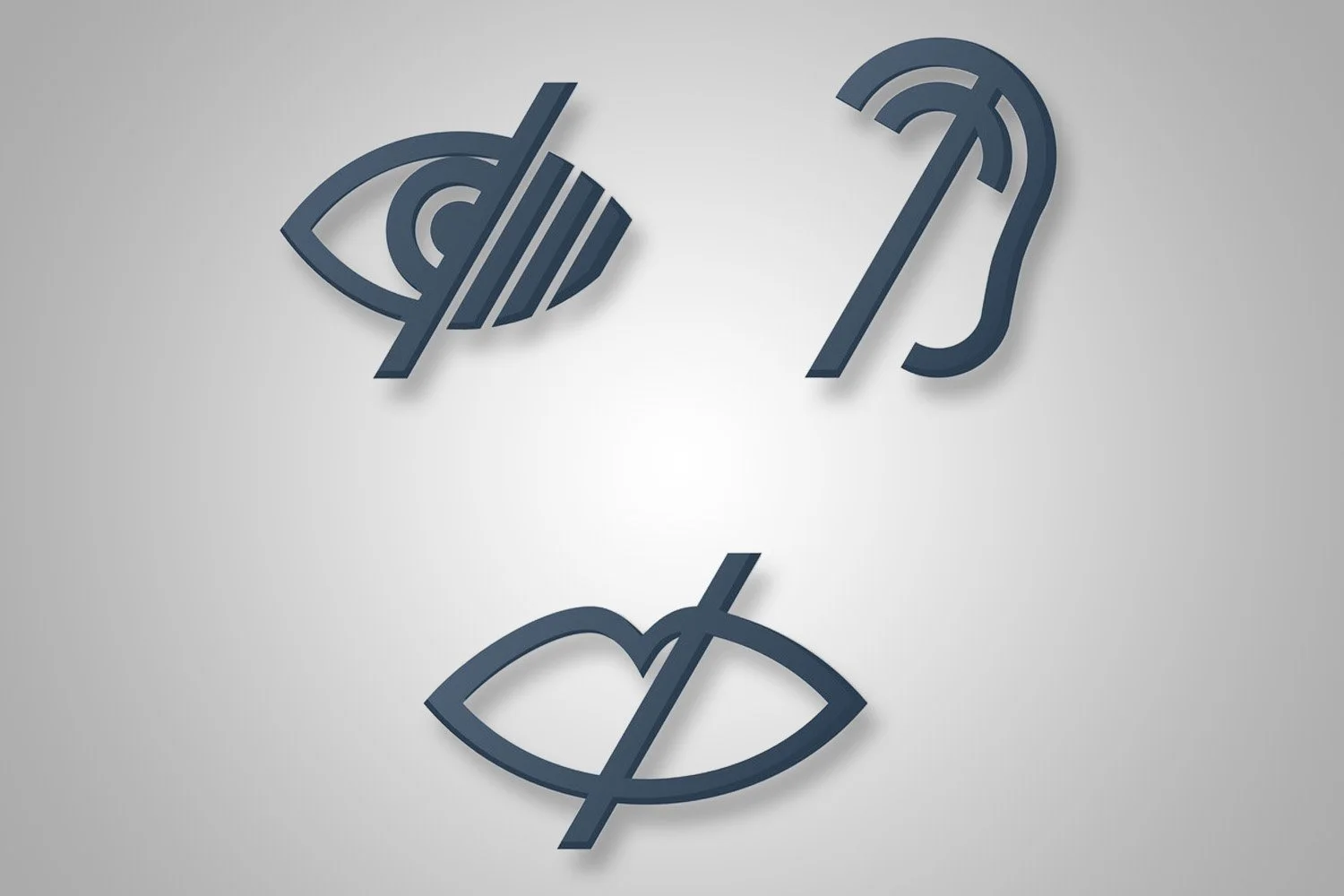
How important are the senses? Is it worse to be blind or deaf? Does Losing senses mean you develop superpower-like abilities with the enhancement of your other senses? The duo tackle the age-old question of whether it’s worse to be blind of deaf.
+Episode Details
Topics Discussed:
- Benefits of Being Blind
- Benefits of Being Deaf
- Drawbacks of Blindness
- Drawbacks of Deafness
- How Superpowers Happen
- Daredevil
Our Links:
Official Website - https://greythoughts.info/podcast
Twitter - https://twitter.com/JustConvoPod
Facebook - https://facebook.com/justconvopod
Instagram - https://instagram.com/justconvopod
+Transcript
Cristina: Warning. This program contains strong themes meant for a mature audience. Discretion is advised.
Jack: Going live in 5, 4.
Cristina: What does live mean?
Jack: Welcome to the Rambling Podcast. I'm your host, Jack.
Cristina: And I'm your host, Christina.
Jack: And this is the show where we ground humanity's most absurd and baffling ideas. Now we're talking about the closed captions in movies that tell deaf people cues about things.
Cristina: Yeah.
Jack: And how blind people.
Cristina: They don't have any of that.
Jack: They don't have any of that. Their thing is the foley versus the imagery. So the first argument is a blind person is watching a movie and the movie has birds in a corner. The guy walks to the birds in the corner, the birds fly away. We see the birds fly away, we hear the birds fly away.
Cristina: And you're saying that the blind person.
Jack: The question that I'm posing is, the.
Cristina: Blind person, what are they imagining?
Jack: What are they imagining? Do they. They hear the footsteps from the person walking and then they hear the birds flapping away? Or. Or do they hear the main character speak? Then somebody use a flat piece of wood and smack it against a bird of gravel repeatedly, and then they hear an umbrella open and close.
Cristina: Is that even the same scene? I don't understand.
Jack: It is because the sound of him walking when we're watching him walk towards the birds was recreated by somebody using a hunk of wood and gravel. And then the birds flapping their wings was recreated by somebody moving an umbrella open and close next to the microphone. So the question is, did the blind person. Because the blind person doesn't have the visual cue that says this is the sound of birds and this is the sound of shoes. They hear words.
Cristina: Yes, but I heard a person say something.
Jack: They heard a person say something, then they heard the. The sound of something that sound like to us walking because we saw it.
Cristina: But to them, something else to them.
Jack: What is it?
Cristina: Why wouldn't it be walking?
Jack: Why would it be walking? Why wouldn't they just hear what the literal sound they're hearing is? Because they don't have a visual cue to trick them.
Cristina: The literal sound would not be of a person walking.
Jack: It wouldn't be of a person walking. Maybe they didn't even record a person walking to get that sound. We only think of it that way because they showed it to us at the same time.
Cristina: But, like, if they didn't do that, we would not know. I don't understand.
Jack: How do you mean?
Cristina: Like if they played some random sound? I don't. Because it's sim. It's so much Similar. At least to what we like. It has to be. They put some random sound while we were walking. Would we not be able to tell?
Jack: Yes, for sure.
Cristina: Really?
Jack: If they put a random sound in place of our walking.
Cristina: Yes. We're gonna be like, yeah, that's still walking.
Jack: No, no, no, we'll be able to tell.
Cristina: But isn't that what they're doing in the first, Like.
Jack: No, they don't. The problem is that we're not idiots. We obviously are using both cues, and we're like, this one's wrong.
Cristina: Okay. But the one that's similar is right. Even if it's not the same. It's just similar enough that we're like, yeah, that's someone walking.
Jack: How similar are they? Is the question.
Cristina: You're saying that they're. That. Oh, you're. You're saying that they are to us, though, and not to someone who can't.
Jack: Yes, it's similar to us because we've already associated these sounds with it. But these people have never associated these sounds with it because they don't have the visual cue to go with it. And nobody tells them at any moment. Oh, and that's the sound of somebody walking?
Cristina: I don't know. But they have heard people walking all the time.
Jack: Exactly. So they know what people walking sound like. So when they hear the fake people sound for walking in a movie, do they not hear people walking? Because they do, in fact, know what people walking sounds like.
Cristina: I'm sure they.
Jack: They know it in such detail that they're like, this is a person pretending to walk.
Cristina: Probably. I don't know. I don't know. That's weird. But they know what movies are and would have to understand, like, yeah, that has to be a person walking, even if it's not really a person walking.
Jack: Yes.
Cristina: Like, they could put that together. Unless you're gonna show them a movie and not tell them it's a movie and then ask them what happened.
Jack: But no, you can't tell them step by step everything that everybody's doing, all the. There's a million different sounds up.
Cristina: No, you're just. You're not gonna tell them anything about what? Of what's happening. You're not gonna tell them you're gonna play them a movie?
Jack: No, they know they're watching a movie. The question is, all the sounds that are in that movie. There's many sounds in that movie. Are they. Are they cat. Are they picking up what they're putting down?
Cristina: Probably most of it.
Jack: You think?
Cristina: Yes. I don't know. Like, they probably question some things and.
Jack: Yeah, very. Enough. Like some of them are convincing enough.
Cristina: Yeah.
Jack: And others like what? That's very off.
Cristina: Because some of it, even for us, it's the same thing in movie. Like Jurassic park with the dinosaurs roaring. You don't question whether that sounds like a dinosaur or not. And that's not a dinosaur. I think it was pigs or something. Some random. Yes, I forgot what it was. Exactly. But you know, it was something else because we can't.
Jack: Yes. Now the question would be, would the sound of those dinosaurs just sound like a pig to a blind person? That's what I'm asking.
Cristina: Or whatever the sound. Is it a pig? I don't remember. I know it's something.
Jack: But let's say was what would the blind person just hear pigs?
Cristina: No way. No way. Just picturing what it sounds like. It sounds like real roar, even if it's not real roar.
Jack: Like a screech or a screech.
Cristina: A screech.
Jack: Because it slowed it down or something, right? In that case, no, because we don't hear it at those speeds normally.
Cristina: Yeah, I mean it's a made up sound in that case. So like they can't picture a pig. They can't picture.
Jack: They did not connect anything. It has to be the example of something that they.
Cristina: That's real.
Jack: That's real in the encounter. Enough to distinguish.
Cristina: I don't know.
Jack: And that's just for the blind person. Right. And then for the deaf person. What was that one?
Cristina: Oh, like I was wondering while watching Stranger Things what was happening because I was watching an episode randomly with what's his. One of the episodes where that guy's still in Russia or whatever, Hopper. And there was like, oh, dogs barking. And they described random things like lady screaming in gibberish or whatever. Okay, maybe that's not the right words, but whatever. They were just describing things besides the actual dialogue of like music playing or whatever. And like what's the person watching that thinking that can't hear what's going on? Do they see, like how long does the sounds to them last? Is it just when that object is there? Is it just when the title is there? Not the title, but the actual fonts are there. That's how long it lasts. Like what are they determining of how long does random sounds last besides the dialogue? I guess, yes.
Jack: See, that's pretty interesting because you're totally right. They see things and then get told cues. So you hear or you don't hear, you see and it says sad music or dance music playing. And he sees people dancing, and it's like dance music. You're playing while he has. Now, as soon as people stop dancing, the main characters just stop dancing. They start talking. Now, did the music in his head that he was playing along with it stop playing?
Cristina: Yeah, he's like. It's probably still playing in the scene.
Jack: Yes.
Cristina: Lower.
Jack: But would he know?
Cristina: Yeah. Or, like, even. Would he know? And if he did know, but would it still be playing in his own head, in his imagination?
Jack: Yes. Like, when does it cut off?
Cristina: Yeah. And, like, the dog is barking in the background. You don't see the dog. You don't know how long it's barking. There's no way you're gonna picture exactly how long. You can't guess. I mean, you can guess, but it's no way that it's gonna be accurate to what's actually happening.
Jack: It's impossible.
Cristina: Yeah.
Jack: So we have an interesting perceptual conundrum because it's confusing in either direction. Death or blind.
Cristina: Yeah. But I don't think it ruins the shows for them because it's still the same thing. I mean, unless in your example, where it's, like, completely random things, I guess.
Jack: Yeah. It sounds like gibberish to them.
Cristina: Yeah. But in for the blind person is still pretty much the same thing. The important things are there. Which. A deaf person. The important things have to be there, too. They can Not a deaf person. A blind person.
Jack: Yeah. I think that's harder. It sucks to be blind over being deaf because, like, being deaf, you can at least see your world.
Cristina: Yeah. So it's gotta be easier for them to watch it. I wonder how blind people do it. Or I wondered until I found it out. And they use. What is the word? Audio descriptors.
Jack: Audio descriptors.
Cristina: Is that what it's called?
Jack: That's a caption, isn't it?
Cristina: Oh, yeah. It's more. It's a little bit more than that. It really describes, like, the person also speaking what's happening while the stuff is happening. They're saying, like, okay, now she closes her eyes and things like that. While the actual auto.
Jack: Like, a lot of people are the blind person.
Cristina: Yeah, they. There's a lot of new and streaming services have this on their shows, and they said, like, Netflix is one of the best ones. And I have a little clip, though, from Stranger Things since I was talking about Stranger Things. And it's a little like the audio description with the audio. If you want to hear that.
Jack: All right. Yeah, let's take a listen to that. Audio description, highlights 11 closes her eyes.
Cristina: Elsewhere in the lab, the man from the photo sits at a table with.
Jack: A piece of paper. I can't see anything at all.
Cristina: Okay. That's just a tiny example because they have, you know, of course they have them talking and stuff too, but that's a good example of like just them describing what's happening.
Jack: Yeah.
Cristina: In the scene and like that. It's gotta be very helpful.
Jack: Yeah. It sounds more like reading a book almost where the book is, trying to convey the information without any of the visual cues.
Cristina: Or listening to an audio book.
Jack: Yeah. You're listening to an audiobook.
Cristina: Yeah. That's pretty cool.
Jack: Interesting.
Cristina: Yeah, because it doesn't ruin the experience. Like maybe if the person was really boring or something. But at least that lady was interesting to listen to. Like her voice was fine.
Jack: Well, when it comes to movies, the cues you get from being blind are way beneficial when you have somebody guiding you like that because you still have the music making it tense.
Cristina: Actually a lot of people, they do find the music very helpful of how they should feel about a scene.
Jack: Yes.
Cristina: The blindfold music is very helpful, 100%.
Jack: Until we're talking about deaf people.
Cristina: Yes. I, I don't know. Deaf people, they just have to have someone telling them what's happening. Guessing. These blind people also have someone telling them, like if they're with someone that they're watching the movie with, who can watch the movie? They'll just tell them and that's how they get it. Like, and you know, like you take your best friend who wants to watch the movie with you but you can't see.
Jack: Yeah.
Cristina: He's gonna describe it for you.
Jack: Yeah. When cool things happen. Like this happened.
Cristina: Yeah.
Jack: But also, chances are you still have, let's say you watch it in a theater. They have a little closed caption connection thingy. So you can hear the closed capt narration thing.
Cristina: Yeah. Well, what do you do if you're friggin blind? I don't know.
Jack: Well, if you're blind, you do that.
Cristina: If you're blind.
Jack: If you're deaf is when you're screen.
Cristina: Oh, when you're deaf, crap can keep confusing them. Yes. When you're deaf, what do you do?
Jack: Because that's a problem, Right? Being deaf sucks hard. Kind of. Only when you're at a movie. It beats being blind in so many ways. But then like the drawbacks of it are like pretty immense.
Cristina: We can see what's happening at least.
Jack: You can. 100%. You can. Totally.
Cristina: Mm.
Jack: But why does it say sad music plays in the Subtitles So you know sad closed caption. What is is that supposed to do? The same thing the book is doing. It's trying to give you the cue, but it now it's trying to give you a sound cue.
Cristina: Yes. To a sound you probably don't know.
Jack: To a sound you probably don't know.
Cristina: But, you know, sad.
Jack: I'm guessing they should have just said sad vibes.
Cristina: Sad vibes. I don't know. That's kind of ruining it. If sad music is playing, you want to know sad music is playing. Even if you don't know what that sad music is. Just sad vibes they could take away from the movie.
Jack: Oh, no. You can also say the tone gets, you know, and then use a clever word for sad.
Cristina: Yes, I guess. But if sad music is playing, wouldn't you want to know? Even if you have no idea what that sad music is, would you need.
Jack: To know that music is that we need to know.
Cristina: But wouldn't you want to know?
Jack: Why would you want to know? How does it affect your life to picture it? You can't. You can't picture it because it sound that you can't. You. You literally don't have that power.
Cristina: Yes. I don't know.
Jack: But.
Cristina: And if you're both. What do you mean, blind and deaf?
Jack: Well, you're screwed at that point. There's not really a lot that we could do about that.
Cristina: You don't think they can watch movies?
Jack: That's what happened to that girl Helen Keller, Right? She's deaf and blind.
Cristina: Some other thing.
Jack: Mute. Well, that's by the default. Yeah. Deaf, blind, and mute. But the mute part happens because the deaf and blind part, you know, it wasn't really that she was mute as much as, like, where would she get an example of how to talk if she can't see somebody moving their mouth and can't hear somebody doing it either?
Cristina: But isn't her amazing story that she learned how to talk or something?
Jack: Stories that she learned how to communicate. That's the.
Cristina: Oh, not by talking.
Jack: No. It's like sign language and touch and bull crap like that. It's really difficult to communicate with her.
Cristina: Oh, okay.
Jack: Yeah. She is a frog at the bottom of a well and you have to talk to her through that opening.
Cristina: It's horrible. Okay.
Jack: Okay. In your case, what would you rather be deaf or be blind?
Cristina: I don't know. It depends on the moment. I don't know. It's really, really, really hard.
Jack: Why?
Cristina: Because I love seeing. I instinctively would want to see.
Jack: Yes. But I think most People would choose.
Cristina: That out on music and sounds. That's so insane.
Jack: Yes, but it feels like you're so trapped in a place if you can't.
Cristina: Hear anything, if you can't. If you can't see anything, you can't see anything.
Jack: Destiny. Like, you're. You're. You. You gotta adapt to navigating the world without sight. You gotta navigate the world without sight. You're trading that. Like you. That's what you get when you choose. Imma be able to hear music, though. But I'll never again be able to see where I'm going. So you'll never see my family.
Cristina: Crazy.
Jack: Never see my friends.
Cristina: So seeing is more important, Is it though? Is it?
Jack: I never see another cat. I never see another dog. I never see art.
Cristina: You get to see all those things, but you don't get to hear any of that. Is that easier? It has to be, right?
Jack: If you have kids, you'll never see them.
Cristina: Is that a big deal?
Jack: You'll never know what your children look like.
Cristina: Yeah, well, I think.
Jack: Never see another color. Never see another color.
Cristina: Yeah. Who would choose being deaf over seeing? I mean, no.
Jack: No music, no hearing. You'll never hear your children. You'll never hear your mom's voice again. You'll never hear your dad's voice again. You never hear your siblings voices again.
Cristina: And you can still imagine, like, no, I don't know. Are we doing this, like, based on if you're born this way or versus you became this way because, like, presumably became not born? Okay.
Jack: So that you knew what it was like if you were to go blind or go.
Cristina: Then I feel like death. Yes. I don't want to know. I want to be deaf. Yes.
Jack: Because if you're born. Yeah, you could totally be deaf. I mean, blind, whatever, who cares? Either one of them is whatever.
Cristina: It's whatever. Yeah.
Jack: S***. It's all, you know.
Cristina: Mm. But becoming. Yeah. I rather lose my hearing.
Jack: Yeah, man.
Cristina: Because I can still remember those things.
Jack: It'll fade.
Cristina: It'll fade.
Jack: Even the memory and scramble over time. Think of what, like your oldest memories are. They're hazy and, like, foggy and unclear and you can't really make out the faces in the scene.
Cristina: I feel like I can visualize it more than I can hear it more. But then again, I have no idea if that's even close to the picture of what it was.
Jack: Yeah, yeah, yeah.
Cristina: But there's still something there that's.
Jack: Listen, this is all you got to think about. Take a camera and take a photo of anything and Then start reducing the pixel number gradually.
Cristina: Mm.
Jack: So it starts getting blurry and blurry. And that's time passing on a memory. Now, it's still the same thing, but if it's blurry enough, crap starts to look like other crap. Okay, you get my point.
Cristina: Yeah.
Jack: And that's where it starts to get foggy. The memory was the same. Nothing was added. But eventually, your mind is to start struggling to figure it out, and it's like, maybe. Maybe this is what that was.
Cristina: Yeah. But I feel like my mind, it's quicker with the sound to lose that memory than the visual.
Jack: Like, you lose the sound, but you don't lose the visual.
Cristina: Like, I probably do both. But I'm saying that it's quicker to lose the sound to lose the sound. So that might be the winner, I guess. For me.
Jack: He's a very visual person.
Cristina: Yes. It would be so insane not to see the world. I don't know. And I'm sure if you're deaf, you probably think being blind is worse in both cases.
Jack: Yeah.
Cristina: You're already used to what you are.
Jack: Exactly.
Cristina: So, though the situation has to sound horrible. Yeah. I think I wouldn't want to be blind.
Jack: Yeah.
Cristina: I wouldn't want to be both.
Jack: Well, I think I would also want to be deaf over blind. But then I remembered the one powerful argument that kind of sends us the other way. And it depends. It depends how you feel about it.
Cristina: Okay, but you were gonna say death over blind.
Jack: Deaf. I was gonna say blind over deaf. No, I'd rather be dead. My bad. I'd rather be deaf over blind. Yes.
Cristina: Okay, but you said something has changed your mind about that.
Jack: No, I'm just saying that this is a different thing to consider.
Cristina: What?
Jack: Which is that you could be. In being blind, you're disconnected from things you don't see the things in the world. But in being deaf, you're connected from.
Cristina: People you're connected from.
Jack: Yes. In being blind, you're disconnected from things. In being deaf, you're disconnected from people.
Cristina: How?
Jack: Because in being blind, what you're not seeing is just stuff. But in being deaf, you lose tone, you lose sarcasm, you lose so much. So much disappears. Communication, yeah. Ceases, and you go back to basics where you can't tell. Well, did he say it with a funny tone? Did he say it with a serious tone? Was there sadness in his voice? Is my mom worried? Is she scared? You know, those things that. That's gone forever. You. When you're deaf, you're disconnected from people. When you're blind, you're disconnected from things. But somebody can sit next to you and be like, man, I gotta tell you my problems. And you hear the tone and you. You're there for the purse. You can be there easy, because you're not disconnected from people just. And people's bodies. But that's not their personality. They're not their body. No, but when you're deaf, you lose communication with their personality. You can only communicate with their body.
Cristina: That is annoying. I don't know. You need both. I don't know.
Jack: Well, no, people live with.
Cristina: I know. Yes, but that sucks. That sucks. They both suck. Okay. You made both of them horrible.
Jack: Yeah. It's pretty crazy, right?
Cristina: Yeah. So what is worse? I don't know.
Jack: It's a pretty hard call. I think I would still lean in favor of being deaf over blind. I need to see the world. I really. I really feel like I could cope more with being deaf.
Cristina: I think so. But I don't know. I don't know.
Jack: Yeah. And there'd be no way to find out. Right. Because if you went one way, you could never find out what the other one was.
Cristina: Unless you could in some kind of weird experiment where you went one way for a week and then you went the other way for a week or whatever length of time you wanted.
Jack: Yeah. I mean, if you can go back, who cares? Do it for the entirety, since you can go back.
Cristina: Yeah. So I don't know how long you'd want to do that. Experimental.
Jack: Maybe it adds something, you know? You never really know.
Cristina: Yeah.
Jack: Maybe it adds some value to your life that you're like, I'd rather be this way.
Cristina: What? That'd be interesting. If people.
Jack: Maybe your senses heighten enough that you're like, wow, I don't even need to see. This is so overpowered. Or the other way. I don't even need to hear. Man, this is too crazy. Think about. I'll never forget. Oh, I know. I've told you a story. I was once walking many, many years ago. I was walking down the street. There's this old lady with a big fluffy dog, and she was blind. And this old lady, this time, I thought her did not have her big fluffy dog. She was walking by herself. And I was. I walk very quietly. Not a sound. You couldn't hear me sneaking up on you if you were a normal person. But as I am walking towards, I'm not nowhere near this person. Like, people could not hear me on top of them.
Cristina: They're behind her.
Jack: I'm way behind her.
Cristina: Okay.
Jack: But I'm Moving pretty quickly. But again, people on. I could be on top of some people, and they would not hear me from how quietly I move, but at such a large distance. This lady turns around, and it's like, hey. To let me know that she knows that I'm there in case I was sneaking up on her to do something.
Cristina: Oh, okay.
Jack: Yeah, yeah, yeah. And. Which I wasn't, obviously. But, yeah. Interesting that she had the super sound awareness to hear me barely making a sound at such a large distance.
Cristina: Okay. I thought you were gonna say, like, she said, hey, and then she said your name or something. Like, what? How did she know?
Jack: How did. How would that relate. Deaf, deaf, blind, or blind? Yeah, how would she relate to being blind? Right.
Cristina: I don't know. Like, your. Your steps have a distinct sound to it that she can. She could tell.
Jack: I bet she can.
Cristina: What?
Jack: I bet she can. I'm pretty sure I've read or heard or seen something about that before, that those kinds of things become the identifiers, you know?
Cristina: Yeah. That's interesting. But you'd have to know her well enough or something like that.
Jack: Yeah. She was just a stranger.
Cristina: Yeah. That you've seen.
Jack: That I've seen. So who knows? Maybe she did know my steps because she lived in the same area I did. We crossed paths quite often.
Cristina: Oh. But that hey wasn't a hi. Hey, you better slow down.
Jack: Yeah. Somewhere in the middle of that, it was, like, not a high to me as a hey person. I know. But it was like, letting people know, oh, yeah, I can move or something if you need me to, or I'm here. I know you're here if you want to do some harm.
Cristina: Somewhere in that.
Jack: In that ballpark, you know, of, like, I'm alerting you that I know you're here, regardless of whether it's. I can move out of the way or so that you can freak.
Cristina: Would you respond? Did you say anything?
Jack: No, he just walked by.
Cristina: Oh, okay. Say hey back.
Jack: But I'll never forget that. That was very interesting. Very interesting.
Cristina: Did that stop you for a second?
Jack: No, I just kept going.
Cristina: Oh, okay.
Jack: Give it the slightest crap.
Cristina: Oh, yeah.
Jack: Okay. That's the superpower she has. Like, maybe there are wins to this that perhaps would make you want to be deaf or blind over being able to see. I know. Particularly with deaf people.
Cristina: Mm.
Jack: A lot of the time they're like, I don't think I would change. I don't think I would take listening over not listening.
Cristina: Listening over non listening.
Jack: Yeah. Like, some deaf people actually believe that. I mean, I guess you're not f****** wrong. It's that the majority is real way superficial. It's the whole freaks and geeks logic. Right. You're forced to be an outcast and see the world from the outside. So you're aware how the inside is f****** stupid.
Cristina: Mm.
Jack: And so as a deaf person, the inside is where the listeners are. There's a lot of them. And like, it's not the listeners, but also I know for a fact it's not the deaf people that.
Cristina: What?
Jack: The people who suck.
Cristina: Oh, okay.
Jack: I know for a fact it's not the deaf people, but it's some of the listeners. And I couldn't like, tell you which. So I just stick to the deaf people.
Cristina: Mmm.
Jack: So there's a lot of that. They rather just really be deaf and like around deaf people. So that's fascinating. There might be wins that we don't even think about. Communication benefits that come to exist. Sign language, you can communicate under any circumstance, at any distance, so long as you have a line of sight.
Cristina: Mm. That's gotta be cool.
Jack: Interesting.
Cristina: So your own secret language.
Jack: Total secrecy.
Cristina: It's a secret language. It's not really a secret if you know it, but yeah, kind of interesting, right? Yeah.
Jack: The question is, Zen, what are the.
Cristina: Benefits of being blind?
Jack: Of being blind?
Cristina: I don't know.
Jack: What are the benefits of being blind? Definitely some crazy ability to hear and definitely music forever. Also, your listening must become so hypersensitive. You enjoy music more than you did before. You see nuance in music if you're.
Cristina: Becoming or it doesn't matter if it's before or after. Like you're born.
Jack: In our scenario, you've. You become after you've already experienced.
Cristina: Okay, some benefits.
Jack: I don't know the ones I've just mentioned.
Cristina: Yeah, but besides the music, what else is there?
Jack: Well, I don't know. You can definitely hear things more clearly. You can hear better. You can enjoy the sounds of Earth. People can't ever sneak on you ever again. You can hear and communicate with people. I wonder.
Cristina: Crossing the street is easier for them. Either death or blind.
Jack: Because for a deaf person who can still see, it's probably way easier. Can. You can literally look in every direction and see if the street is empty. That's an over sight is overpowered.
Cristina: Mm.
Jack: It's amazing. All the creatures on this planet have it. Or most. Many.
Cristina: Many.
Jack: Being deaf, you have to hope. You can't confirm for a fact. You have to hope that you're hearing what you're hearing.
Cristina: Mm. What I don't know. That's crazy.
Jack: So then that's for blind, right? Yeah, that's blind. If you're blind, you have to hope you're hearing what you're hearing. If you're deaf, you can see it.
Cristina: If you're deaf, you can see it.
Jack: You can see it. Crossing the street is easier deaf than blind.
Cristina: Mm. If you're blind, I guess that's why you would have something with you that's helping you navigate. Navigate. Yeah, because it would feel.
Jack: You don't need the help if you're deaf.
Cristina: Yeah. So then that's another benefit of why that one's better.
Jack: Yeah. You need some level of assistance because the world is designed for the seer.
Cristina: Yeah. Yeah. That's crazy. Like, you can't hear the stoplight or the sign or anything. The cars. I don't know. Whoa. For the person who can hear, I wonder if they can cross the street better than a person who can see in here. Because I know people who can see in here, and they still have a horrible time crossing the street.
Jack: Yeah, that's because people are idiots. They're not really focused on their surroundings. They're probably looking at their phones.
Cristina: Maybe.
Jack: But.
Cristina: So it's kind of suck being deaf.
Jack: Well, again, what are the benefits? We can hear music.
Cristina: Mm.
Jack: I mean, not deaf. Blind. Being blind.
Cristina: Blind. Oh, yeah. Being blind.
Jack: So we can hear music better. We can hear people better. We can communicate. That's an important point. We can communicate. We can talk to people. We can hear the voices of those around us. We can stay connected to humans, which in return, makes getting help from humans significantly easier, because you can still connect on a real level as opposed to being deaf. Which makes sense, I guess, why deaf people end up talking to deaf people. Because listeners require a lot of cues, and deaf people don't have those tonal cues. They have the body language cues. So that's the. How you send the message. Your face, how you slouch, how you move, how you like. That's how you're displaying. And again, this is very emotive.
Cristina: Yeah.
Jack: For the listener. They see so much emotion, they're catching on to what you're. They can pick up what you're putting down. It's excessive.
Cristina: Mm.
Jack: But it kind of cuts you off from them when they try to communicate. And they seem kind of like, literally tone deaf, because they can emote themselves better because they have to be physically emotive, but because the listener requires, they use voice tone to convey some of that same information, so they're less physically emotive yeah.
Cristina: So that we do for the deaf person.
Jack: That's weirder for both. When the. The case of the listener, the deaf person probably seems excessive. And in the case of the deaf person, because they can't actually catch the vocal tones, the listening people feel a little muted, a little flat, a little gray.
Cristina: Okay.
Jack: Because they're missing the flavor of how your voice telling a lot of information and you're not going out of your way to display it physically the way that somebody deaf would have to to convey information to somebody else deaf.
Cristina: Okay.
Jack: So again, you are cut off from people if you are deaf, but you are cut off from things. Things if you're blind. And like that matters less unless you're trying to.
Cristina: If you're trying to be like an independent without having to worry about someone else. Like, if you want to live alone, you want to do things on your own, you want to cross that street by yourself, you can.
Jack: You can do this. If you're blind, you can. A lot of blind people do it all the time, but they have things. A stick.
Cristina: Stick or dog.
Jack: Yeah. Some people just stand and listen. There are those people. That is a thing that is akin to gambling.
Cristina: Yes, I know.
Jack: How far away the next f******. Here's the thing. You don't know how far, how big the street is and like how long before you get to their side.
Cristina: Well, I guess they have. Well, in some spots now I'm thinking of like things when you're crossing the street and you click the button and then they. It's like a voice that talks to you and tells you, okay, this is it. Counts it down for you. Of like how long you have to cross the street.
Jack: That is so far and in between.
Cristina: Yes, I know. But like.
Jack: Like a blind person would be f***** trying to find that one.
Cristina: Yes. Yeah, I guess.
Jack: Like, has a blind person ever stumbled upon one of those? Who are those for?
Cristina: In a very dangerous areas. I see that. Not date fair. I guess dangerous because it's like truck drive in that area. It's very populated with trucks and that's where it's at. And it's like. Okay, yeah. Because anyone. You need to worry, you don't want to get hit by a truck. That's crazy. But so that would be good for both for anyone, I guess.
Jack: Yeah, I guess that's not really a matter of being deaf or blind.
Cristina: They could help.
Jack: Yeah. Like it. It'll help anybody because it's good information in a dangerous spot.
Cristina: Yeah.
Jack: Some people are dumb and they both see in here, you know, like Anything helps.
Cristina: Anything else. Yeah, anything helps.
Jack: Okay, so here is how the senses getting stronger works. When you lose a sense, those neurological pathways don't go wasted in the brain. So the brain dedicates those same neurological pathways to all the other senses, the ones that would process whatever is missing. So if you were to process visual information but you are blind, that's going to get converted to sense. Touch, taste, smell.
Cristina: To all the senses.
Jack: Yeah, I said sense. To hearing.
Cristina: Touch, taste, smell, Hearing, touch, taste, smell. Yeah, I guess.
Jack: And in the case of crossing that street that we're talking about, you would more easily be able to track a car's position in space just based on their sound. Based on their sound, just based on where they are. You'd be more capable of tracking an object in space without sight because you're more refined hearing their location.
Cristina: Okay.
Jack: Because the location is also a visual aspect.
Cristina: Yeah, but it's the same with being deaf. Then like, then you can hear more, but I mean, I hear you see more. More or something.
Jack: You can see in greater. You can see in greater detail.
Cristina: In greater detail.
Jack: And again, the senses must feed you the. The auditory information. You must receive the auditory information somehow. So all your other senses must get stronger in every case. In the case of a deaf person, not having sight seems to increase their language capacity. Interesting.
Cristina: What does that mean?
Jack: They're better with language.
Cristina: Okay.
Jack: It increases their motor functions, their cognitive functions, their spatial awareness.
Cristina: Okay. That's all cool because you got to.
Jack: Train at crossing a street where you have to hear a moving up. So you. You're so refined at hearing and tracking objects around you. I guess that kind of explains that old lady. Yeah, she just kind of knows because the information is all there. Her visual information is fed to her ears. She can see in every direction.
Cristina: Oh, okay.
Jack: Because you can hear in every direction.
Cristina: So she knew you're coming because she had her. She has spidey senses.
Jack: Yeah, exactly. I'm behind her and she can see me.
Cristina: Mm.
Jack: Because she can hear in 360 and her seeing got fed into her hearing.
Cristina: Okay.
Jack: Interesting. Yeah, interesting. You see how that works?
Cristina: Mm.
Jack: Now how does that work the other way? Because that seems like a way one way street. Because if you are then deaf, how does your hearing get fed into your seeing?
Cristina: I thought it was the whole you can see a little better or. No.
Jack: Well, you can see a little better. But we just gave a perfect example of how that plays out for being blind. So what's a perfect example of that for being deaf? What's the scenario that could Take place that we could be like, oh, yeah, that clearly gets influenced. This situation could use that help.
Cristina: This situation can use that. Well, if you can understand what. How people are feeling and stuff, like, through their body language better, like, communicating with people is easier.
Jack: When you are deaf, that's harder. It's hard because, again, you don't have tone. But I guess you have to receive more from body language. Yeah, yeah. You're picking up more nuance, but it's still. You're picking up on crap at that point, man. No matter what, you're cut off emotionally, you're both superior and inferior. You cannot.
Cristina: Well, you can't hear. You're getting through what you're seeing. Like, you can't hear the sadness in.
Jack: Your voice, but I can see nuances in your expression.
Cristina: It's all saying what you're feeling.
Jack: Yes.
Cristina: Even though you're not. Yes.
Jack: Interesting, interesting. I see what you mean. So then I mean, then I don't know how the other. That I free that. Not the phrase, but that. You know, that line holds up because being deaf doesn't disconnect you from people. In that case, it keeps you connected to people. Legally. It's a different way.
Cristina: It's just a different way.
Jack: I guess that's the problem. To the other people, that cuts you off.
Cristina: Yes. But you're not.
Jack: You're not cut off. They've cut you off. And in return, you must cut them off in order to be around people who you communicate with equally and aren't confused by you.
Cristina: Yes. I think that makes sense.
Jack: Interesting.
Cristina: Interesting. Yeah. Because then that's. It's still the winner. That's.
Jack: Here's another interesting power that you get being deaf, blind. It seems like that brings a lot. Because you see, the sight is so important, so much information is there that your hearing gets crazy.
Cristina: Mm.
Jack: And one of the things that I. Me, myself, I'm not even, like, particularly blind. I could be walking down a street and actually, no, you could do this at any moment. You're outside, and you just put your hand slowly closer to your ear. The closer it gets, the more the sound changes. And, like, if you weren't doing it and I stood next to you and I put my hand really close to your ear but didn't touch you. The change in how the world sounds would tell you something. Got close, it'd be. You'd be like a little like, whoa, what's up? Next to me? Imagine that turned up to a million. You could see a building because sound is changing in front of it.
Cristina: Oh, okay.
Jack: Do you see what I mean?
Cristina: Yeah.
Jack: You pick it up when I put it down.
Cristina: Yes.
Jack: That's crazy, right? You could just be walking down the street and you're like.
Cristina: You just sort of understand where you're surrounding is.
Jack: Yeah. It's almost so close to echolocation.
Cristina: Yes.
Jack: It's so close.
Cristina: Definitely not.
Jack: It's close. It's a primitive version of it.
Cristina: Yes.
Jack: It's like if you were to turn that education way down.
Cristina: Mm. It was not like Daredevil type of.
Jack: No, but Daredevil is if you were to turn it up to a thousand.
Cristina: Yeah.
Jack: You know.
Cristina: Mm. So that's a crazy example. But he's definitely. He's blind, right?
Jack: Yeah. Their devil's blind. But he also, you know, he does have powers.
Cristina: He does?
Jack: Yes. His power.
Cristina: Super abilities came from him being.
Jack: No, no, no, no, no. I guess it's both. Right. So he's blind.
Cristina: Mm.
Jack: Because he falls into, like, this chemical waste thing. But it didn't just enhance all the other stuff because he's blind. As the stuff was enhancing because of the chemical toxic.
Cristina: Oh, so it's like a combination of both things.
Jack: Yeah. It's like. Okay. Your senses are about to get enhanced because you're about to be blind. So from this day forward, all your senses are going to develop except sight.
Cristina: Mm.
Jack: But also chemical waste. So we're gonna turn that up to a million every. All your senses are gonna enhance because. Not just because blindness, but you're gonna multiply them by the power of this thing. So now you got super senses. Not just enhanced senses evening out the fact that you're blind. It's. If you turned being blind, your sight into a million.
Cristina: Yeah.
Jack: And then fed that into normal human other senses.
Cristina: Okay, but does he know that he has a special. These special beliefs because of the fat. And not just because, like, oh, I'm blind. So these powers, like, how did he know?
Jack: He was trained by dude named Stick and everything.
Cristina: And he told him, like, hey, you got powers from the accident.
Jack: They know from. They don't know from the accident. He just knows he has powers. Oh, I don't know if it's from. If he knows it's from the accident.
Cristina: Oh, okay. Because he could just think like, oh, I'm just super skilled for being.
Jack: He probably knows it's from that.
Cristina: Okay.
Jack: But his powers are super enhanced. They're not just enhanced because of the blindness, but also just because of the waste or chemical whatever. I don't know if it's chemical waste.
Cristina: It's just regular waste.
Jack: It's his nuclear something. And he fell in there and his power is enhanced. He does have powers, yes.
Cristina: Is there a plot? Wait, no. He's the blind one. Is there a death superhero? I guess. Or at least not a famous one.
Jack: Not that I know of.
Cristina: Like, there's probably one. Dude, we just don't know them.
Jack: Blind person might be able to tell there's a building. And it's similar to echolocation. Again, we can kind of already do that even while we see again. You could just put your hand. If I were to do that while you're walking and you didn't know I was doing it, you'd know I was there. Just based on the sound shift, you'd know something changed. If you turn that up high enough, you can kind of heavily tell about things around you. Just imagine being able to see that at a further range.
Cristina: What about that thing where, like, you feel like someone's looking at you? Is it even stronger?
Jack: I don't think that's an actual thing. That's not one of your senses that we're talking about. Okay, yeah, maybe, I don't know, some unrelated other thing.
Cristina: It's neither.
Jack: Has nothing to do with sight and nothing to do with a hearing.
Cristina: Oh, what is that?
Jack: Because you're not seeing the person and you're not hearing the person, but you.
Cristina: Know they're looking at you.
Jack: Yeah, that's some other thing.
Cristina: Oh, okay. That is another thing.
Jack: Highly unrelated other thing. But back to the building. Imagine a person that can already. We can already detect those shifts around us. And you do have somebody hold their hand up to your ear till you as close as they can get. And stop where you first notice a change. Right. How far they are holding their hand from your ear. Maybe half a foot before you start hearing a change between the air.
Cristina: Mm.
Jack: But imagine being blind. Means you can hold your hand twice as far. Three times as far. Four, maybe 10 times as far.
Cristina: Doubtful. What?
Jack: But maybe two to three times and.
Cristina: Then they know, like, hey, yeah.
Jack: Now multiply that by everything. The average person would have two to three times. Now, just knowing that there's a building in your area because it's a little off, it sounds different here. Oh, I'm in between a bunch of structures around me. As a seeing person, I can tell that sonically. As a blind person, could you pinpoint exactly where the buildings are based on how the sound is changing? And it's just sound. You're not seeing it, but it's working in your mind the way echolocation would? That you're kind of structuring the world and you're not seeing anything. But you know where the turns are and where the corners are and where the. Let me move around this and over that. And it's like, some blind people are really good at that stuff.
Cristina: Yes. But isn't it because they have things that help them? Like, you don't. They don't just walk and know, like, sense like that, like with the sticks and stuff. Like, don't they have to physically sometimes know where things are?
Jack: A lot of the time, yes. But maybe the more advanced born deaf people.
Cristina: Oh, that's what you think?
Jack: Yeah, I think people who are born this way have powers. People who aren't must adapt.
Cristina: Mm.
Jack: You go in with a handicap, somebody who's born with it. Well, all your connections needed to originate without this other function. So they start off entirely dedicated to other things.
Cristina: Yeah.
Jack: Your sight has always been fed into your hearing. So your entire ability to track moving objects in space by looking at them got translated to hearing them in space. Moving. That's perfect translation.
Cristina: Yeah.
Jack: We already know we have stereo hearing. I can hear if you're on my right or on my left. And it's a little faded and very specifically, directional if you're in the front and it's faded and very specifically, direction of. You're in the back. Now, I couldn't tell if it didn't have that change in. What is it? You have more bass behind me and more treble in front of me. So if that subtle nuance didn't exist, my brain couldn't tell if you were in front of me or behind me if I closed my eyes. But also the shape of my ears is allowing me to do that.
Cristina: The shape of your ears?
Jack: Yeah, because you hear more clearly what's in front of you. You're more muffled what's behind you. So those are. There's a million things helping me already.
Cristina: As a seeing person.
Jack: As a seeing person. And then I take that away and feed that sight into all these other senses. What, to a million. I bet if you are deaf, there must be so many colors you can see. If you are deaf, you have a more complex rainbow.
Cristina: Okay.
Jack: You know, like, the same designers have one of the most complicated rainbows because they can tell you all the different reds inside of what you call red.
Cristina: Mm. Think they would.
Jack: I think somebody who's deaf also has this naturally, if you're born deaf.
Cristina: Yeah. Yeah. Because you're paying attention to more.
Jack: Yeah. Everything is sight.
Cristina: Mm.
Jack: That's the most. Again, you're not tasting everything. The second thing you're coming across is touch. Anyways.
Cristina: The second thing.
Jack: Yeah. Smells pretty good.
Cristina: Mm.
Jack: But again, it's not really too important for communicating.
Cristina: No.
Jack: And understanding your world.
Cristina: Maybe if you're blind, it would be even more important.
Jack: What, smell?
Cristina: Yeah.
Jack: Yeah, probably.
Cristina: Yeah. Besides hearing then smelling.
Jack: It's crazy, right? So if you're blind, all you're missing is hearing. No, if you're blind, all you're missing every. You need everything else. If you're deaf, though, all you need is hearing. But what you lose in being deaf exaggerated what you lose in being blind. Just spatial awareness, which for moving objects and even large objects. Yeah. It doesn't matter because you get. You gain it no matter what. Sight is so overpowered. It boosts what it needs to the right amount.
Cristina: People use it.
Jack: Yeah. No, if you're born with it.
Cristina: Oh.
Jack: People we see with walking dogs and crap like that. Those people lost the sight.
Cristina: They lost the sight.
Jack: They lost their sight. You know, they were. They were seeing people.
Cristina: Oh, okay.
Jack: They were seeing people and they lost it. So they don't have perfect navigation spatial awareness that allows.
Cristina: Do you think if someone's born that way, they're not using those same aids?
Jack: A hundred percent. Because your neural pathways were built this way, it's natural to track buildings and people in space and cars in space without seeing them.
Cristina: I guess you had it built to an area. But I feel like if you're going to somewhere new that you've never been to, you still might.
Jack: No, you are still really good at identifying buildings. You are really good at identifying moving sounds and pinpointing exactly where they are. And you can tell when people are around you youu can tell when the cars are moving in this direction versus that direction. So you know when it's your turn to walk, you can tell when a car is getting close enough because again, the sound is changing. And you can hear that car better than anybody can.
Cristina: Yeah.
Jack: So going somewhere new doesn't really matter other than not knowing the streets.
Cristina: Yeah.
Jack: That's all interesting, right?
Cristina: Yeah.
Jack: Fascinating. They're pretty equal, but different.
Cristina: Both has their advantage and disadvantage. Yes, but at the end of the day, what do you choose?
Jack: I would rather be deaf. I gotta see the world.
Cristina: You have to see the world.
Jack: I have to see the world.
Cristina: No matter how much advantage you get.
Jack: It sucks to lose music, man. It sucks. But I will sacrifice music to see. Wow.
Cristina: Yeah. I don't know. It's tough. That's so crazy. And if you're both that Is so crazy.
Jack: Yeah. You live in a box at that.
Cristina: Point, but you can still communicate.
Jack: Yeah.
Cristina: You said with. With touch.
Jack: Sign language. You figure it out. Morse code. Yeah, I think that's how they did it with Morse code.
Cristina: Okay.
Jack: Yeah. They would touch her. They would do Morse code on her hands.
Cristina: Okay. And Braille helps with that stuff.
Jack: Yes, I think they taught her Braille through Morse code.
Cristina: Oh, okay. So then she can read.
Jack: There was a road taken to getting her to communicate. Yeah, there's a path.
Cristina: Yeah. Because there are people who are both. Like, she's not the only person who's ever.
Jack: Yeah. And then she can tell her story back through Morse. She reads Braille and then tells her story to Morse. God.
Cristina: And someone else can just translate that and write it into a story. Yes, like, they could. Oh, that's so cool.
Jack: Makes sense, right? It's such a complicated process, but it works.
Cristina: It works. What?
Jack: Somebody figured it out. There's smart people out there. She figured it out. But she figured out because somebody helped. Like, she would have been in a box forever.
Cristina: Yeah. That's so crazy. And there's probably going to be technology in the future to get those people to be able to watch things.
Jack: Yeah.
Cristina: Like. But not watch things. Like, you know, like how we saw the thing for Netflix with the visual aids and whatever that would describe the scene. Yes, but they would have, like, I guess, some type of computer that would do the communicating from the tv. The TV will go into the computer. It'll vibrate in the way it needs to. Where she could feel like you feel the keyboard. Like, maybe it's a special keyboard that tells you, like, what's going on on the tv.
Jack: Interesting. Yes. I know you're talking about, like, I.
Cristina: Don'T know if that makes sense. That makes sense. It would.
Jack: But the problem is, in the case of somebody like Helen Keller, that would be astoundingly useless because it requires too much contextual information. What is the use of anything on the screen to. Helen Keller doesn't know what music is. You could try to explain music to her. It wouldn't make sense. So the same thing that does make sense to somebody who's blind. And they're like, well, sad music is. Well, no, actually, I guess this would be deaf person. And they're like, sad music is playing. At least that context clue makes sense of. Sad music is playing, thus sad. But, like, how complicated must be understanding. Other people feel emotions and they can probably communicate their emotions equal to yours to Helen Keller. That thought must be f****** baffling because it's like, holy f***. Exactly the way I feel. But that's impossible because nobody like me exists. And those that do can't even communicate with me. Because we learn how to communicate different. Like that thought is incomprehensible, you know?
Jack: So like, the keyboard wouldn't make sense. What, What? What's the use of lady make sad face? I mean, I guess, but what the f*** does that mean to her? You never seen a sad face?
Cristina: Okay. I guess she hasn't seen a sad face.
Jack: She's never heard a sad tone.
Cristina: Huh? Huh?
Jack: Yeah, 100%. She's never. It's useless. A system like that would be. But anyways, anyways, Helen Keller's f*****. Or was.
Cristina: We talk about it like she's alive.
Jack: Yeah, the chef kids. That'd be crazy. That's rape. Like, you gotta explain sex to her in her language. You gotta explain sex to her in her language. And then you have to get her to consent without a. Like, like base.
Cristina: What if she was like naturally h****, though?
Jack: She probably was animalistically h****, so you.
Cristina: Didn'T really have to explain anything.
Jack: Yes. How everything works.
Cristina: Oh, okay.
Jack: And like, why she's like this. You know, those kind of useful bits of what you're feeling is this. And you'd wanna. Well, let's begin. You want to put stuff into your body because it feels good to put things into your body like this. A weird, complicated series of explanations in order to just be like. Well, this is why you want to put things in your body. Your hormones make you want to put external things.
Cristina: Why would you be explaining all that to her?
Jack: You're not gonna tell her what sex is. You're just gonna. Because you need to get consent. Oh, how the f*** are you gonna get consent if you don't explain to her what it is?
Cristina: When she was alive, did it matter?
Jack: Did consent matter?
Cristina: Yes.
Jack: So we're gonna just let somebody have sex with her?
Cristina: If she's pushing herself onto him and he's like, will he not just be.
Jack: Like, okay, no, I think we would definitely put a halt to that. We would say this is not a person able to make decisions for themselves. And you are a rapist.
Cristina: Yes, I know. Y. Did they care?
Jack: No, that's. Yes. I'm talking about back then, not now.
Cristina: Oh, okay.
Jack: I'm saying that back then we are still moral enough to be like, nah. Okay, we're gonna set. Okay. There's a kid down there with autism. He's a full blown adult. Not even autism.
Cristina: I'm not Saying that we're gonna let them do it. I'm saying that there's a guy who would be, like, okay with it.
Jack: You did not say that before.
Cristina: Okay, that's what I mean.
Jack: That's what I mean, that there's a guy who would. Yes, there's a guy who would be okay. There is currently an entire religion who are okay with f****** kids.
Cristina: That's horrible.
Jack: Helen Keller is the least of our problems, okay? The Catholic Church still stands to this day. Helen Keller existed somewhere in the ranch. She's a blip in the existence of the Catholic Church. She came and went and the Catholic Church has stood around her. Nobody gives a s*** about Helen Keller. If you're talking about.
Cristina: Well, if.
Jack: Is some guy gonna be down the f*****, bro? Can you think of something a guy wouldn't be down the. At least one guy. Name the thing.
Cristina: I don't know.
Jack: And they'll call a fish. I'm sure a guy has at least put his d*** on a fish, okay. And been like, I. That fish. He probably loved it, too.
Cristina: Oh, okay.
Jack: Fish in one hand, squished it against his d*** and jerked off. Technically raping the fish.
Cristina: Killing it. Probably too.
Jack: Yeah, probably killing it.
Cristina: Oh, okay.
Jack: Anyways, look, don't Helen Keller. Because that's wrong is the moral of the story. And find the Helen Keller emoji and throw it in the comments.
Cristina: Helen Keller emoji.
Jack: Somebody made it, bro. Somebody made it. And we have the listeners who are disturbed. Disturbing.
Cristina: Let's have, like, a frog in a well. That's what you said before.
Jack: She's. Yeah, she's a frog and a wolf. Yeah, sure. Unless you could find the Helen Keller emoji. If you can't, or make one, whatever, figure it out. But listen, you guys can find the show on Facebook, Twitter, and Instagram @justconvopod.
Cristina: Yes. Remember to subscribe, rate, and review the show.
Jack: Yes. Word of mouth is amazing. That's why you must let people who might like the show know about it. Because, again, word of mouth, very important. So do that. They'll come and listen and everybody wins.
Cristina: This has been the Rambling podcast. Take nothing personal and thanks for listening.
Jack: Bye.
Cristina: Crap that pops up and it's like.
Jack: Okay, so what you're saying is, like.
Cristina: How different is the show to them?
Jack: Yeah, yeah, yeah. So do they think the music is playing for as long as the caption.
Cristina: Says it's playing, which isn't very long? Just quickly. Yeah, yeah.
Jack: Like music played.
Cristina: Yeah.
Jack: Are they taking the words literally? Or they just imagine, but also here's where the tricky part comes in. If you've always been deaf, MUSIC plays memes.
Cristina: But I'm guessing you learn what music is. Like, even if you don't know what music is, you.
Jack: But, like, who is that cue for? Because you already don't hear music when you're watching these scenes. Yeah, but it's saying that music is. Music is playing.
Cristina: I don't know. I guess it makes some scenes make sense, at least when it comes to, like, oh, they're dancing. Okay. Are they dancing to nothing? Are they dancing? What kind of music? Like, maybe you'll say, like, this type of music is playing. Or, you know.
Jack: Interesting. Interesting. Yes.
Cristina: Specific situations. It kind of makes sense.
Jack: Yeah. Listens to sad music or sad music plays and then she's sitting there crying.
Cristina: Yeah.
Jack: Because of the thing that happened.
Cristina: Yeah. But they would have to describe the music. Because if it's just music playing, that doesn't make sense.
Jack: No, it could be.
Cristina: It could make sense if they show radio or something. Like, maybe you need to know that music is playing out of that radio.
Jack: No, because maybe it's just what I'm talking. Like, what if a scene is playing music and they get told, you know, music plays. Yeah, there's no radio to show. That's like, the world is playing that song.
Cristina: Yeah, that's weird. Like, would that even help at all?
Jack: Yeah, like, what is that? But maybe sometimes. Because again, it could say, sad music starts to play. Now they understand the tone should be sad. They're being told the same cue we're being told sad music starts to play. That's it. That's a cue we're getting from hearing sad music and then placing the scene. So they would just then be like, oh, sad music equals sadness and sad music.
Cristina: Yeah, that would be way helpful, I guess, if it's just music playing. Not helpful. But then, like, dog barking. But you don't know how long that dog is barking.
Jack: No, no, you don't.
Cristina: You know, because it could be barking throughout the whole scene. Unless you just. I guess if you see it barking the whole scene, you know, like, okay, I can imagine the dog barking the whole scene, but if it's in the background. Yeah, it's just that moment the dog was barking when they said it.
Jack: It's. I don't know. It has to be so strange, you know, how do we.
Cristina: But I don't think it changes the whole experience. I mean, I'm sure it definitely does. It's not like. It's not. We're not seeing the same thing. Good morning. Good morning. The podcast is hosted by Christina Collazo and Jack Thomas, produced by Lynne Taylor and published by greatthoughts.in fox art by 0lupo and logo by Seth McCallister, with social media managed by Amber Black.